Why Vancouver Yards Leave Money With Single Buyers
How One Vancouver Yard Stopped Leaving Money on the Table
Most scrap yards in British Columbia have the same problem: they know their metal has value, but they have no real way to prove it at the time of sale. You call your usual buyer, they give you a number, and you take it. There's no benchmark. No competition. No way to know if that number reflects the actual market — or just what one buyer is willing to pay that day.
This is the story of how a mid-size recycling operation serving the Vancouver market changed that. Not with a dramatic overhaul. Not with a new building or a new crew. They changed one thing: how they brought their inventory to market. What followed was a cleaner process, better price discovery, and a documentation trail that actually held up when buyers had questions.
For anyone working in aluminum recycling Vancouver or handling mixed non-ferrous loads across B.C., this one's worth reading closely.
---The Old Way: One Buyer, One Number, No Leverage
The yard had been operating for over a decade. Good operation. Organized. They ran a solid volume of aluminum castings, bare bright copper, shredded auto bodies, and a rotating stream of catalytic converters pulled from end-of-life vehicles. Their team knew the difference between a clean load and a mixed one. They documented weights. They photographed their cats.
But when it came time to sell, they were stuck in the same loop most yards know too well. Call the buyer. Get a number. Maybe push back a little. Take the deal. Repeat.
The problem wasn't that their buyer was dishonest. The problem was structural. A single-buyer relationship doesn't produce price discovery — it produces a negotiation where one side has far more information than the other. The buyer knows what the market is paying. The seller is guessing. That information gap costs yards real money, especially on higher-value material like copper scrap, platinum-group metals in catalytic converters, and large aluminum loads.
In early 2026, regional aluminum prices in Western Canada had been moving on the back of shifting tariff dynamics and tightening secondary supply. Buyers knew it. Many sellers didn't — or couldn't act on it without a competitive outlet.
What Changed: Bringing Loads to a B2B Scrap Metal Marketplace
The yard connected with SMASH Recycling's auction platform and listed their first load — a mixed aluminum lot including castings, extrusions, and some painted clip. Nothing exotic. The kind of material that moves through every yard in the country.
The difference was immediate — not in the final number, but in the process.
Instead of one phone call, multiple vetted buyers saw the load. They reviewed the photos, the weight documentation, and the material breakdown the yard had submitted through the inventory tool. Buyers who had confidence in the documentation placed stronger bids. Buyers who weren't interested didn't waste anyone's time.
That's how competition is supposed to work. More buyers seeing verified inventory means better price discovery. Not guaranteed higher prices — markets are markets — but a result that reflects actual demand, not just what one buyer decided to offer that morning.
For their catalytic converter inventory, the documentation process made an even bigger difference. Serial tracking and photo documentation on cats isn't just a compliance tool — it's a trust signal. Buyers in the B2B scrap metal marketplace who can verify what they're buying bid accordingly. Vague loads get discounted. Documented loads get competitive attention.
You can compare scrap metal bids from verified buyers when your inventory is clean and documented. That's the shift this yard made — and it changed how their buyers behaved.
Regional Pricing Context: What's Moving in British Columbia Right Now
Note: Scrap metal prices fluctuate constantly based on global commodity markets, exchange rates, and regional supply and demand. Always verify current rates before selling.
Understanding the regional pricing landscape matters, especially if you're operating in British Columbia where port access, transportation costs to processors, and local demand all play a role in what buyers will actually pay.
Here's what's been shaping the Canadian scrap metal market in 2026 across B.C.:
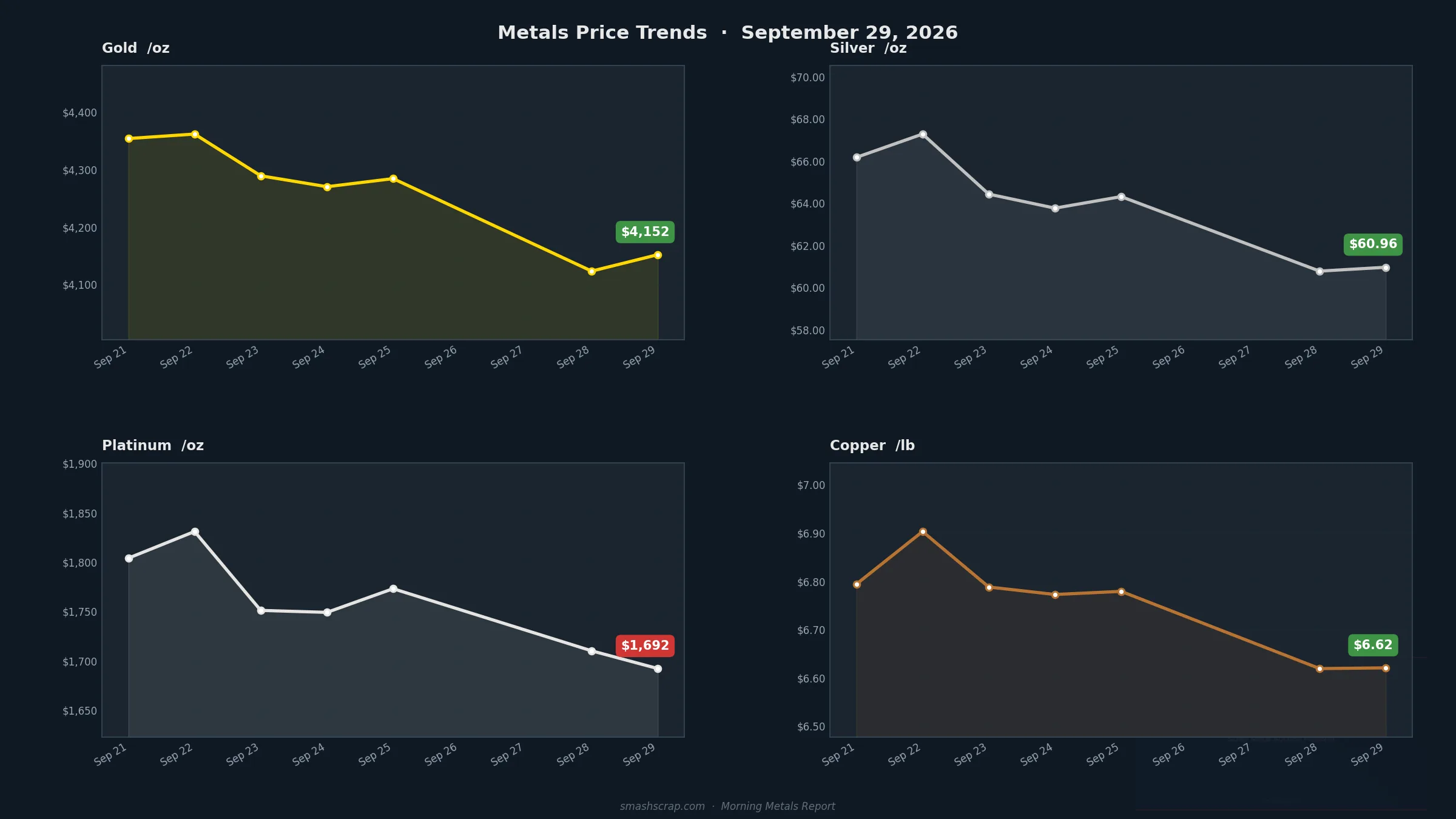
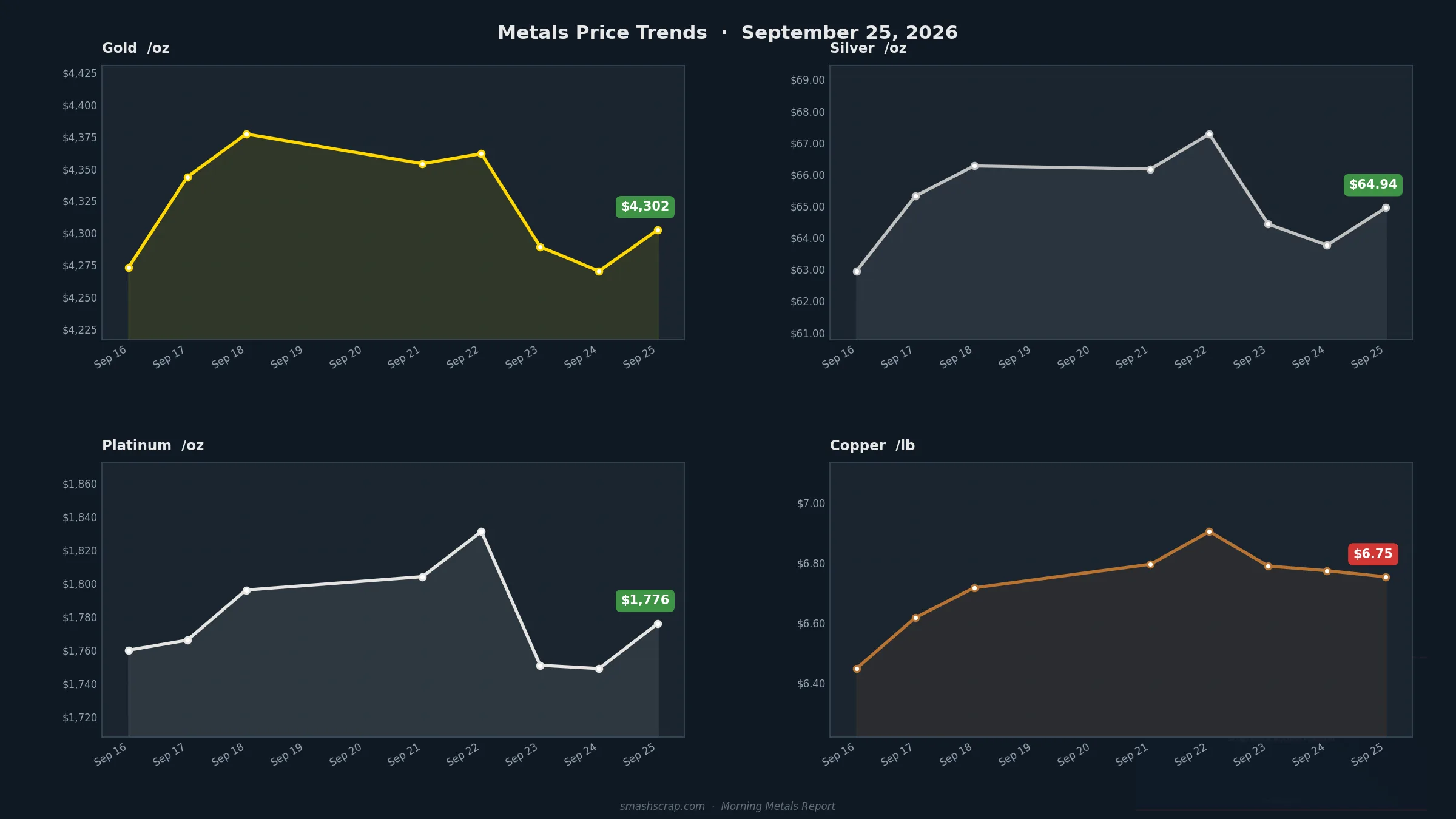
- Aluminum: Secondary aluminum demand has remained firm, driven by manufacturing requirements and tighter primary supply. Extrusions and castings are both moving well. Clean, sorted loads consistently attract stronger attention than mixed material.
- Copper: Copper scrap prices have been volatile in 2026, influenced by global infrastructure spending and energy transition demand. Bare bright and #1 copper remain high-demand grades. Contamination kills value fast — buyers are paying attention to prep quality.
- Catalytic converters: Platinum, palladium, and rhodium prices remain the key drivers. PGM markets have seen compression from expanded mining output and fluctuating auto production, but documented, high-grade cats from newer vehicles still attract serious bids. The serial tracking piece matters more than ever — theft-prevention regulations across Canada have raised the bar on documentation requirements.
- Ferrous: Shredded steel and HMS grades have been range-bound but stable. Export demand from B.C. ports keeps a floor under regional pricing.
Vancouver yards have a geographic advantage in some categories — port proximity matters when buyers are competing for export-grade material. But that advantage only pays off when sellers can reach enough buyers to make that competition real. That's exactly what a platform like SMASH is built to do for Vancouver scrap metal services.
What the Documentation Process Actually Looked Like
This is where the rubber meets the road. Better prices don't come from magic — they come from giving buyers the information they need to bid with confidence.
Here's what the yard submitted for each load through the platform:
- Photos from multiple angles — top, side, and close-up shots of material grade and condition.
- Accurate weight documentation — certified scale tickets attached to each listing.
- Material breakdown — sorted by grade where applicable, with contamination noted honestly.
- Serial numbers for catalytic converters — each unit logged individually, meeting the documentation standards increasingly required by provincial regulations and industry best practices supported by organizations like the Automotive Recyclers of Canada (ARC) and the Ontario Automotive Recyclers Association (OARA).
This isn't extra work for its own sake. Documented inventory moves faster and attracts more competitive bids. Buyers — especially in a B2B environment — aren't just buying metal. They're buying certainty. When you hand them uncertainty, they build a discount into their bid to protect themselves. When you hand them a clean, verified load, that discount disappears.
Auto wreckers across Canada who've adopted this approach — whether they're pulling cats from a steady stream of end-of-life vehicles or moving bulk aluminum from crushed bodies — report that the documentation habit pays off in buyer relationships over time, not just on a single transaction.
Why the Auction Format Matters for Canadian Yards
One thing the yard noticed quickly: the auction format changed the dynamic of buyer conversations entirely. There was no more back-and-forth negotiation on a single number. Buyers competed. The yard watched bids come in from multiple vetted buyers and made a clear decision based on real market data — not a gut feeling about whether they'd pushed back hard enough on a phone call.
No subscription fees meant the yard could test the platform without committing before they'd seen results. SMASH earns when the sale happens — that alignment matters. If a load doesn't sell, nobody wins, which means the platform has every reason to bring serious buyers to every listing.
For a region like British Columbia — where yards can be spread across the Lower Mainland, the Fraser Valley, Vancouver Island, and further north — having access to a national pool of vetted buyers breaks the geographic constraint that used to limit what local yards could get for their material. You're no longer dependent on whoever is willing to drive to your gate.
If you're ready to see how competition works for your loads, join Canada's B2B scrap marketplace on SMASH Recycling and get your inventory in front of buyers who are actively looking for quality material.
The Shift That Sticks: From One-Call to Multi-Buyer
Here's what this yard took away from the experience — and what any B.C. yard can take away from their story.
The old model isn't broken because buyers are dishonest. It's broken because it was never designed to produce a fair market. One buyer, one call, no benchmark. That's not a market — that's a negotiation where the other side has more information than you do.
A B2B scrap metal marketplace changes the information balance. Vetted buyers compete. Documented inventory performs better. Auto invoicing and packing list tools reduce back-office friction. And the yard keeps control of what they sell, when, and to whom.
For yards running regular volumes of aluminum, copper, cats, or mixed loads anywhere in British Columbia, this is how you stop guessing what your material is worth. The Canadian scrap metal market has real data in it — you just need a way to access it.
Read the latest from SMASH Recycling for ongoing market insights, platform updates, and scrap industry news relevant to Canadian yards.
If you're operating in Vancouver or anywhere across B.C. and you're ready to find out what competitive bidding looks like for your next load, the door is open. Register at smashrecycling.ca — no subscription, no commitment until you're ready to sell.
---Frequently Asked Questions
Q: What aluminum grades are most commonly sold through a B2B scrap metal marketplace in Vancouver?
The most common grades include aluminum extrusions, castings, painted clip, and sheet aluminum from automotive and construction sources. Clean, sorted loads consistently attract stronger bids than mixed or contaminated material. Vancouver yards with access to port-adjacent buyers often see competitive attention on export-grade aluminum.
Q: How does aluminum recycling in Vancouver compare to other Canadian markets?
Vancouver's proximity to Pacific ports gives local yards a potential advantage for export-grade material, but price discovery still depends heavily on how many buyers see your load. Without a competitive platform, that geographic advantage often stays theoretical. A B2B auction format brings national and regional buyers to your listing, regardless of where your yard is located.
Q: Are catalytic converter prices included in the SMASH platform?
Yes. SMASH supports catalytic converter listings with serial tracking and photo documentation built into the process. Given the regulatory environment in Canada around cat documentation — and best practices supported by organizations like ARC and OARA — this isn't optional for serious buyers. Documented cats attract stronger, more competitive bids than undocumented loads.
Q: Do I need a subscription to sell scrap metal on SMASH?
No. SMASH does not charge subscription fees. The platform earns when a sale completes — which means the incentive is aligned with yours. You can list inventory and see how the auction process works without paying upfront.
Q: How often do scrap metal prices change in the Canadian market?
Scrap metal prices — including aluminum scrap prices, copper, and PGM values in catalytic converters — can change daily based on commodity markets, exchange rates, and regional supply. Always verify current rates before committing to a sale. The best way to know what your load is actually worth on a given day is to let vetted buyers bid on it competitively.
---Follow SMASH on LinkedIn for Canadian scrap metal market insights, platform updates, and industry news delivered directly to your feed.