Small Metal Recyclers Etobicoke: Fair Pricing Guide
Small recyclers get squeezed from both sides — big operations lock up volume contracts, and single buyers lowball loads because they know you have nowhere else to go. But the game is changing, and metal recycling prices Canada-wide are no longer reserved for the yards with the biggest footprints.
Here's what most small operators don't realize: the pricing gap between a 500-tonne-a-month yard and a 20-tonne operation isn't about volume. It's about buyer access and price discovery. Fix those two things, and the playing field levels fast.
This guide breaks down exactly how smaller Canadian recyclers — including yards across Etobicoke and the broader Ontario market — can stop leaving money on the table and start competing on their own terms.
Why Small Recyclers Get Undercut on Metal Recycling Prices in Canada
Let's be direct about what's actually happening. When you sell a load to one buyer with no competition in the room, you're not getting market price — you're getting that buyer's offer. Those are two very different numbers.
Large operations run volume. They have long-term contracts, established relationships, and the leverage that comes from promising a buyer consistent tonnage every month. A smaller yard doesn't have that leverage — but leverage isn't the only path to a fair price. Competition is.
The other issue is documentation. Big yards have full inventory systems. They photograph loads, track serial numbers on cores and catalytic converters, and provide detailed packing lists with every shipment. Buyers trust documented loads more — which means they bid more confidently and more aggressively. If your competitor is providing VIN lookups and serial tracking on their cats and you're sending a photo from a flip phone, buyers will price that uncertainty into their offer. It costs you real money.
Understanding What Your Scrap Is Actually Worth: Metal Recycling Prices Ontario
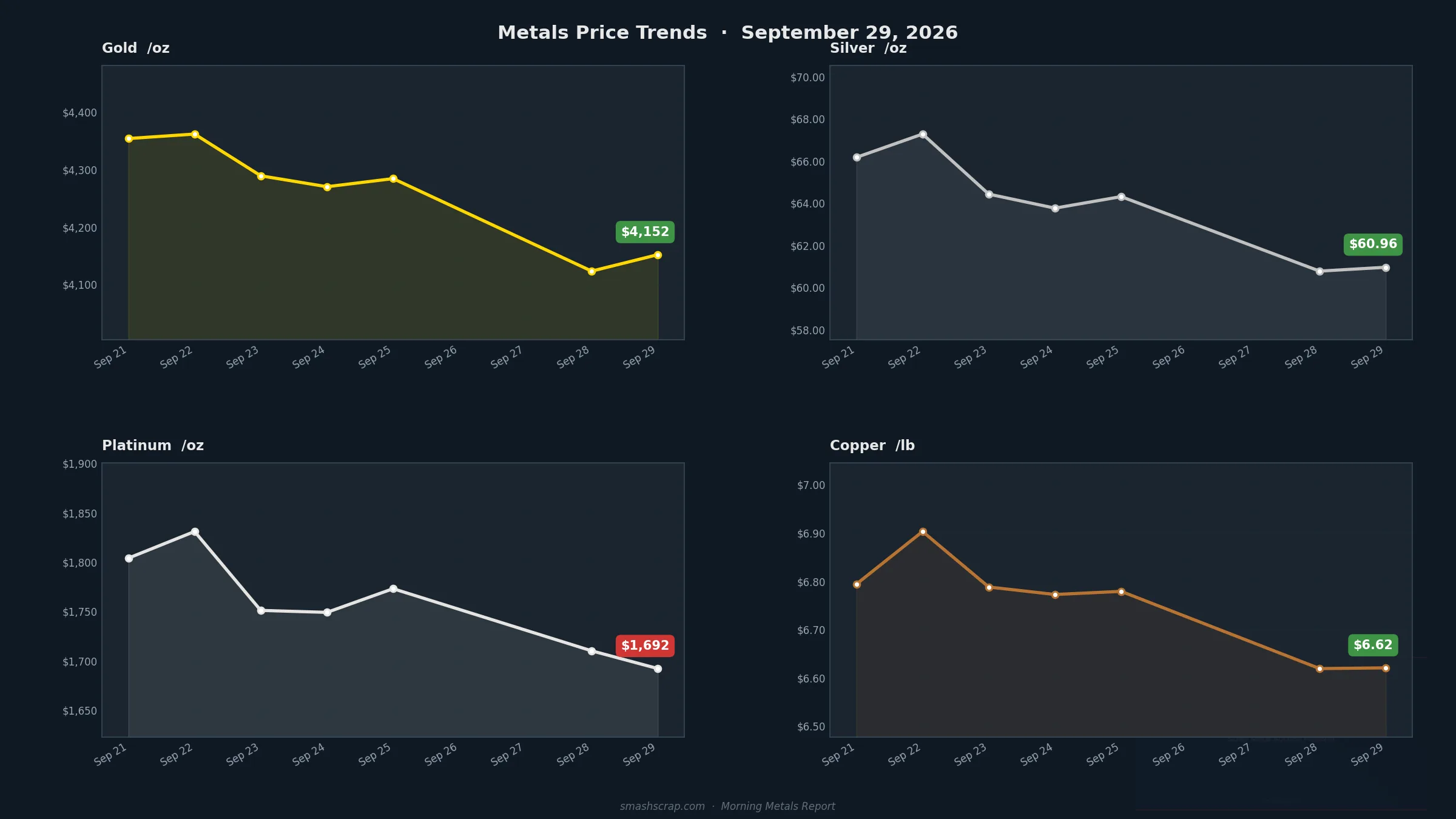
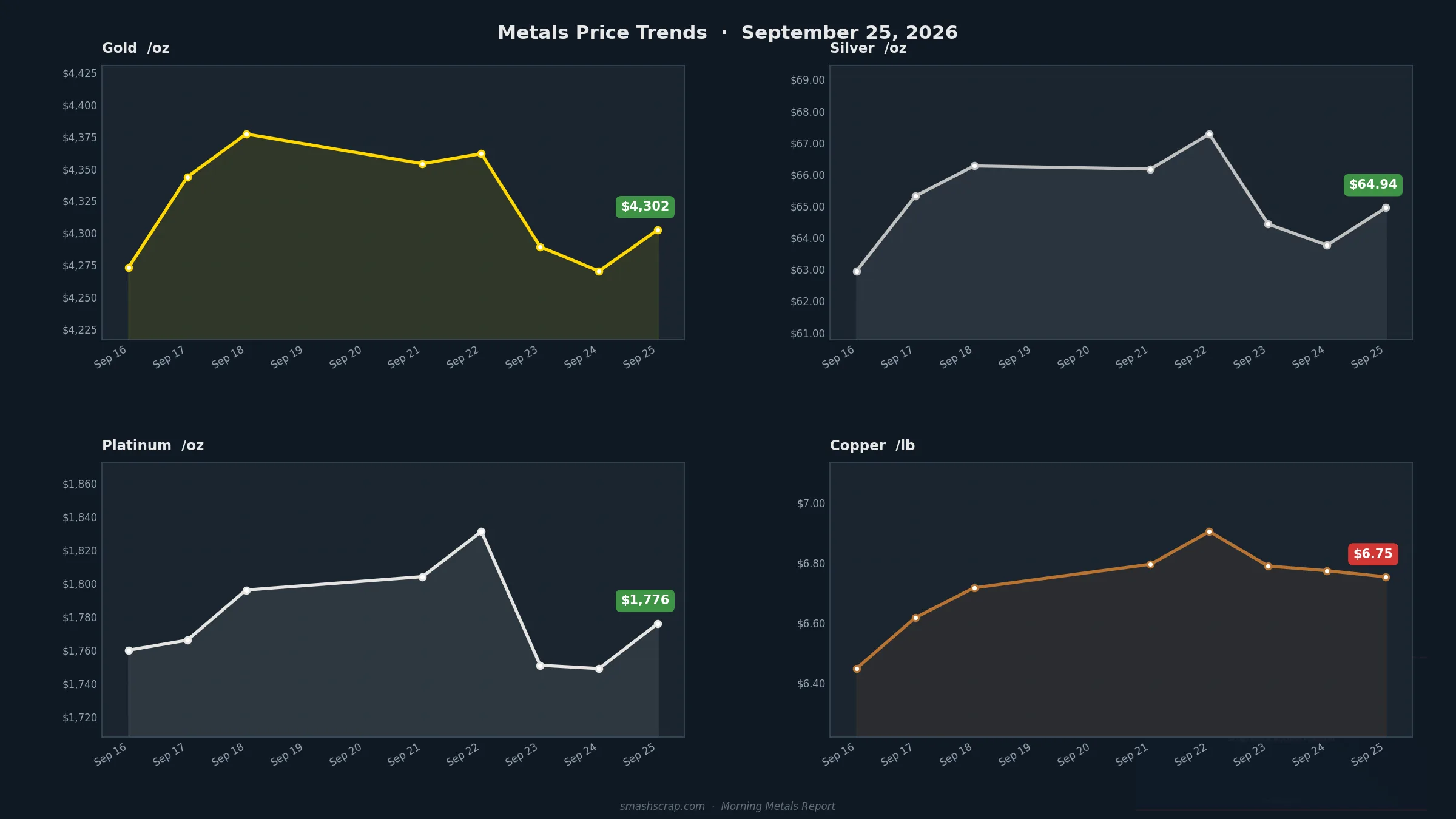
Before you can compete, you need to understand the market you're competing in. Metal recycling prices Ontario — and across Canada — fluctuate based on London Metal Exchange benchmarks, USD/CAD exchange rates, global demand, and local processing costs. No single number stays current for long.
Here's a practical breakdown of the major categories and what drives their value:
- Copper scrap: One of the most price-sensitive commodities in the yard. Bare bright, #1 copper, and #2 copper all trade at meaningfully different levels. Clean documentation and proper grading directly affect what buyers will pay.
- Aluminum: Grades matter enormously — cast aluminum, extrusion, and litho sheet aren't interchangeable. For yards in Etobicoke and surrounding areas, aluminum recycling represents a significant volume category and is worth grading carefully before listing.
- Catalytic converters: Platinum, palladium, and rhodium content drives cat pricing. Prices for these platinum group metals shift constantly, sometimes dramatically week over week. Serial tracking and photo documentation are non-negotiable if you want serious buyers to bid seriously.
- Ferrous loads: HMS, shredded, and specialty steel grades each carry their own pricing. Accurate weight, clean separation, and verified BOLs reduce buyer risk and increase bid confidence.
- Non-ferrous mixed loads: The harder you work to sort and document, the better your price discovery. Undocumented mixed loads invite low bids because buyers are pricing in the unknown.
Disclaimer: Scrap metal prices fluctuate daily. Check current rates before making selling decisions. The categories above reflect general market structure, not current spot pricing.
Is Scrap Metal Recyclable — and What Should You Actually Be Collecting?
This question comes up more than you'd think, especially from newer operators or yard staff fielding calls from the public. Is scrap metal recyclable? Yes — virtually all metals are recyclable, repeatedly, without degradation of material quality. That's what makes this industry valuable and why the demand side never fully disappears.
But not everything belongs in the same pile — and this is where small operators lose money through poor sorting discipline. A quick primer on what's sellable and how to handle it:
- Can you put scrap metal in a recycling bin? No. Municipal recycling bins are for household materials — paper, plastic, glass, small aluminum cans. Scrap metal, especially industrial or automotive scrap, needs to go through a certified recycler or yard. Sending someone to a curbside bin with a catalytic converter or a bundle of copper pipe is not a recycling strategy — it's waste.
- Automotive cores, catalytic converters, alternators, and starters are B2B-grade material. They belong in a proper inventory system with photos, serial numbers, and accurate grading — not in a general bin or a single-buyer transaction.
- Non-ferrous metals — copper, aluminum, brass, stainless — should be sorted before sale. Mixed non-ferrous loads are worth less than sorted loads. Period.
Organizations like the Ontario Automotive Recyclers Association (OARA) and the Automotive Recyclers of Canada (ARC) provide best practice frameworks for proper material handling, documentation, and compliance. If you're running an automotive dismantling operation in Ontario, these organizations are worth knowing. Their standards exist to protect your yard and your buyers — and following them signals professionalism to the market.
How to Sell Scrap Metal Online and Actually Get a Fair Price
The shift to selling scrap metal online isn't just a convenience play — it's a structural advantage for small operators. When you sell scrap metal online through an auction format, you're no longer limited to the buyers who call your yard or who happen to be in your geography. You're open to every vetted buyer who wants what you're selling.
Here's how the process works in a competitive auction environment:
- Document your load properly. Photographs, weights, grades, serial numbers on cats and cores, VIN lookups where applicable. This isn't paperwork for paperwork's sake — it directly affects how many buyers engage and how confidently they bid.
- List on a platform with vetted buyers. Not every online marketplace is equal. You want buyers who have been verified, who understand scrap grades, and who are ready to transact — not tire-kickers who disappear after the auction closes.
- Let competition set the price. Multiple buyers bidding on the same load creates price discovery. More buyers means better price discovery. You stop guessing and start seeing what the market will actually pay.
- Handle the paperwork digitally. BOLs, packing lists, GST/HST documentation — the less friction in the transaction, the faster you get paid and the more likely buyers return for your next load.
This is exactly what SMASH Recycling's auction platform is built for. VIN lookup, serial tracking, photo documentation, auto-invoicing with GST/HST handling — the tools that big yards have always had access to, built specifically for operations that don't have a full back office.
Aluminum Recycling in Etobicoke: A Practical Competitive Advantage
Etobicoke's industrial history means there's real non-ferrous volume moving through the area — manufacturing scrap, construction offcuts, automotive material from local dismantlers. Aluminum recycling in Etobicoke is a meaningful category for yards operating in the western Toronto corridor, and it's one where grading discipline pays off.
The difference between selling a mixed aluminum load and a properly graded, sorted aluminum load can be significant. Buyers pay more for certainty. If you can tell a buyer exactly what they're getting — grade, weight, contamination level, origin — they price that confidence into their bid. Vague descriptions produce vague prices.
Small yards in Etobicoke and across Ontario that invest in their inventory process — even basic things like consistent photography and accurate grade labeling — position themselves to attract better bids than larger competitors who are moving fast and documenting loosely. Quality of documentation beats volume of material when buyers are making decisions.
For yards that haven't yet explored what a B2B auction platform can do for their aluminum loads specifically, find the best price for your scrap on SMASH and see what vetted buyers will actually pay for a properly documented load.
The Real Edge: Building a Repeatable Process, Not Just One Good Sale
One auction win doesn't change your business. A repeatable process does. The small recyclers who consistently outperform their size are the ones who treat every load like a product — documented, graded, photographed, and presented to the market the same way every time.
That consistency builds buyer trust. Buyers who know what to expect from your listings bid faster and higher. They come back. Over time, you build a buyer base that competes for your material — without you needing to cold-call anyone or negotiate under pressure.
The platform side of this matters too. No subscription fees means you're not paying for access before you've sold a single kilogram. You only win when the seller wins — that alignment is worth paying attention to. Join Canada's B2B scrap marketplace on SMASH Recycling and start building that process today.
For more on how the Canadian scrap market is moving and what's affecting prices this year, read the latest from SMASH Recycling — practical, yard-level content without the filler.
Small operations across Ontario are already using competitive auctions to get prices they couldn't get on the phone. The tools exist. The buyers are there. The only thing missing is the decision to stop selling the old way.
Register at smashrecycling.ca and put your next load in front of buyers who actually compete for it.
Frequently Asked Questions
Q: How do metal recycling prices in Canada compare to U.S. prices?
Canadian scrap metal prices are closely tied to U.S. benchmarks through the London Metal Exchange, but the USD/CAD exchange rate adds a layer of variability. A stronger U.S. dollar generally benefits Canadian sellers exporting material, while a weaker dollar compresses returns. Checking current CAD-denominated rates before selling is always the right move — prices shift frequently.
Q: Can you put scrap metal in a recycling bin?
No. Municipal recycling bins are designed for household recyclables like paper, plastic, and aluminum cans — not industrial or automotive scrap. Scrap metal needs to go through a certified recycling yard or B2B platform. Putting heavy or sharp scrap in a curbside bin creates safety issues and typically results in the material being rejected or landfilled.
Q: How can small recyclers in Etobicoke compete with larger operations on price?
The biggest lever is buyer access. A small yard selling to one local buyer is always at a disadvantage. By listing documented loads on a competitive auction platform, smaller yards in Etobicoke and across Ontario access the same vetted buyer pool as large operations — and let competition set the price rather than a single offer. Consistent documentation and accurate grading amplify that advantage further.
Q: Is scrap metal recyclable — including automotive parts?
Yes, virtually all metals are recyclable, including automotive parts like catalytic converters, alternators, copper wiring, and steel body panels. The key is proper sorting, documentation, and routing through a certified recycler. Organizations like OARA and ARC provide Canadian automotive recyclers with best practice guidelines for handling these materials responsibly and profitably.
Q: What's the best way to sell scrap metal online in Canada?
The most effective approach is to document your load thoroughly — photos, weights, grades, serial numbers on cats and cores — then list it on a platform with vetted buyers and a competitive auction format. Avoid platforms where a single buyer makes an offer with no competition. Price discovery only happens when multiple buyers are in the room, even a virtual one.
Stay current on scrap metal market trends, platform updates, and yard-level insights — follow SMASH Recycling on LinkedIn for regular updates from inside the Canadian scrap market.