Prince George Scrap Metal: Escrow & Payment Security
Most B2B scrap deals still run on a handshake and a hope. You load the truck, ship the material, and wait — sometimes weeks — to find out what you actually get paid. In 2026, that's not a payment system. That's a gamble.
Payment terms and escrow protection are reshaping how serious scrap yards and buyers do business across Canada. Whether you're running a Prince George scrap metal services operation or buying non-ferrous loads from yards across British Columbia, the financial mechanics of your transaction matter as much as the metal price itself. Getting paid late — or not at all — can sink a deal that looked great on paper.
This post breaks down what payment terms actually mean in B2B scrap, why escrow is gaining traction, and how platforms like SMASH are bringing structure to a market that's historically operated on trust and luck.
Why Payment Terms in Scrap Metal Recycling Canada Are Broken
The traditional scrap deal works something like this: a yard calls their one buyer, quotes a price, loads a truck, ships a BOL, and waits. Payment terms of net-30, net-45, or even net-60 are common. That means a yard could be carrying the full cost of material — fuel, labour, sorting — for two months before seeing a dollar.
That's a cash flow problem. And it gets worse at scale. If you're moving multiple loads a week, you can be six figures deep in receivables before your first payment clears. For smaller operations near Prince George or anywhere in northern British Columbia, that gap can mean missing payroll or turning down loads you can't afford to carry.
The problem isn't unique to one region. It's structural. The scrap industry built its payment habits decades ago, when buyers held all the leverage and sellers didn't have options. The result: extended payment terms got normalized, and most yards just accepted them.
- Net-30 to Net-60 terms mean you're financing the buyer's inventory
- Single-buyer relationships give you no leverage to push back on terms
- No documentation standards leave disputes open-ended
- Manual invoicing creates delays and errors that extend payment timelines further
What Escrow Actually Does in a B2B Scrap Metal Marketplace
Escrow isn't complicated. A neutral third party holds funds until both sides confirm the transaction is complete. In a scrap context, that means the buyer deposits payment before the load ships, and those funds release to the seller once delivery and material specs are confirmed. Neither side is exposed.
For sellers, escrow eliminates the receivables risk entirely. You know the money is sitting in trust before your truck leaves the yard. For buyers, it means they're not paying on blind faith — they get confirmation that the material matches the listing before funds move. Both sides have protection, and the deal has structure.
Escrow also changes the negotiating dynamic. When payment is guaranteed before shipment, sellers are more willing to negotiate on price. When buyers know they can dispute a discrepancy before funds clear, they're more willing to bid on loads from new suppliers. That's how escrow builds trust between parties who've never done business before — which is exactly the kind of transaction a B2B scrap metal marketplace facilitates every day.
It's worth noting that industry organizations like the Automotive Recyclers of Canada (ARC) and the Ontario Automotive Recyclers Association (OARA) have long advocated for clearer transaction standards in automotive recycling. Escrow and documented payment terms align directly with the kind of professionalization those organizations push for across Canadian yards.
Scrap Metal Depot Prince George: The Local Cash Flow Reality
Running a scrap metal depot in Prince George isn't the same as running one in Vancouver or Toronto. Your buyer pool is smaller. Your freight costs are higher. And your operating margins leave less room for payment delays. A net-45 term from a buyer in the Lower Mainland can put real strain on a northern yard's books.
That's one reason why yards in Prince George and across northern British Columbia are increasingly looking at auction-based platforms. More buyers means more competition. More competition means better price discovery. And better transaction infrastructure means you're not financing someone else's inventory for six weeks before you get paid.
When a yard in this region lists a load of copper, aluminum, or catalytic converters on a platform like SMASH, they're not just getting better price exposure — they're also getting a transaction structure that doesn't require them to take the buyer's word on payment timing. That matters when you're running a lean operation in a region where your next load has to fund the one after it.
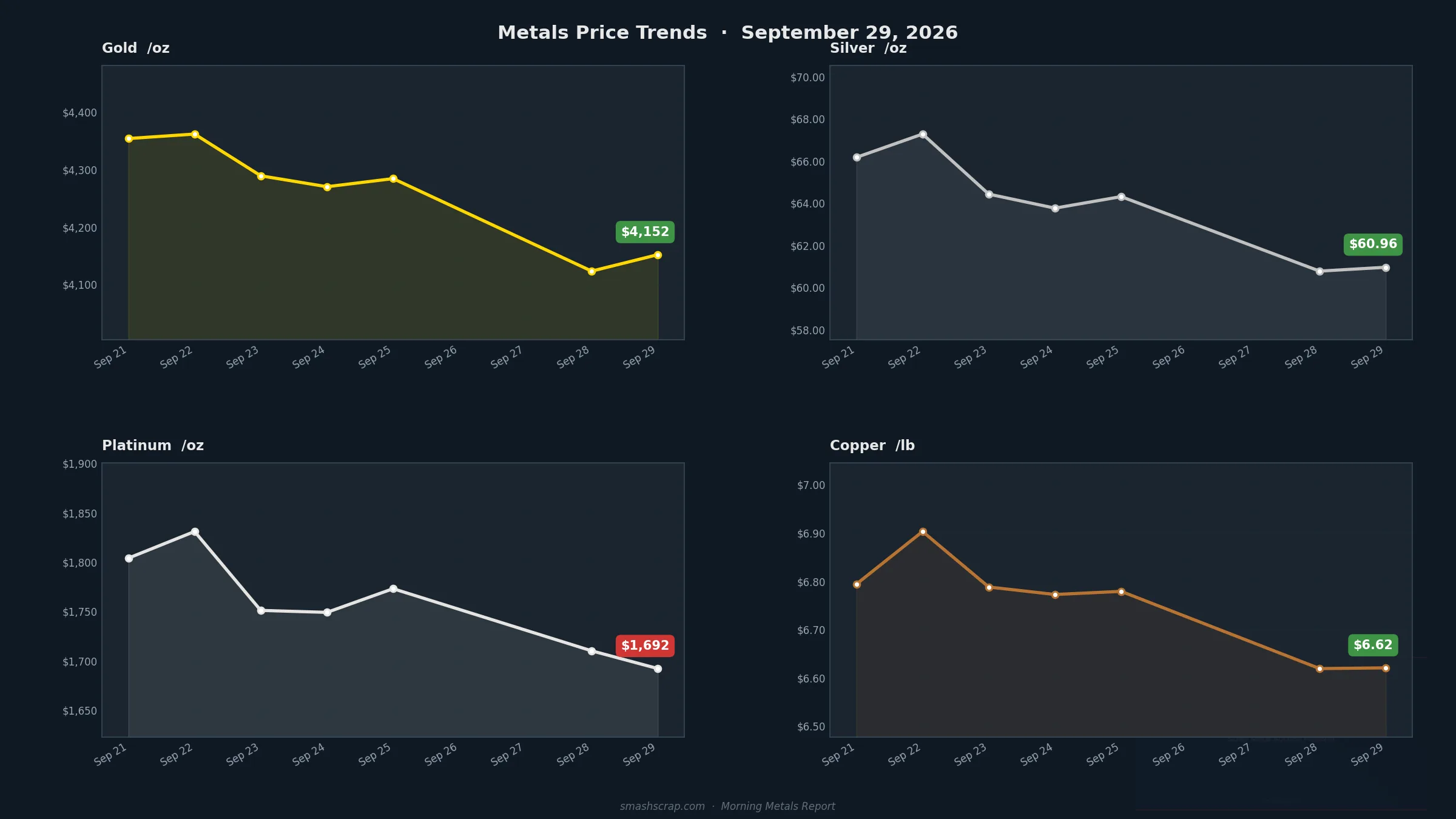
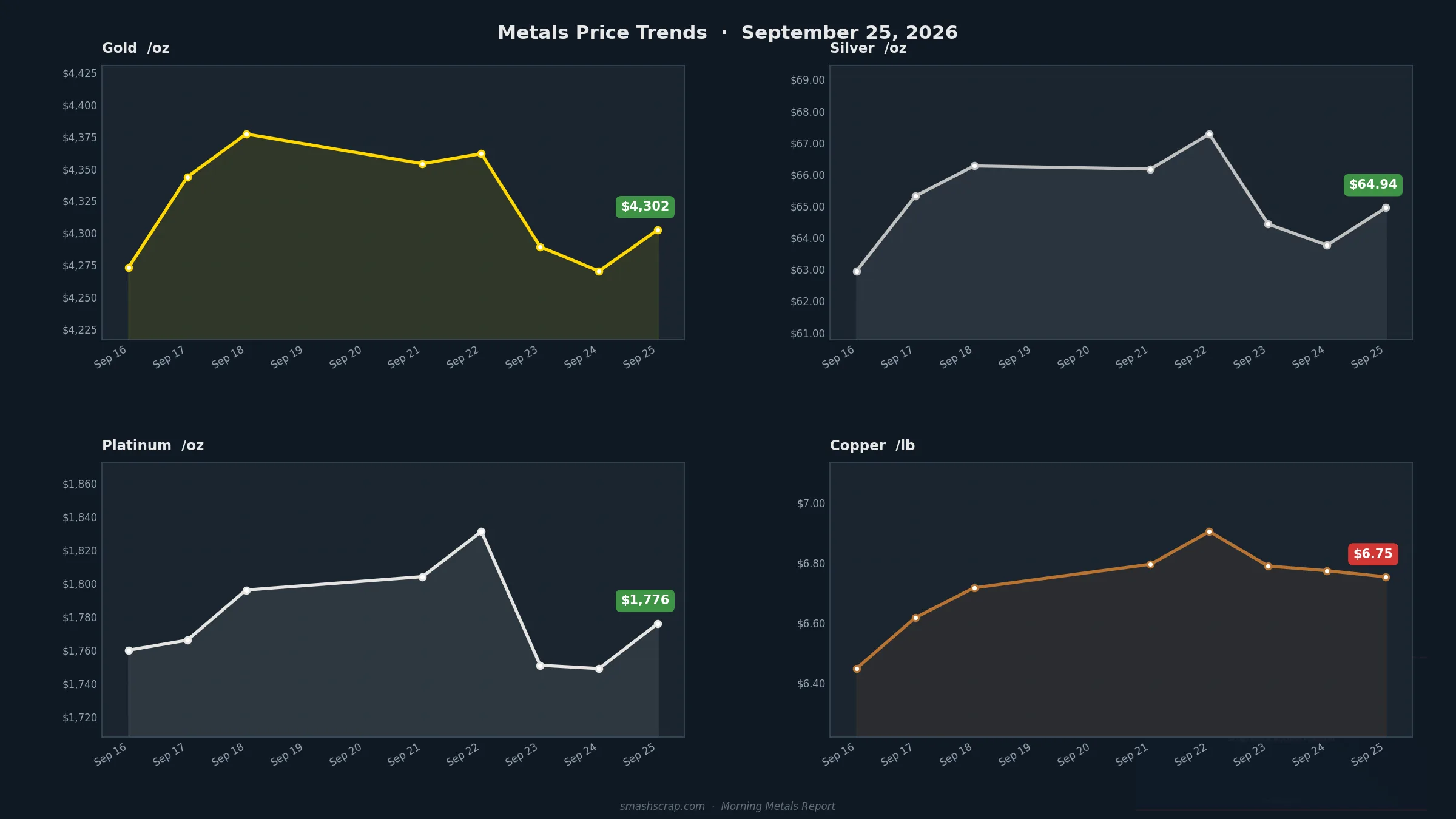
For reference, commodities like copper, platinum, palladium, and rhodium — all found in catalytic converters and non-ferrous loads — can move significantly in price between the time you load a truck and the time a net-45 payment clears. Escrow locks in the agreed price at transaction time. No surprises, no "market moved" excuses three weeks later.
Disclaimer: Metal prices fluctuate daily. Always verify current scrap metal prices today with your buyer or platform before finalizing any deal.
How SMASH Handles Payment Structure in Scrap Auctions
SMASH builds transaction structure into the platform by design. When you list a load — whether it's a pallet of cats, a container of shredder feed, or a sorted non-ferrous parcel — the auction format creates competition. Vetted buyers bid against each other. You see the market in real time instead of guessing whether your single buyer is giving you a fair number.
Auto-invoicing removes one of the most common sources of payment delay: manual paperwork. When a load sells on SMASH, the invoice generates automatically, tied to the auction result. No back-and-forth on BOL reconciliation. No "we never got your invoice" excuses. The documentation trail is there from the moment the hammer falls.
For yards exploring explore SMASH Recycling's auction platform, the combination of competitive bidding and structured payment terms isn't just a convenience — it's a material change in how you manage cash flow. You're not guessing what your load is worth, and you're not waiting on a buyer's accounts payable cycle to fund your operation.
SMASH also handles GST/HST/PST/QST documentation, which matters when you're doing volume across multiple provinces. Getting the tax documentation wrong on a large non-ferrous transaction isn't just an accounting headache — it can delay payment while someone sorts out the compliance piece. When the platform handles it automatically, that risk disappears.
What to Look for in Payment Terms Before You Ship a Load
Not every buyer on every platform offers the same terms. Before you load your truck, ask these questions explicitly. Vague answers are a red flag.
- What are the payment terms? Net-7, net-15, net-30? Get it in writing before the load ships.
- Is escrow available? If not, what happens if the buyer disputes the material weight or grade after delivery?
- How are disputes handled? Is there a documented process, or is it a phone call to someone who may or may not pick up?
- Is the buyer vetted? Platforms like SMASH vet buyers before they're allowed to bid. Know who's on the other side of your deal.
- How does invoicing work? Manual invoicing creates delay. Auto-invoicing tied to the transaction closes that gap.
- What documentation is required? Photo documentation, serial tracking, VIN lookup — these aren't just compliance tools. They protect you if a dispute arises.
If you're selling catalytic converters or other high-value non-ferrous material, these questions matter more, not less. The higher the value, the higher the stakes if payment goes sideways. Knowing current catalytic converter prices today is useful — but knowing you'll actually get paid at that price is what keeps your business running.
For yards looking to stay current on transaction best practices and market developments, read the latest from SMASH Recycling — the blog covers pricing trends, platform updates, and operational topics relevant to Canadian yards.
Building a Smarter Transaction Habit in 2026
The scrap industry is getting more sophisticated. Buyers are more price-literate. Sellers have more options. And the yards that will come out ahead aren't necessarily the ones with the most material — they're the ones who understand their numbers and protect their cash flow.
Payment terms and escrow aren't administrative details. They're the difference between a deal that builds your business and one that drains it. If you're still operating on net-45 verbal agreements with a single buyer, you're leaving money on the table and carrying risk you don't need to carry.
Whether you're running a metal recycling near me Prince George search to benchmark your operation, or you're a multi-yard operation looking to systematize your sales process, the tools exist to do this better. The question is whether you use them.
The right platform connects you to vetted buyers across Canada, structures your transactions, and handles the documentation that protects you if something goes wrong. That's what join Canada's B2B scrap marketplace on SMASH Recycling is built to do. And for yards from Prince George to Halifax, it's a material upgrade over the old way of doing things.
Ready to stop guessing and start selling with structure? Register at smashscrap.com or reach out to jeff@smashscrap.com to get started.
Frequently Asked Questions
Q: What payment terms should I expect when selling scrap metal at a depot in Prince George?
Payment terms vary by buyer, but net-15 to net-30 is common for established relationships. Newer buyer relationships or auction-based sales may offer shorter terms or escrow options. Always confirm payment terms in writing before your load ships — verbal agreements create disputes.
Q: How does escrow work for scrap metal recycling in Canada?
In a scrap escrow arrangement, the buyer deposits payment to a neutral third party before the load ships. Funds release to the seller once both parties confirm the material and delivery meet the agreed terms. It protects both sides and removes the receivables risk that's common in traditional scrap deals.
Q: Is SMASH available to scrap metal sellers in British Columbia?
Yes. SMASH serves yards and sellers across Canada, including British Columbia. Sellers list loads, vetted buyers bid competitively, and the platform handles invoicing and documentation. There are no subscription fees — SMASH earns only when a transaction closes.
Q: What should auto recyclers in Canada look for in a scrap auction platform?
Look for vetted buyer pools, transparent bidding, auto-invoicing, and clear payment terms. Organizations like the Automotive Recyclers of Canada (ARC) and the Ontario Automotive Recyclers Association (OARA) support transaction transparency as part of professional standards in the industry. A platform that documents everything — photos, serial tracking, VIN lookups — protects you if a dispute arises.
Q: How do I know if scrap metal prices today are fair before I sell?
Competitive auctions are one of the most reliable ways to test the market. When multiple vetted buyers bid on your load, the result reflects real demand — not a single buyer's margin target. That's the core principle behind price discovery on a B2B scrap metal marketplace like SMASH. Always check current commodity prices before listing, as copper, platinum, palladium, and rhodium values shift daily.
Stay current on scrap metal market trends, platform updates, and Canadian recycling industry news by following SMASH Recycling on LinkedIn.