Brampton Scrap Metal Auctions Beat Broker Deals
Auction vs. Broker: Why Canadian Scrap Sellers Are Rethinking How They Move Metal
Here's a number that surprises most scrap sellers: studies in commodity trading consistently show that competitive bidding environments return 10–30% more value than single-buyer negotiations. Yet the majority of Canadian scrap metal market participants still rely on brokers or fixed-price buyers — often leaving real money on the table every single transaction. In 2026, that gap is closing fast, and platforms like SMASH are leading the shift.
This week's market recap digs into one of the most practical decisions any scrap seller, recycling yard, or fleet operator faces: should you work through a broker, or should you let competitive bidding do the heavy lifting? The answer matters more than ever as catalytic converter prices, copper values, and precious metal rates fluctuate week to week in response to global supply pressures.
What a Broker Actually Does — And Where the Model Falls Short
A broker connects scrap sellers to buyers and takes a margin in the middle. On paper, that sounds convenient. In practice, it means someone else controls the price you see, the buyer you access, and the timeline you're working against. The broker's incentive is not necessarily to maximize your return — it's to close the deal efficiently enough to protect their cut.
In Canada's scrap metal market, broker-led transactions are common for high-volume sellers like automotive recyclers and industrial facilities. The relationship can work well when trust is established and volumes are consistent. But the model has structural blind spots:
- Limited price transparency: You rarely see the full spread between what buyers offer and what you receive.
- Single-point negotiation: You're negotiating with one intermediary, not competing buyers — which reduces your leverage.
- Slower timelines: Broker-facilitated deals can take days or weeks to finalize, especially for specialty materials like catalytic converters or e-waste components.
- Relationship dependency: If your broker's network shrinks or their margins increase, your returns drop — often without explanation.
For sellers in high-density markets like Brampton, where scrap volumes are significant and buyer competition is real, the broker model can actively suppress what sellers earn. That's not a knock on individual brokers — it's a structural reality of single-buyer negotiation.
How Scrap Metal Auctions Change the Price Discovery Process
An auction flips the dynamic entirely. Instead of one buyer setting the terms, multiple qualified buyers compete against each other in real time. Price discovery happens transparently — you see what the market will actually bear, not what a middleman decides to show you.
In the Canadian scrap metal market, this matters enormously for materials where prices shift rapidly. Consider catalytic converters: platinum, palladium, and rhodium spot prices can move significantly within a single trading week. A broker deal locked in on Monday may not reflect Tuesday's commodity move. An auction run mid-week captures live market sentiment. Sellers who understand this are actively moving toward auction platforms to capture that precision.
The core advantages of auction-based selling include:
- Competitive upward pressure on price: When three or more buyers compete, the floor becomes the starting point — not the final offer.
- Full market visibility: You see what buyers are willing to pay, which informs your future pricing strategy.
- Faster settlement: Digital auction platforms resolve deals in hours, not days.
- Access to a broader buyer pool: Online auctions break geographic barriers — a buyer in Calgary can bid on material in Brampton, Ontario, expanding your reach dramatically.
- Documentation and compliance: Reputable platforms maintain transaction records that support regulatory compliance, important for operations aligned with organizations like the Ontario Automotive Recyclers Association (OARA) and the Automotive Recyclers of Canada (ARC).
Both OARA and ARC have long advocated for transparent, traceable transactions in Canada's automotive recycling ecosystem. Auction platforms that provide full audit trails align directly with those industry standards — something broker-based deals often can't match.
The B2B Scrap Metal Marketplace Advantage for Ontario Sellers
Not all auctions are equal. Consumer-facing platforms and general auction sites aren't built for the realities of industrial scrap — bulk weights, commodity grading, chain-of-custody documentation, and the price sensitivity of materials like copper, steel, and precious metal-bearing components. A true B2B scrap metal marketplace is purpose-built for these transactions.
SMASH Recycling operates exactly this kind of platform for the Canadian market. Sellers — from small automotive recyclers in Brampton to large industrial generators across Ontario — can list scrap, reach verified buyers, and close deals in a transparent, competitive environment. The platform is designed so that both sides of the transaction know the rules, the grades, and the timelines before bidding begins.
For e-waste recycling Brampton operations specifically, this is a meaningful development. E-waste contains recoverable copper, gold, palladium, and circuit board materials that vary significantly in value depending on buyer and processing capability. Listing through a competitive auction means that value gets discovered properly — not averaged down by a broker working a thin margin. If you're ready to experience the difference, explore SMASH Recycling's auction platform and see how competitive bidding works in practice.
Catalytic Converter Auctions: A Category Where Competitive Bidding Pays Off
Few scrap categories benefit more from auction dynamics than catalytic converters. The precious metals inside — primarily platinum, palladium, and rhodium — are globally traded commodities with prices that shift daily. A single catalytic converter from a late-model diesel truck can carry material worth hundreds of dollars. A pallet of converters from an automotive recycler can represent a significant transaction.
In that environment, the difference between a broker's fixed offer and a live catalytic converter auction can be substantial. Buyers in the catalytic converter space — processors, refiners, and specialty traders — have very different cost structures and profit margins. When they compete, the seller benefits from that spread.
On platforms designed for this category, sellers can also access:
- Up-to-date assay references that reflect current platinum price, palladium price, and rhodium price benchmarks
- Buyer verification to ensure you're dealing with legitimate processors
- Lot structuring tools that let you group converters for maximum bidder interest
- Chain-of-custody documentation that meets provincial compliance standards in Ontario
For sellers who want to sell catalytic converters online, the auction model removes the guesswork. You're not taking someone's word for what the market looks like — you're watching the market reveal itself in real time. North America's B2B scrap metal auction platform makes this process accessible to sellers at every scale, from individual recycling yards to multi-location operations.
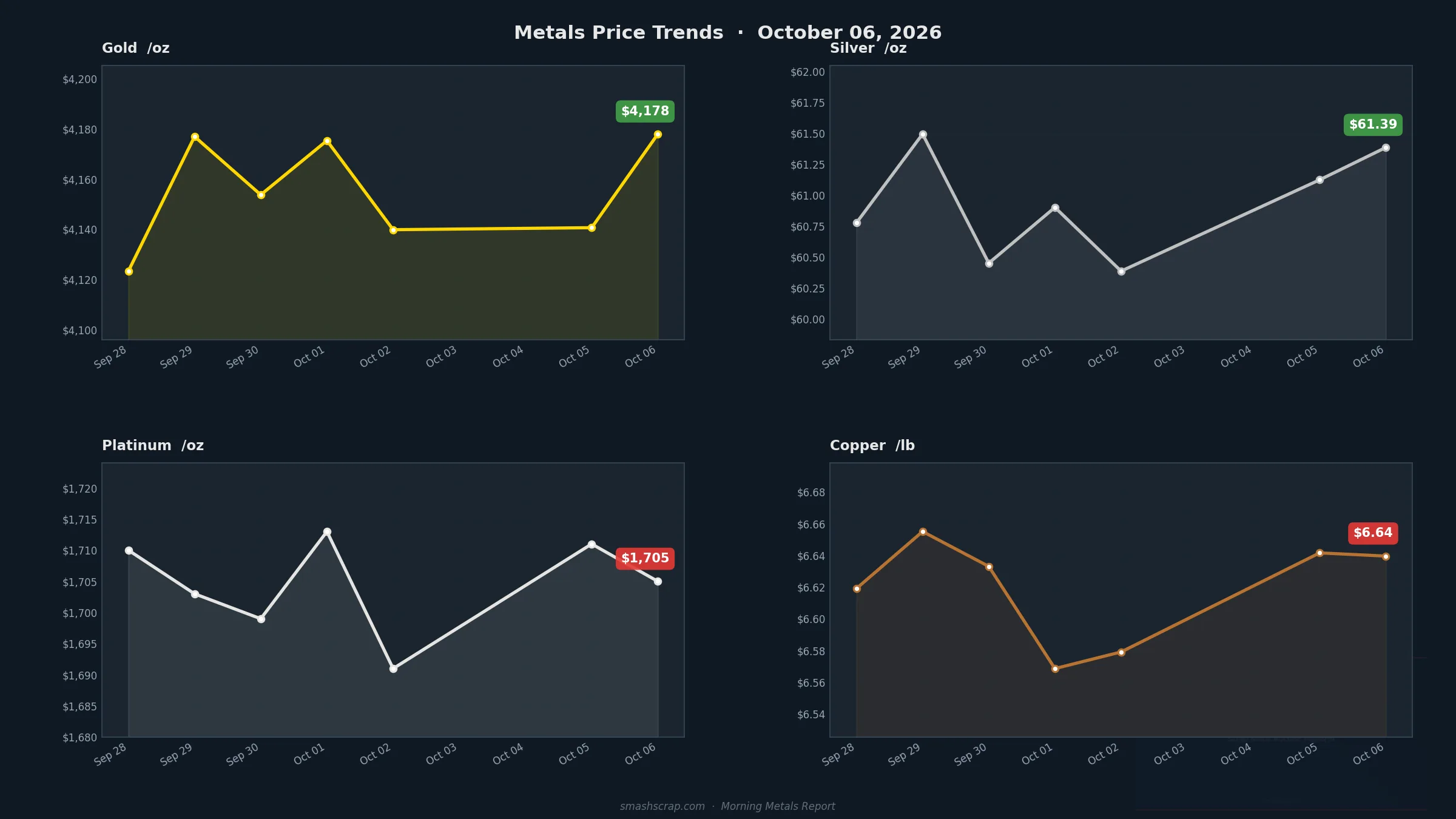
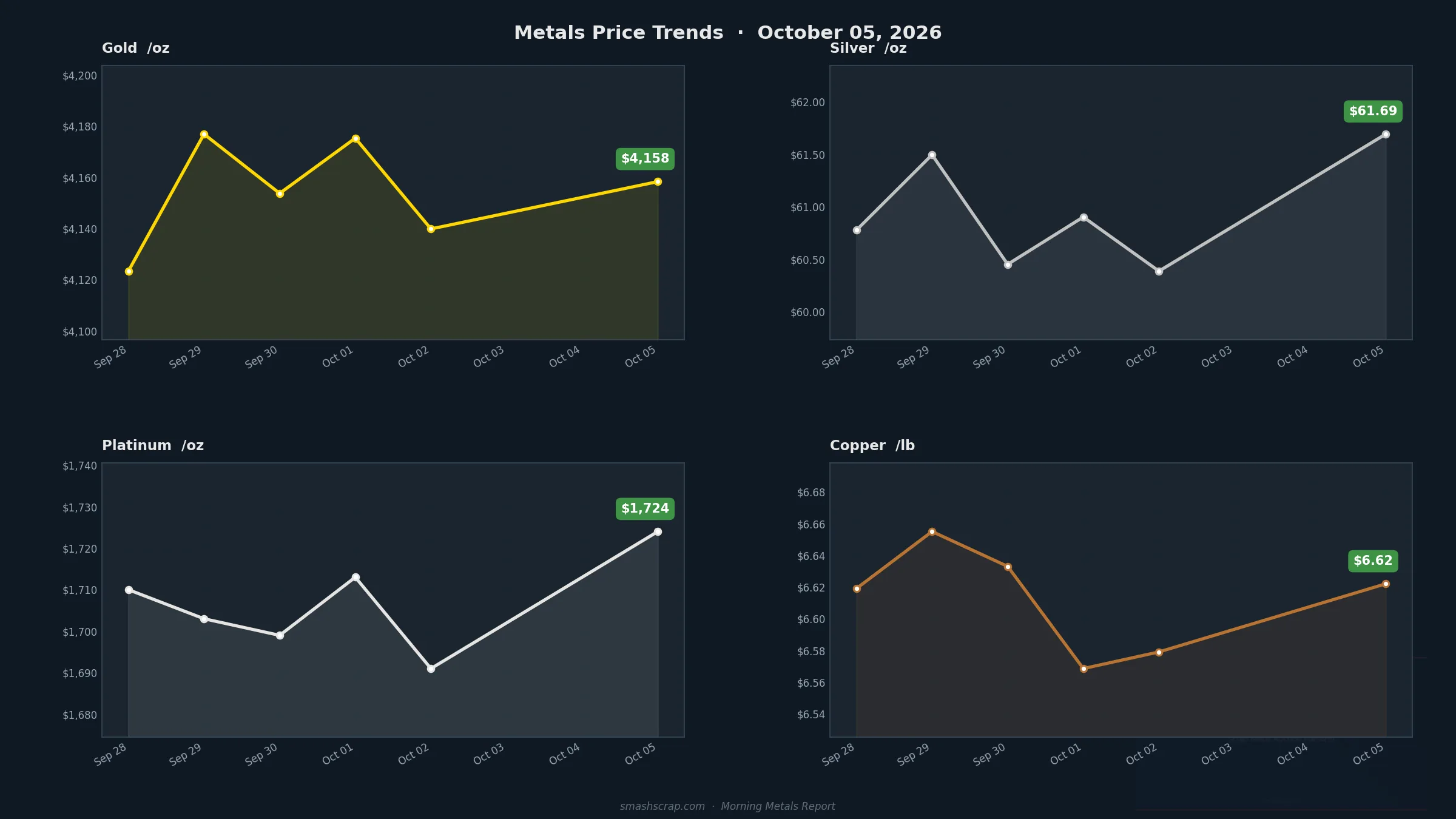
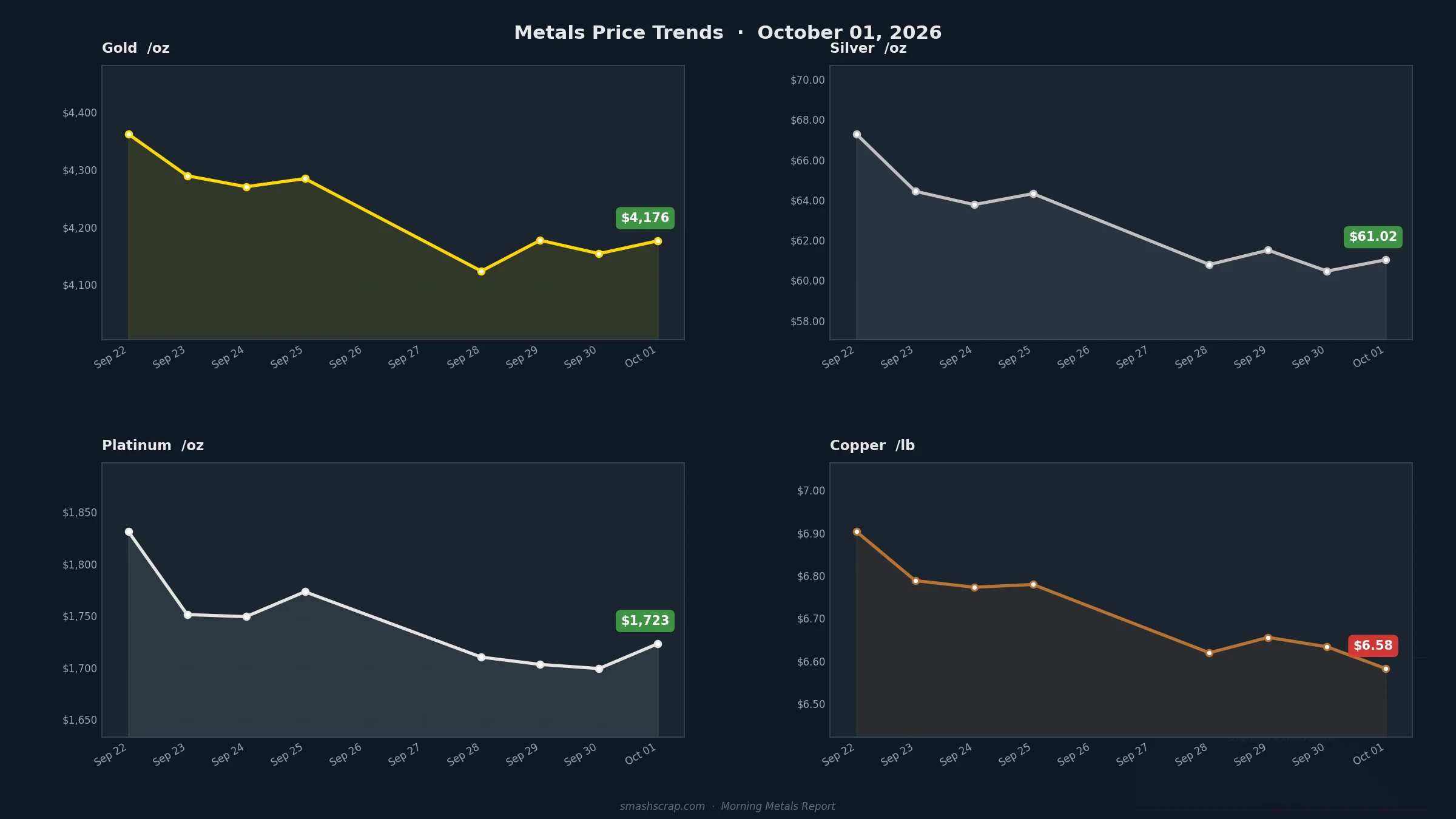
What Canadian Scrap Metal Prices Look Like Right Now — Week of May 24, 2026
This week, the Canadian scrap metal market continues to reflect global commodity pressures driven by infrastructure spending cycles, EV battery material demand, and ongoing trade flow adjustments. Copper remains a closely watched benchmark — copper scrap prices in 2026 have reflected both strong industrial demand and periodic supply disruptions from South American producing regions.
Precious metals tied to catalytic converter recovery — platinum, palladium, and rhodium — continue to see differentiated demand based on the global automotive production mix. As hybrid and transitional drivetrains remain prevalent in Canadian vehicle fleets, catalytic converter volumes at recyclers across Ontario remain robust. Sellers holding converter inventory should be paying close attention to refiner spreads this week.
On the ferrous side, structural steel scrap and shredded auto scrap have held relatively steady, though seasonal demand from construction activity can introduce short-term upward pressure through the summer months. For the most current scrap metal prices today, sellers should always verify live rates — commodity markets move faster than any weekly recap can track. Note: All prices referenced in this article are general market context only. Always check current rates before making selling decisions.
To stay current with price movements and market analysis, read the latest from SMASH Recycling — the blog covers real-time market shifts, regulatory updates, and platform news relevant to Canadian scrap sellers.
Making the Switch: Is Auction-Based Selling Right for Your Operation?
If you're a scrap seller who values predictability above all else, a long-standing broker relationship may still serve you. But if you're optimizing for return — especially on high-value materials like catalytic converters, copper, or e-waste streams — the auction model almost always outperforms over time.
The barrier to entry has dropped significantly. Today, registering on a B2B scrap metal marketplace like SMASH takes minutes, not weeks. There's no need to renegotiate relationships or navigate complicated onboarding. You list your material, qualified buyers bid, and you compare offers in one place. For operations in Brampton and across Ontario, that accessibility is a genuine competitive advantage.
If you've relied on a broker for years and haven't tested the auction market, 2026 is the right year to run the comparison. List a single lot, see what competitive bidding returns, and measure it against your current baseline. The data will tell its own story. Join Canada's B2B scrap marketplace on SMASH Recycling and find out what the market is actually willing to pay for your material.
Frequently Asked Questions
Q: What is the main difference between selling scrap through a broker vs. an auction in Canada?
A broker negotiates with a limited set of buyers on your behalf and takes a margin, often without full price transparency. An auction platform puts your material in front of multiple competing buyers simultaneously, driving transparent price discovery. In most cases, competitive bidding returns higher values — especially for high-demand materials like catalytic converters and copper scrap.
Q: Are B2B scrap metal auctions available to sellers in Brampton, Ontario?
Yes. Digital B2B scrap auction platforms like SMASH Recycling are accessible to sellers anywhere in Canada, including Brampton and the broader Ontario market. Online platforms remove geographic barriers, meaning your material reaches verified buyers across provinces — not just your local area.
Q: How do catalytic converter auction prices compare to broker offers?
Auction prices for catalytic converters typically outperform broker offers because multiple buyers — refiners, processors, and specialty traders — compete for the same lot. The spread between refiner bids can be significant, and auctions capture the top of that range rather than a brokered middle point. Always reference current platinum, palladium, and rhodium spot prices when evaluating offers.
Q: What scrap metal prices should I be tracking in the Canadian market in 2026?
Key benchmarks for Canadian scrap sellers include copper scrap prices, shredded steel, catalytic converter PGM (platinum group metal) assay values, and aluminum grades. Precious metal spot prices — platinum, palladium, and rhodium — are especially relevant for automotive recyclers. Prices fluctuate daily; always verify current rates before listing or accepting offers.
Q: How do organizations like OARA and ARC relate to auction-based scrap selling?
The Ontario Automotive Recyclers Association (OARA) and the Automotive Recyclers of Canada (ARC) both promote transparent, compliant, and traceable transactions within Canada's automotive recycling sector. Auction platforms that provide full documentation and verified buyer networks align with these standards — making them a natural fit for members and operators committed to industry best practices.
Ready to see what competitive bidding can do for your scrap returns? Join Canada's most transparent B2B scrap marketplace — register at smashrecycling.ca and start connecting with verified buyers across the country today.
Stay ahead of market movements and industry news by following SMASH Recycling on LinkedIn — your weekly source for Canadian scrap metal market insights, price updates, and platform announcements.