Thunder Bay Auto Recyclers: Environmental Rules & Compliance
Environmental Compliance Isn't Optional — And It's Getting More Expensive to Ignore
Canadian scrap metal operations are sitting under a growing stack of environmental obligations. Regulations tightened in 2025 and carried forward hard into 2026 — and yards that treat compliance as an afterthought are learning that lesson through fines, audits, and lost operating licenses. For automotive recyclers in Thunder Bay and across Ontario, the pressure is real and it's not easing up.
This isn't about bureaucracy for its own sake. Environmental compliance protects the land, the water table, and frankly your business's long-term right to operate. Understanding where the obligations sit — and how smart inventory and auction processes help you meet them — is how serious yards stay ahead of the curve.
What Environmental Compliance Actually Means for Canadian Auto Recyclers
In Canada, automotive recyclers operate under a layered framework of federal, provincial, and municipal rules. At the federal level, the Canadian Environmental Protection Act (CEPA) governs hazardous materials handling — including refrigerants, mercury switches, and heavy metals. In Ontario, the Ministry of the Environment, Conservation and Parks (MECP) sets the local bar for soil and groundwater protection, waste disposal, and emissions standards.
For yards doing scrap metal recycling in Thunder Bay, that means tracking every vehicle that comes through the gate. You're required to document:
- Fluid removal — oil, coolant, brake fluid, transmission fluid, fuel
- Battery removal and proper storage or disposal
- Mercury switch extraction (still present in many pre-2003 vehicles)
- Refrigerant recovery from A/C systems
- Airbag depowering or safe storage
- Freon and other ozone-depleting substances
These aren't suggestions. They're conditions tied to your operating certificate. Missing one creates liability that can follow your yard for years. The latest from SMASH Recycling covers how documentation gaps are showing up during government spot audits of yards across Ontario — and how the right systems can close those gaps fast.
Industry Standards: Where OARA and ARC Set the Floor
Two organizations set the professional benchmark for Canadian auto recycling: the Ontario Automotive Recyclers Association (OARA) and the Automotive Recyclers of Canada (ARC). Both organizations publish best-practice standards that go beyond minimum legal requirements — and yards that follow their frameworks tend to weather regulatory inspections with fewer surprises.
OARA's Certified Auto Recycler program, for example, requires documented processes for depollution, dismantling, and parts certification. ARC operates at the national level and advocates for the industry while maintaining codes of conduct that serious buyers recognize. If you're operating Thunder Bay scrap metal services and you're not already connected to these organizations, that's worth fixing. Membership signals credibility to buyers, insurers, and regulators alike.
The practical benefit: yards that follow OARA and ARC guidelines typically have better documentation habits. And better documentation directly supports your ability to sell confidently in a competitive marketplace — because buyers want proof, not promises.
Scrap Metal Inventory Management: The Compliance-Commerce Connection
Here's where compliance and commerce converge in a way most yards underestimate. Tight scrap metal inventory management isn't just good business practice — it's a compliance tool. When your yard can account for every catalytic converter, every copper load, every core and non-ferrous lot, you have an audit trail that satisfies regulators and builds buyer confidence simultaneously.
Think about what happens when a provincial inspector asks for your records on a load of cats that moved last month. If you're running paper logs or relying on memory, you're scrambling. If you've got serial tracking, photo documentation, and a timestamped transaction record — you hand that over in minutes. No drama. That's what modern inventory infrastructure looks like in 2026.
For auto recyclers in Ontario, this matters doubly because catalytic converter regulations have tightened across the province. Theft-related legislation requires sellers to document the source of converters — VIN linkage, purchase records, seller ID. A platform with built-in VIN lookup and serial tracking isn't optional anymore. It's the baseline.
SMASH's inventory tool was built with exactly this in mind. Photo documentation, serial tracking, and structured lot descriptions give buyers confidence in what they're bidding on — and give sellers a defensible paper trail if regulators ever come knocking. That's the same tool helping yards with copper recycling across Canada document mixed non-ferrous loads with precision that a handwritten manifest simply can't match.
How the SMASH Auction Model Supports Compliant Selling
Let's be blunt about the old way. A single buyer on the phone, no documentation, a price based on a guess and a handshake — that's how yards end up with problems. Not just compliance problems. Revenue problems too. One buyer means no competition, which means no price discovery, which means you're probably leaving money on the table on every load.
The SMASH scrap metal auction model changes both sides of that equation. When you list a load on SMASH — whether it's a pallet of cats, a container of copper, or a stripped vehicle inventory — vetted buyers compete. Competition can help reveal the true market for your material. More buyers means better price discovery. And because every transaction runs through a structured platform, you get auto-invoicing and documentation baked in.
For automotive recyclers in Thunder Bay, that means a buyer in Toronto, Calgary, or Vancouver can bid on your load without a cold call, a fax, or a favour owed. The platform handles the BOLs, the packing lists, and the transaction record. You get a competitive price. You get documentation. You get a process that holds up under scrutiny — from buyers and regulators alike. Compare scrap metal bids from verified buyers and see what competition does for a load your yard used to sell to one contact with no leverage.
No subscription fees. SMASH wins when you win — that's the model.
Catalytic Converter Compliance: A Specific Challenge in 2026
No section on environmental compliance in Canadian auto recycling would be complete without addressing catalytic converters directly. Cats sit at the intersection of high value, regulatory scrutiny, and theft legislation — a combination that demands serious process discipline.
In Ontario, regulations require recyclers to maintain purchase records for every catalytic converter acquired. That means seller identification, vehicle source documentation, and in many cases, VIN linkage. Failure to maintain these records isn't just a regulatory exposure — it can get your yard flagged under criminal code provisions tied to trafficking in stolen property.
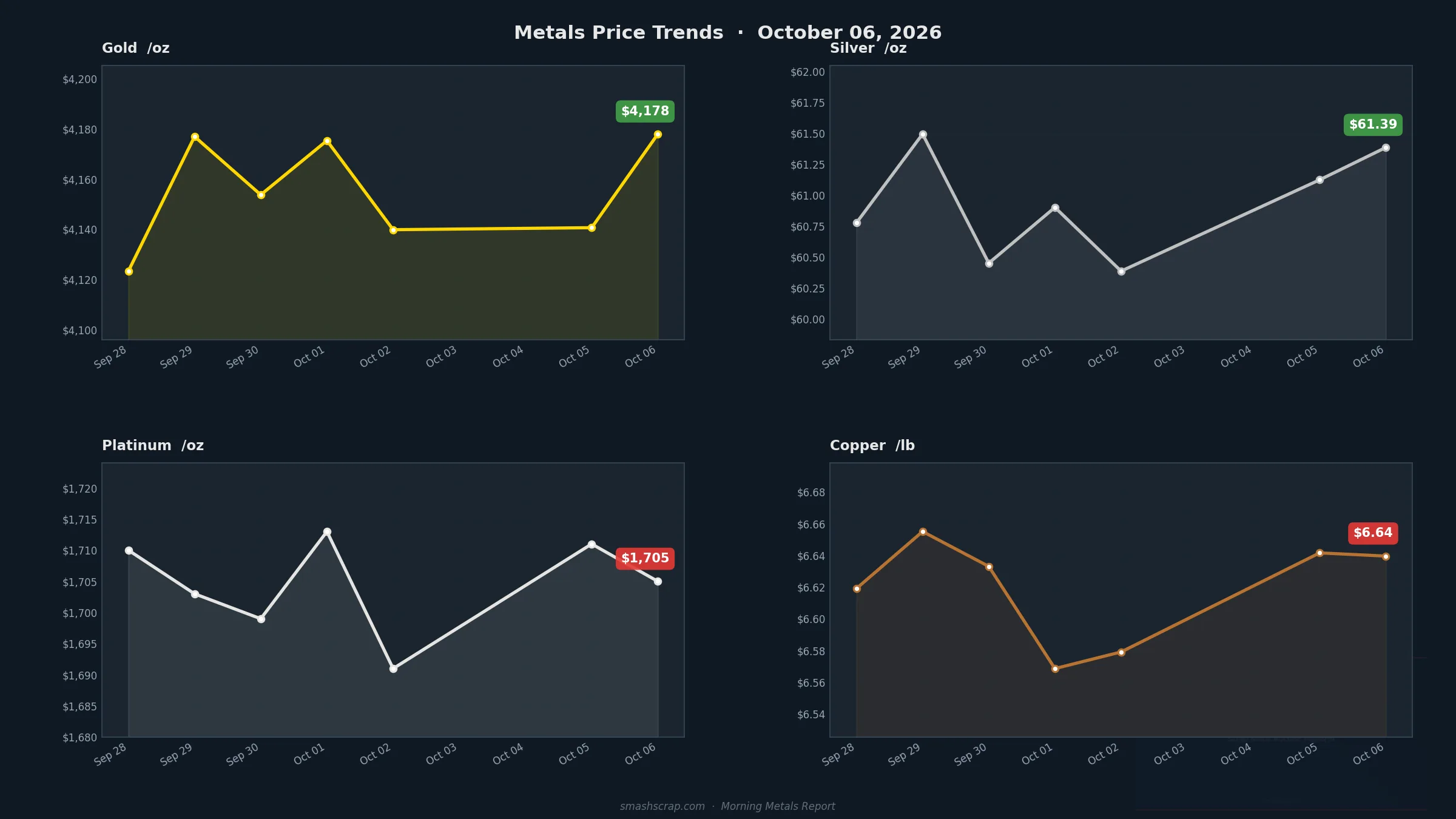
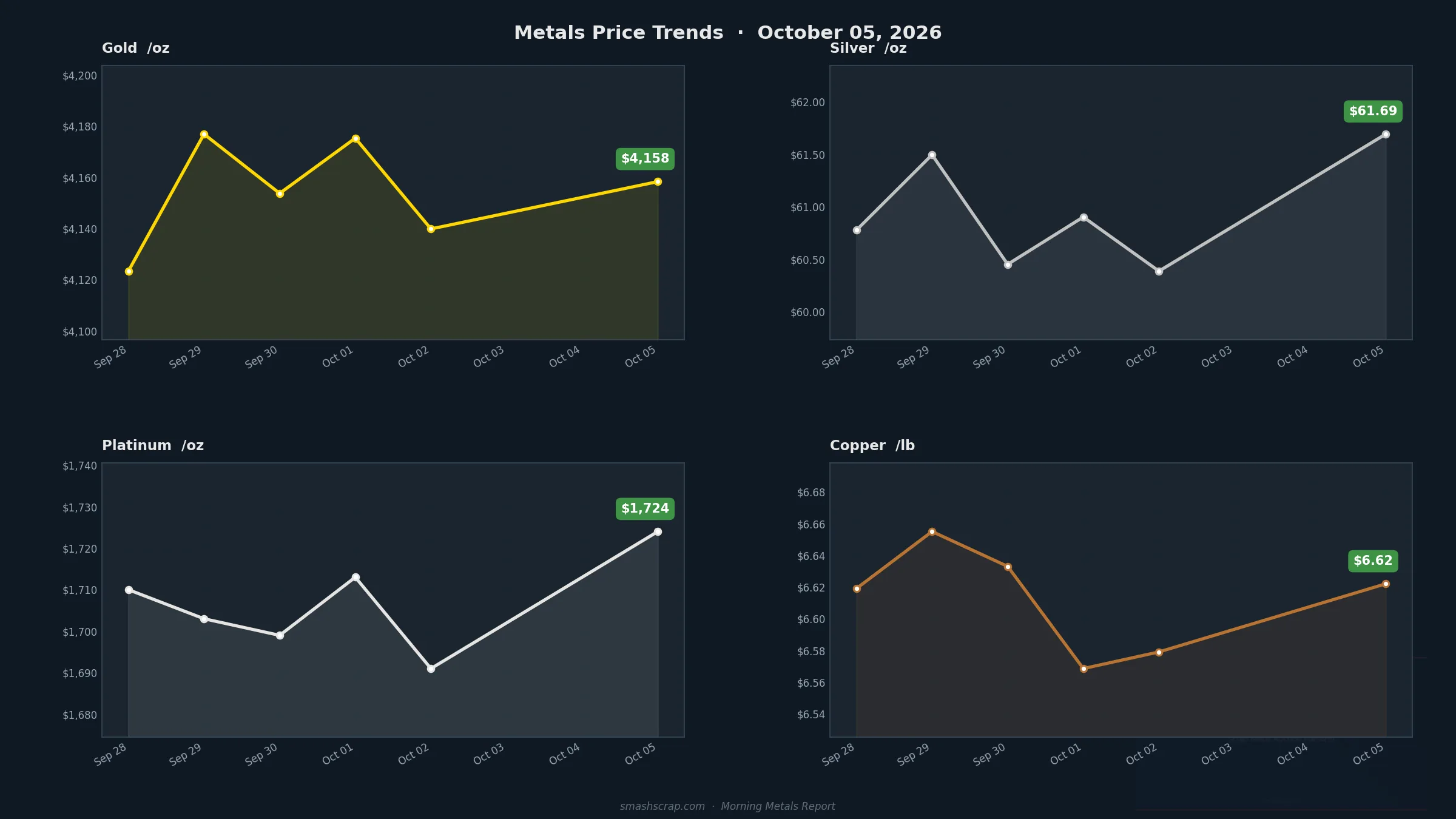
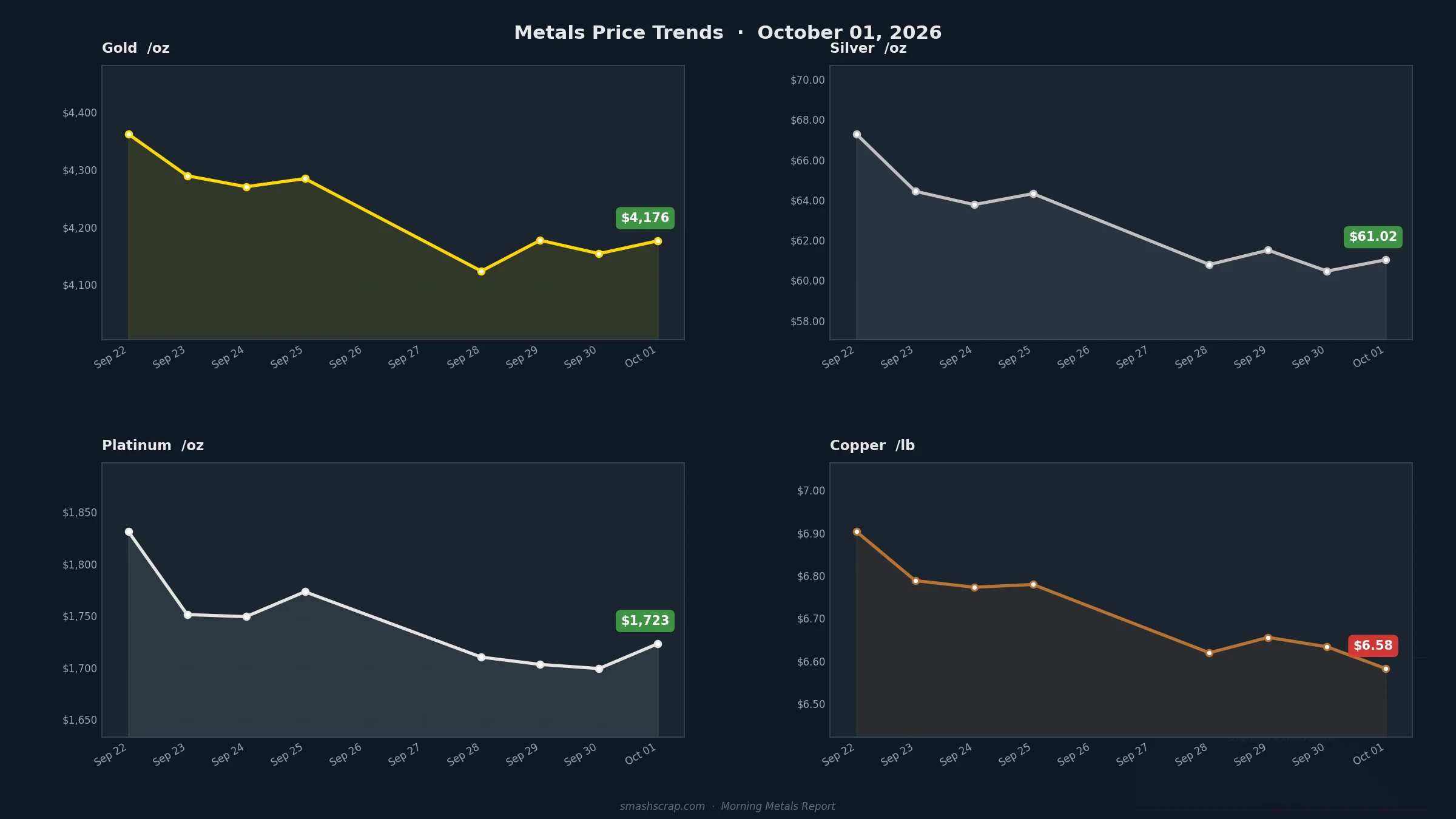
Platinum, palladium, and rhodium prices fluctuate significantly — and because cats carry real money, they attract bad actors. Your documentation process is your protection. Photo every unit. Track serial numbers where applicable. Link converters to source vehicles in your records. When it comes time to sell, explore SMASH Recycling's auction platform to list cats with full documentation so buyers know exactly what they're bidding on.
Well-documented lots tend to attract more confident bids. That's not marketing — that's how buyers think. Uncertainty about sourcing or condition pushes bids down. Clarity and documentation push them up. Disclaimer: catalytic converter prices — including platinum, palladium, and rhodium values — fluctuate daily. Always check current market rates before pricing or listing any material.
Building a Compliant Operation That Buyers Actually Want to Work With
Compliance and marketability aren't opposites. The yards that run clean operations, document everything, and connect to verified buyer networks consistently outperform the ones running on relationships and rough estimates. That's true in Thunder Bay, Hamilton, Saskatoon, and everywhere else serious scrap moves in Canada.
Here's what a compliant, market-ready operation looks like in practice:
- Documented depollution — every vehicle, every fluid, logged and timestamped
- Accurate inventory — weight, grade, condition, and photo for every lot
- VIN and serial tracking — especially for high-value non-ferrous and cats
- Vetted buyer relationships — not one contact, but a network that competes
- Auto-invoicing and BOL generation — so transactions are clean and defensible
- Industry affiliation — OARA and ARC membership as credibility anchors
If your yard is running all six of these, you're in a strong position. If you're missing two or three, you've got identifiable gaps — and identifiable upside. Join Canada's B2B scrap marketplace on SMASH Recycling and start building the kind of documented, competitive selling process that holds up in 2026 — in front of buyers and regulators alike.
The market rewards yards that run tight. Buyers pay more for material they trust. Regulators leave you alone when your records are clean. That's not a coincidence — it's a business model.
---Frequently Asked Questions
Q: What environmental regulations apply specifically to automotive recyclers in Thunder Bay?
Thunder Bay yards operate under Ontario's Environmental Protection Act and the rules set by the Ministry of the Environment, Conservation and Parks (MECP), as well as federal CEPA requirements. This includes fluid removal, refrigerant recovery, battery handling, and mercury switch extraction for every end-of-life vehicle processed. Local municipal bylaws may add additional requirements for stormwater management and yard drainage.
Q: Do I need to document catalytic converter purchases in Ontario?
Yes. Ontario regulations require automotive recyclers to maintain purchase records for catalytic converters, including seller identification and vehicle source documentation. VIN linkage is strongly recommended and increasingly expected during inspections. Platforms like SMASH support this with built-in VIN lookup and serial tracking tools.
Q: How does OARA certification help my scrap yard?
OARA's Certified Auto Recycler program establishes documented standards for depollution, dismantling, and parts certification. Certified yards signal professionalism to buyers, insurers, and regulators — and tend to face fewer issues during government audits. It also connects you to a broader network of compliant operators and best-practice resources across Ontario.
Q: How does a B2B auction platform like SMASH help with compliance?
SMASH's platform includes photo documentation, serial tracking, VIN lookup, and auto-invoicing — tools that create a defensible paper trail for every transaction. When regulators ask for records, you have them. When buyers want proof of sourcing, you have it. Compliance and competitive selling aren't separate — they reinforce each other on a structured platform.
Q: Are scrap metal prices in Thunder Bay the same as elsewhere in Canada?
Not necessarily. Regional factors like transportation costs, local demand, and proximity to processors affect what buyers will pay in northwestern Ontario. That's exactly why competitive auctions matter — they surface what buyers across Canada will actually pay for your material, rather than locking you into a single local quote. Always check current market rates, as prices for copper, catalytic converter metals, and other non-ferrous materials fluctuate daily.
---Ready to run a tighter, more profitable yard? Join Canada's B2B scrap marketplace on SMASH Recycling — no subscription fees, vetted buyers, and a platform built for how compliant Canadian recyclers actually work.
Stay sharp on scrap metal market shifts, regulatory updates, and industry news — follow SMASH on LinkedIn for insights that matter to Canadian recyclers.