B2B Scrap Metal: Payment Security in Medicine Hat
Why Payment Terms and Escrow Matter in B2B Scrap Metal Transactions
You've loaded the truck, sent the photos, agreed on a price — and then you wait. And wait. That moment of uncertainty after a scrap deal closes is where a lot of money quietly disappears.
Payment disputes, delayed wire transfers, and buyers who ghost after pickup are real problems in the scrap metal industry. For yards and sellers across Canada — including operators running a scrap metal depot in Medicine Hat or managing multi-load contracts across Alberta — unclear payment terms aren't just frustrating. They're a cash flow problem that compounds fast.
This article breaks down how payment terms actually work in B2B scrap transactions, where escrow fits in, and why a transparent auction platform changes the risk profile entirely. If you're buying or selling scrap metal in Canada today, this is the part of the deal most people don't talk about — until something goes wrong.
The Old Way: Verbal Agreements and Hope
In traditional scrap transactions, payment terms are often informal. A buyer agrees to net-30. Or net-15. Or "we'll send the EFT Friday." There's no documentation beyond a handshake and maybe an email thread. The seller ships the load — copper, catalytic converters, shredded steel, non-ferrous cores — and then chases the invoice.
This works fine when you've dealt with the same buyer for a decade. It falls apart the moment you expand your buyer pool, move higher-value material, or work with a new counterparty. And the higher the value of the load — say, a full pallet of cats or a clean copper run — the bigger the exposure when payment doesn't show up on time.
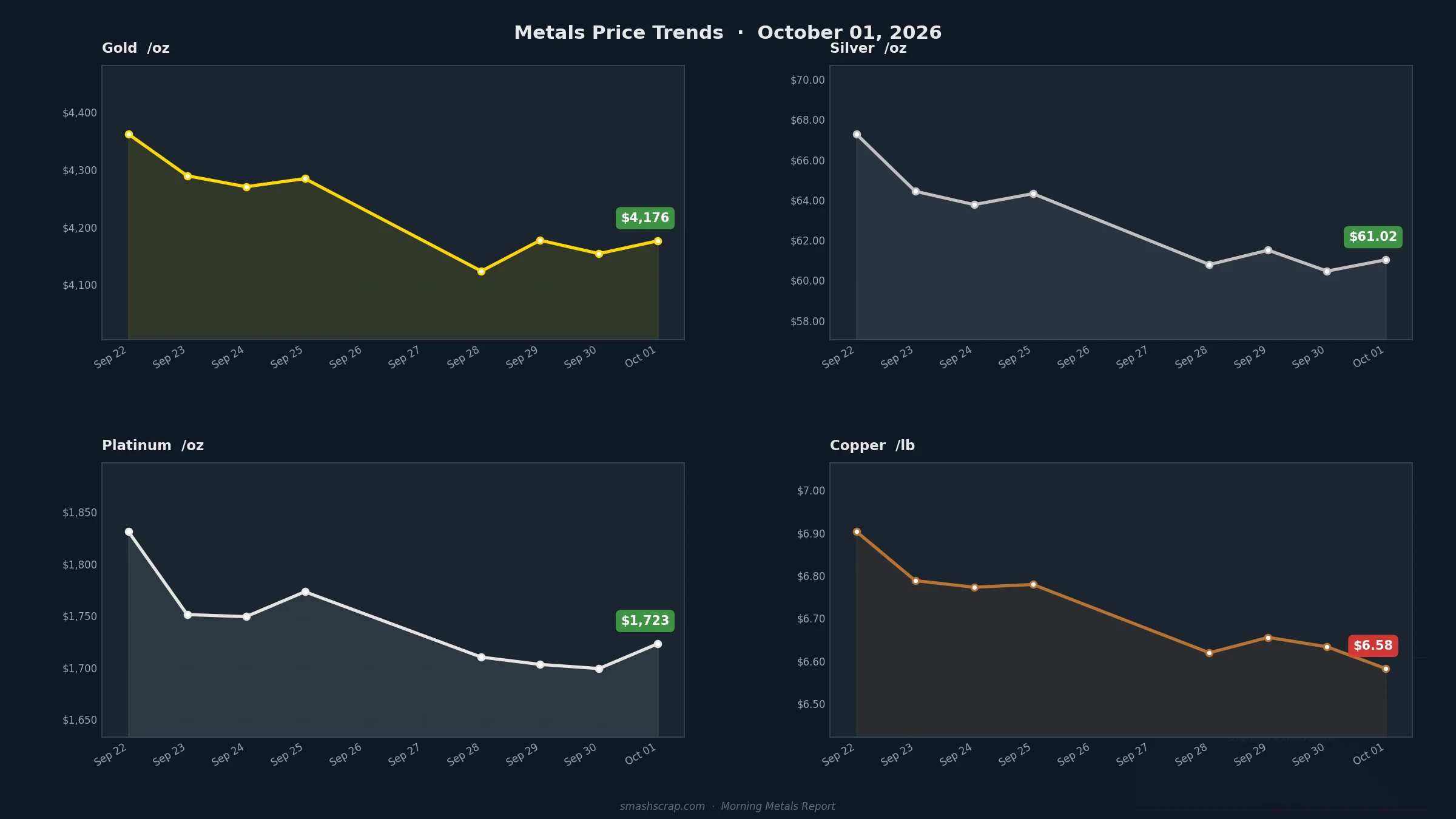
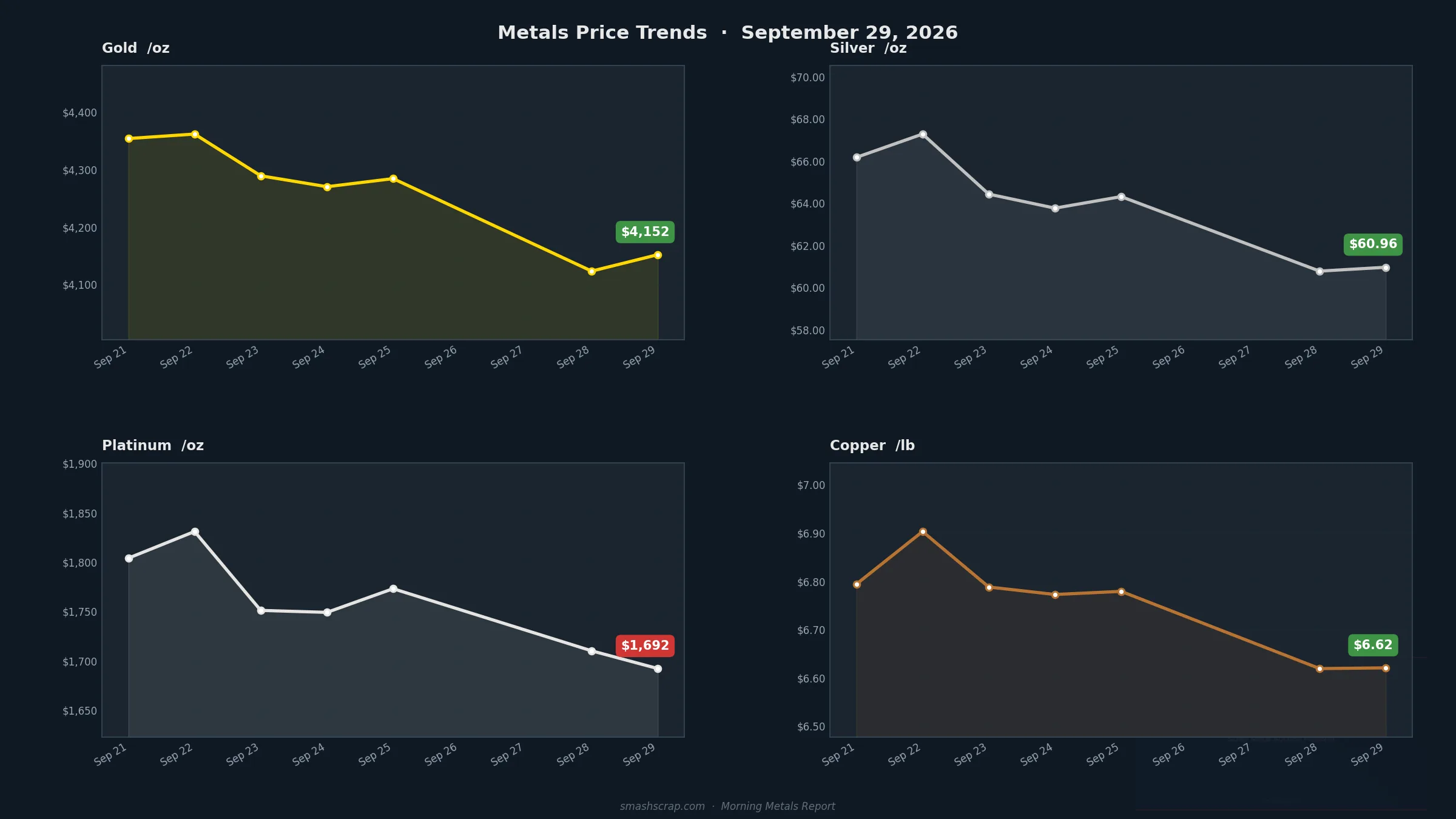
Consider the reality of Canadian scrap metal prices in mid-2026: copper scrap, platinum group metals from catalytic converters, and high-grade aluminum are all moving at prices that make individual loads worth serious money. A load of mixed cats from a busy recycling yard can carry significant value. Getting paid on that load — promptly and in full — isn't a courtesy. It's the entire point.
What B2B Payment Terms Should Actually Include
If you're selling scrap through any channel — direct, brokered, or through a B2B scrap metal marketplace — your payment terms should be documented and explicit before the load moves. Here's what matters:
- Payment window: Net-7, net-15, or net-30 from invoice date or delivery date? These are different. Clarify which.
- Payment method: EFT, wire, cheque, or platform transfer? Each has different clearance timelines and reversal risk.
- Trigger event: Does the clock start when the load arrives, when it's weighed and graded, or when the invoice is issued?
- Dispute resolution: What happens if the buyer disputes weight, grade, or condition after delivery? Who holds the funds during arbitration?
- GST/HST handling: In Canada, GST and HST need to be clearly addressed on every commercial invoice. Provincial treatment varies — Alberta has no PST, which simplifies things for Medicine Hat operators, but buyers and sellers across provinces need to get this right.
- Documentation requirements: Does the buyer need a BOL, packing list, photos, or serial tracking before releasing payment?
None of this is complicated. But most informal B2B scrap deals skip half of it. The result is ambiguity — and ambiguity in scrap transactions always costs the seller time, money, or both.
Where Escrow Fits Into Scrap Metal Transactions
Escrow in scrap metal isn't common yet, but it's gaining ground — especially for high-value loads like catalytic converters, refined non-ferrous, and specialty metals where platinum price, palladium price, and rhodium price volatility can swing the value of a single shipment by hundreds or thousands of dollars between agreement and delivery.
The concept is straightforward: a neutral third party holds funds until both buyer and seller confirm the terms of the transaction have been met. The buyer commits the money before the load ships. The seller ships with confidence. The funds release on delivery and verification.
For a scrap metal depot in Medicine Hat shipping cats or copper to a buyer in Ontario or B.C., escrow reduces counterparty risk dramatically. You're not shipping based on a promise. The money is already in the system — it just hasn't transferred to you yet.
The challenge has always been infrastructure. Traditional escrow services weren't built for scrap metal. They're slow, expensive, and don't understand the nuances of grading, moisture content disputes, or what happens when a load of auto parts recyclers' material gets downgraded at the receiving yard. That's where purpose-built platforms change the game.
How a Scrap Metal Auction Platform Reduces Payment Risk
When you list inventory through a platform like SMASH Recycling's auction platform, the payment structure changes fundamentally. You're not negotiating terms with a single unknown buyer after the fact — you're selling to a pool of vetted, verified buyers who have already agreed to the platform's payment conditions before they bid.
That's a structural shift. The vetting happens upfront. The payment expectations are set before the auction closes. Auto-invoicing kicks in when the lot settles, so there's no delay between a winning bid and the paperwork that triggers payment. And because every load goes through photo documentation, serial tracking, and a formal inventory process, there's less room for post-delivery disputes about what was actually in the shipment.
For sellers doing volume — multiple loads per week, a mix of ferrous and non-ferrous, cats logged by VIN — this matters at scale. SMASH Scrap — where verified buyers bid on your metal — isn't just about price discovery. It's about knowing the buyer on the other side of the deal has skin in the game before your truck leaves the yard.
Organizations like the Automotive Recyclers of Canada (ARC) and the Ontario Automotive Recyclers Association (OARA) have long emphasized documentation and traceability as best practices in the industry. A platform that builds those requirements into the transaction process isn't adding friction — it's protecting both parties.
Canadian Scrap Metal Prices and Why Payment Speed Matters More Than Ever
In a market where Canadian scrap metal prices can shift week to week — sometimes faster — the gap between deal date and payment date carries real financial weight. If you agreed on a price for copper scrap today and don't get paid for 30 days, you're carrying the risk of price movement for a month. On a high-value non-ferrous load, that exposure is meaningful.
For Alberta operators — including yards and dealers around Medicine Hat — faster payment cycles aren't just a preference. They're a competitive advantage. A yard that collects payment in 7 days can reinvest in new inventory faster than one sitting on a net-30 receivable. That compounding effect adds up over a year.
This is especially true in the auto parts recyclers Canada space, where catalytic converter values are tied directly to live platinum group metal spot prices. The palladium price and rhodium price move. A slow payment cycle means you locked in the price at one point and got paid at another — and those two moments can look very different.
If you want to stay current on market movements, read the latest from SMASH Recycling — the blog covers price trends, platform updates, and practical guidance for Canadian scrap sellers navigating this market.
Practical Steps to Protect Yourself on Every Transaction
Whether you're running a busy scrap metal depot in Medicine Hat or sourcing material from across Alberta, these steps reduce payment risk on every deal:
- Document everything before the load ships. Photos, weights, grades, BOL, packing list. If there's a dispute, you need evidence that predates delivery.
- Use written payment terms on every deal. Even a short email confirmation with the agreed amount, payment method, and due date is better than nothing.
- Vet new buyers before shipping high-value loads. A buyer you've never worked with shouldn't receive a $15,000 load of cats on a handshake.
- Understand your GST/HST obligations. In Alberta, no PST applies, but GST still applies to commercial transactions. Cross-provincial deals add complexity — know your obligations before you invoice.
- Consider platform-based transactions for unfamiliar counterparties. When the platform holds the payment framework, you're not relying on the buyer's goodwill or cash flow timing.
- Track serial numbers and VINs on cats and cores. Documentation that matches what you shipped to what the buyer receives eliminates the most common grading disputes.
None of this replaces a good buyer relationship. But it does mean that a bad transaction doesn't have to become a bad debt. The goal is a deal where both sides know exactly what they agreed to, and the payment follows the terms — every time.
If you're ready to work in a marketplace built around that standard, join Canada's B2B scrap marketplace on SMASH Recycling and start transacting with buyers who've already committed to the process.
Frequently Asked Questions
Q: What are standard payment terms for a scrap metal depot in Medicine Hat selling to out-of-province buyers?
Most B2B scrap transactions in Canada use net-7 to net-30 terms, depending on the relationship and load value. For new counterparties or high-value shipments — especially cats, copper, or non-ferrous — shorter payment windows and written confirmation of terms are strongly recommended. Alberta sellers dealing cross-provincially should also confirm GST treatment on the invoice before shipping.
Q: Is escrow commonly used in Canadian scrap metal transactions?
Not yet, but it's becoming more relevant as load values increase and sellers work with more buyers outside their local market. Purpose-built auction platforms reduce the need for traditional escrow by vetting buyers upfront and building payment accountability into the transaction framework before a bid is accepted.
Q: How does metal recycling near me in Medicine Hat connect to a national buyer pool?
Platforms like SMASH give local yards access to verified buyers across Canada without requiring a personal network or cold calls. You list your inventory, buyers compete, and the transaction settles through a documented process — regardless of whether the buyer is in Alberta or across the country.
Q: Why do Canadian scrap metal prices affect how quickly I should collect payment?
Because the value you agreed to is a snapshot of the market at one moment. The longer the payment cycle, the more exposure you carry to price movement — especially on platinum group metals tied to live spot prices. Shorter payment windows protect your margin and improve cash flow for reinvestment.
Q: What documentation do auto parts recyclers in Canada need for a clean B2B transaction?
At minimum: a bill of lading, a packing list with weights and grades, photos of the material, and a formal invoice with clear payment terms including GST/HST as applicable. For catalytic converters, serial tracking or VIN documentation significantly reduces post-delivery disputes and is increasingly expected by serious buyers on any reputable scrap auction platform.
Payment terms aren't glamorous. But they're the difference between a deal that works and a deal that costs you. If you're serious about getting paid fairly, on time, every time — it's worth transacting on a platform built for exactly that. Register at smashrecycling.ca and see how a structured marketplace changes the way you do business.
Stay ahead of the market — follow SMASH Recycling on LinkedIn for Canadian scrap metal price updates, industry news, and platform insights.
Disclaimer: Scrap metal prices fluctuate based on global commodity markets, grade, volume, and buyer demand. All pricing discussed in this article is general in nature. Check current rates directly with buyers or through your marketplace platform before committing to a transaction.