Auction Bidding vs Spot Pricing: Winnipeg Cat Recycling
Most yards are leaving real money on the table — not because of bad luck, but because of how they sell. If your current process for catalytic converter recycling in Canada involves calling one buyer, getting a number, and taking it, you're not selling. You're settling. The lot-based auction model flips that dynamic entirely, and if you haven't looked at what competitive bidding does for your returns, this week's roundup is worth your time.
Platinum, palladium, and rhodium prices have been moving in 2026. When PGM values shift, the gap between a single-buyer quote and what the actual market will pay widens. That gap is money leaving your yard. Let's break down why the auction format — specifically lot-based auctions — gives automotive recyclers and scrap yards a structural advantage over spot-price selling, whether you're running a large operation in Ontario or managing a smaller yard in Winnipeg.
---What Is Lot-Based Selling and Why Does It Change the Game?
Spot-price selling is simple: one buyer, one call, one number. You accept or walk away, usually without a strong sense of what the actual market would pay. Lot-based auctions work differently. You package your catalytic converters — or other non-ferrous material — into a documented lot with photos, counts, assay data where available, and condition notes. That lot goes to multiple vetted buyers simultaneously. They compete. You see the results.
The difference isn't just psychological. It's structural. When a single buyer sets your price, they're pricing to their margin, not to the market. When multiple qualified buyers bid on the same documented lot, price discovery happens in real time. The market reveals itself. That's a fundamentally different outcome for the seller — and it's why join Canada's B2B scrap marketplace on SMASH Recycling is the right move for any yard serious about maximizing returns on cats and other high-value material.
Lot-based selling also forces better documentation habits. When you're preparing a lot for auction, you photograph the material, count the units, note any damage or decan, and track serial numbers or VINs where applicable. That documentation doesn't just help buyers bid with confidence — it protects you as a seller. It creates a paper trail that holds up in disputes and builds your reputation over time.
---The Case for Competition: Catalytic Converter Prices Today Aren't Fixed
Here's the reality of catalytic converter recycling in Canada right now: PGM prices are not static. Platinum, palladium, and rhodium values fluctuate based on global mine output, automotive manufacturing demand, and currency movement. What one buyer quotes you on a Tuesday may be materially different from what the market actually supports on that same day. You won't know the difference unless there's competition in the room.
Rhodium in particular has seen significant volatility over the past several years. When rhodium spikes, certain cat grades become dramatically more valuable — and that value gets captured by whoever is bidding, not necessarily by the yard that collected the material. The lot-based auction model at least gives you a fighting chance to capture more of that upside because buyers are forced to outbid each other, not just outprice your alternative (which is often "accept or don't").
This is especially relevant for automotive recyclers in Winnipeg and across Manitoba, where geographic distance from major smelters or processors can mean yards are working with fewer established buyer relationships. Fewer relationships means less natural competition. The auction format compensates for that by bringing vetted national and North American buyers to your material digitally — no geographic disadvantage.
- Platinum: Prices move with diesel vehicle demand and mine supply from South Africa and Russia
- Palladium: Historically linked to gasoline vehicle catalytic demand — EVs are reshaping this market
- Rhodium: Extremely volatile, low liquidity — the spread between a single quote and true market can be significant
- Copper scrap prices: Also relevant for non-cat non-ferrous lots — competition matters here too
Disclaimer: Metal prices fluctuate daily. Always check current PGM and base metal rates before pricing or selling your material. The values above are context, not quotes.
---How SMASH Builds the Lot for You — and Why Documentation Wins Bids
The biggest friction point for yards new to selling scrap metal online isn't trust or technology — it's the work of building a proper lot. That's where the SMASH platform earns its keep. The inventory tool walks you through documenting each load: photo uploads, unit counts, condition grading, VIN lookup for high-value OEM cats, serial tracking for cores and non-ferrous material. You're not guessing what buyers need. You're building exactly what drives competitive bids.
Buyers bid with more confidence when the lot is well-documented. That confidence translates into tighter, more aggressive bids. A blurry photo and a rough count does not inspire the same bidding behavior as a clear, itemized lot with assay data attached. explore SMASH Recycling's auction platform and you'll see how the documentation workflow is built directly into the process — not bolted on as an afterthought.
This matters even more for catalytic converter recycling in Canada, where the value-per-unit spread between grades is enormous. An OEM unit from a newer V8 truck is not the same as an aftermarket replacement cat. If your lot doesn't differentiate those units clearly, buyers have to price in uncertainty — and they price it conservatively. Better documentation narrows that uncertainty premium and lets buyers bid aggressively on what they're actually getting.
SMASH also handles auto-invoicing and the GST/HST/PST/QST documentation that makes B2B transactions in Canada cleaner and more auditable. That's not a small thing for a yard doing significant volume — it's compliance infrastructure that used to require manual work on every deal.
---Spot Price vs. Auction: A Structural Comparison for Canadian Scrap Yards
Let's put the two models side by side so the difference is concrete. This isn't about which method feels better. It's about which method is structurally designed to give the seller a better outcome.
Factor Spot-Price Selling Lot-Based Auction (SMASH) Number of buyers 1 (usually) Multiple vetted buyers Price discovery Buyer's margin determines offer Competition reveals market Documentation Informal or minimal Photos, counts, serial tracking, VIN lookup Subscription fees N/A No subscription fees Geographic reach Local network only National and cross-border buyers Invoicing / compliance Manual Auto-invoicing, GST/HST handlingThe spot-price model isn't broken because buyers are dishonest. It's broken because the structure doesn't create competition. Without competition, the price defaults to whatever the buyer needs to make margin — not what the seller's material is actually worth on the open market. If you're an auto parts recycler in Canada handling meaningful volumes of cats, that structural difference compounds across every transaction.
---Industry Standards, Compliance, and What OARA and ARC Say About Best Practices
The Ontario Automotive Recyclers Association (OARA) and the Automotive Recyclers of Canada (ARC) have both pushed for greater documentation standards and transparency in the automotive recycling sector. Their guidance consistently points toward documented transactions, proper chain-of-custody for high-value parts, and buyer-seller accountability. The lot-based auction model aligns directly with those standards — not as a workaround, but as a natural fit.
When you document a lot on SMASH — photos, unit counts, packing lists, BOLs, and serial data — you're building the kind of record that OARA and ARC members recognize as best practice. You're also protecting yourself. If a buyer disputes a grade or condition after delivery, your pre-auction documentation is your defense. That matters when you're dealing with loads where individual units can carry meaningful value per piece.
For Winnipeg scrap metal services specifically, connecting to a national platform matters because the local buyer pool for specialty material like cats is smaller than in major metro markets. Platforms that bring national buyer pools to Manitoba yards level that playing field without requiring the yard to build those relationships one cold call at a time. find the best price for your scrap on SMASH and see what a documented, competitive process looks like in practice.
---Weekly Market Context: What's Moving in Canadian Scrap Metal Prices This Week
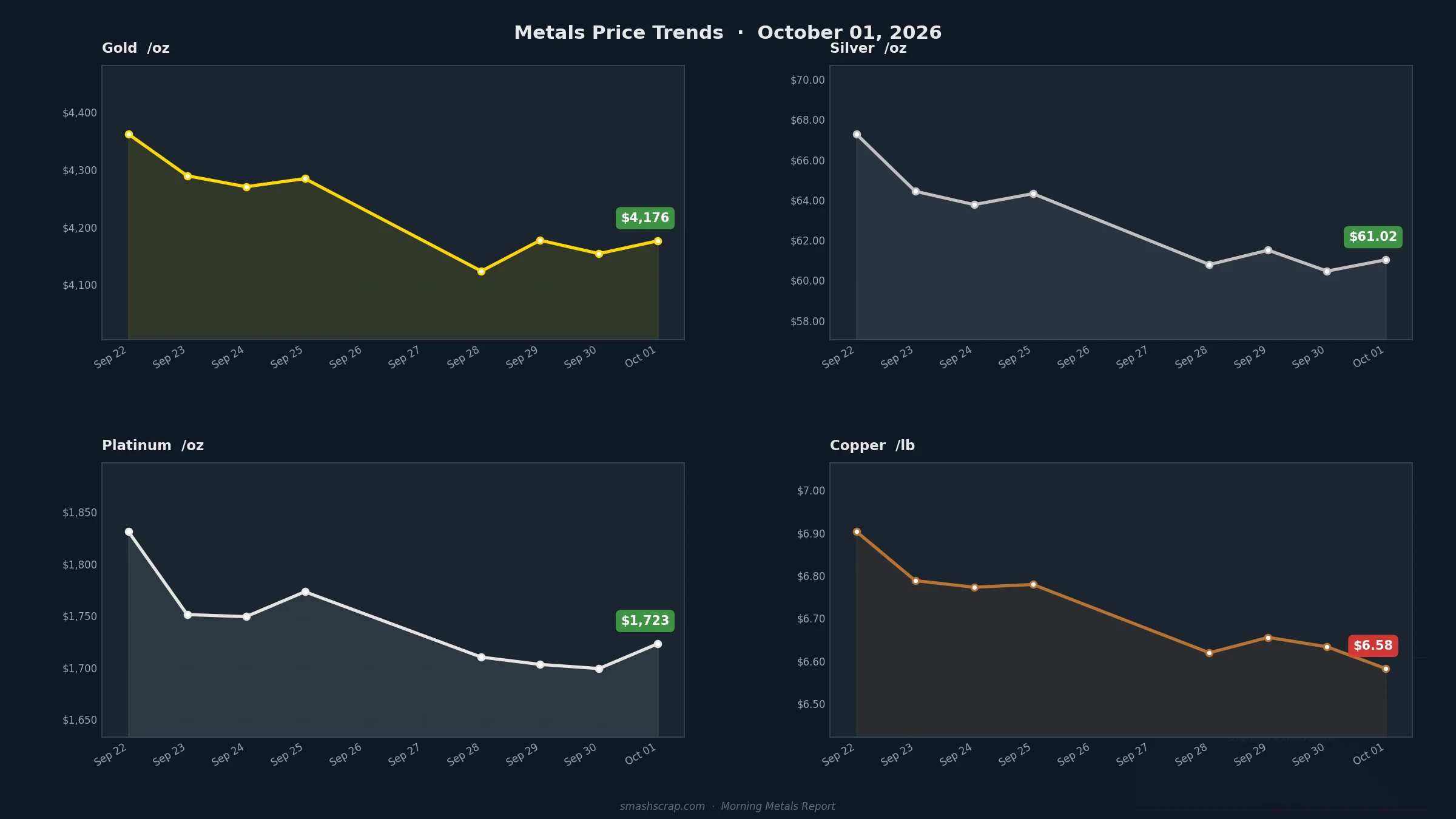
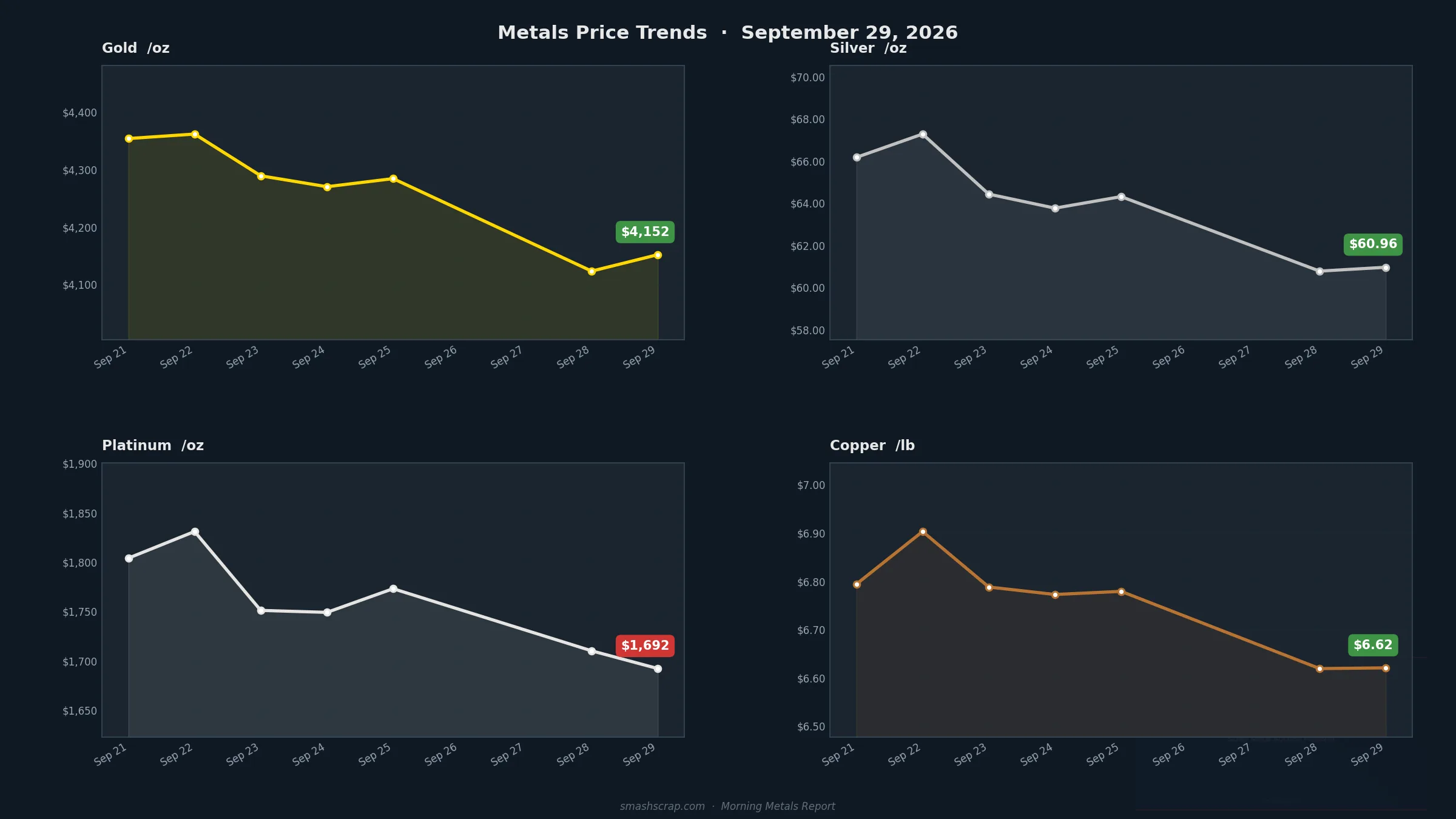
As of early July 2026, PGM markets remain a key variable for any Canadian yard holding catalytic converter inventory. Global EV adoption continues to reshape palladium demand projections, while platinum is seeing renewed interest tied to hydrogen fuel cell applications. Rhodium remains the most volatile of the three — yards holding significant rhodium-bearing cats are carrying real price risk on every day they delay selling.
On the base metal side, copper scrap prices in Manitoba and across Canada have been responding to infrastructure spending signals and manufacturing activity. Non-ferrous lots with clean copper content are moving well when properly documented and priced competitively. Steel and ferrous markets remain more stable but are still sensitive to import/export dynamics and USD/CAD exchange movement.
The takeaway for this week: if your yard is sitting on cats or non-ferrous material and waiting for "a better price," the question is better than whose offer? A single buyer's quote on a given day is not the market. It's one data point. The auction format gives you the actual market. read the latest from SMASH Recycling for ongoing market context and platform updates as conditions evolve through Q3 2026.
Note: Metal recycling prices fluctuate daily based on global commodity markets, exchange rates, and local supply conditions. Always verify current rates before making selling decisions.
---Frequently Asked Questions
Q: How does catalytic converter recycling in Canada work through an auction platform?
You document your cats — photos, unit count, grade notes, VIN data for OEM units — and list them as a lot on the platform. Vetted buyers review the lot and submit competitive bids. You see the bids, accept the best offer, and the platform handles invoicing and GST/HST documentation. It's the same material, sold to a better market.
Q: Are there subscription fees to sell catalytic converters on SMASH?
No. SMASH does not charge subscription fees to sellers. The model is aligned so that SMASH only wins when the seller wins. Check smashrecycling.ca for current terms and how the fee structure works on completed transactions.
Q: Why should automotive recyclers in Winnipeg use an online auction instead of local buyers?
Winnipeg yards often work with a smaller local buyer pool for specialty material like cats. An online auction platform brings national and cross-border vetted buyers to your material digitally — giving you real competition without requiring you to build those relationships from scratch. More buyers means better price discovery.
Q: What documentation do I need to sell a catalytic converter lot on SMASH?
At minimum: clear photos of the material, a unit count, condition notes, and any available grade or assay data. VIN lookup is available for OEM cats, and serial tracking is supported for cores. Better documentation consistently drives more confident — and more aggressive — bidding from buyers.
Q: How do platinum, palladium, and rhodium prices affect what I get for my cats?
PGM spot prices directly determine the underlying value of catalytic converter material. When rhodium or palladium spikes, the spread between a single buyer's conservative quote and what a competitive auction reveals can be significant. Check current platinum, palladium, and rhodium prices daily — and never sell on a single quote when those metals are moving.
---If you're running a scrap yard or automotive recycling operation in Winnipeg, Manitoba, or anywhere across Canada, the lot-based auction model isn't a luxury — it's the logical upgrade from a process that was never designed to favor the seller. Competition reveals the market. Documentation builds buyer confidence. Transparency makes every transaction defensible. When you're ready to stop settling and start selling, join Canada's B2B scrap marketplace on SMASH Recycling and put your material in front of buyers who compete for it.
Stay current on scrap metal market conditions, platform updates, and industry news — follow SMASH on LinkedIn at linkedin.com/company/scrap-metal-auction-sales-hub.