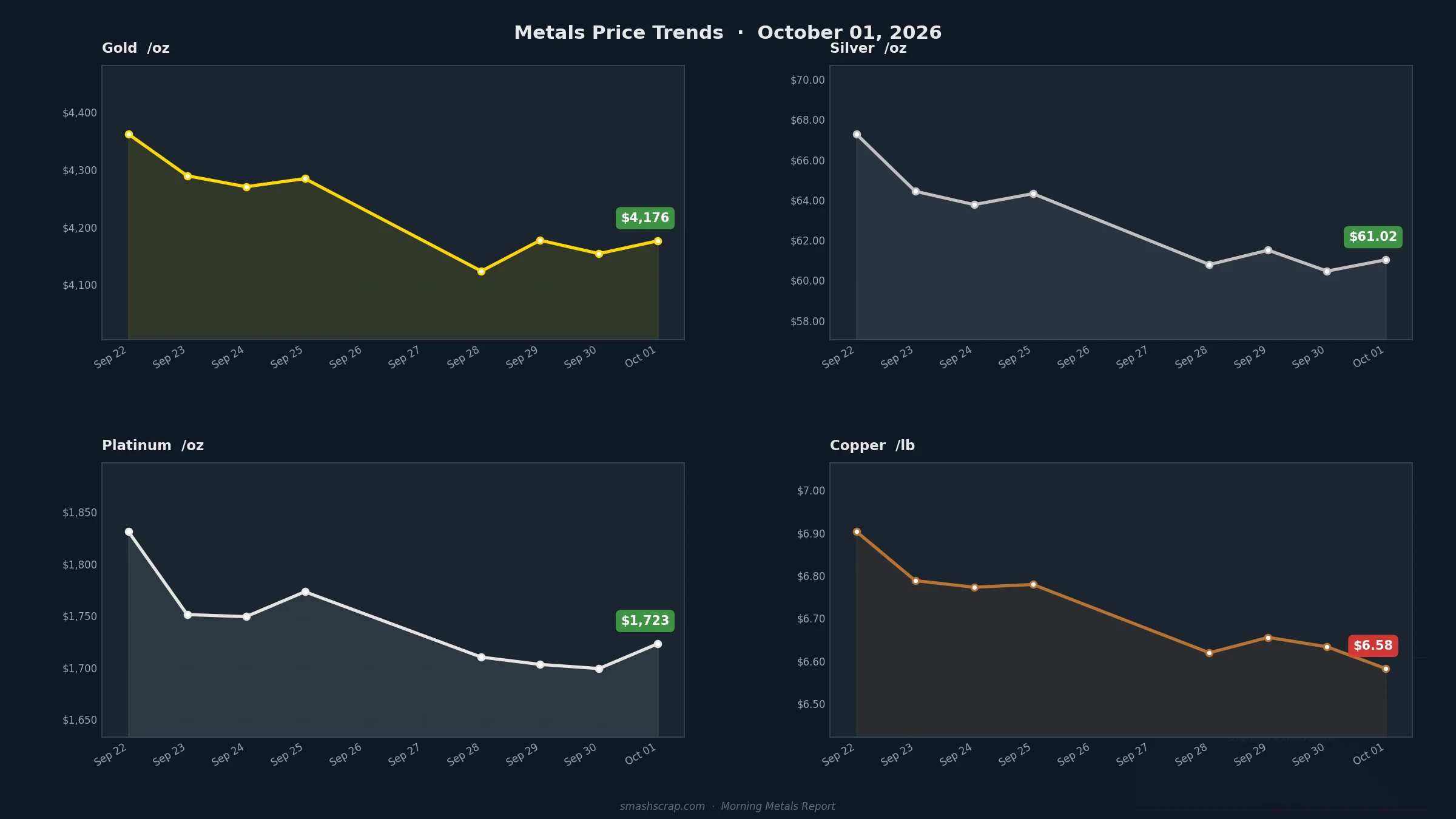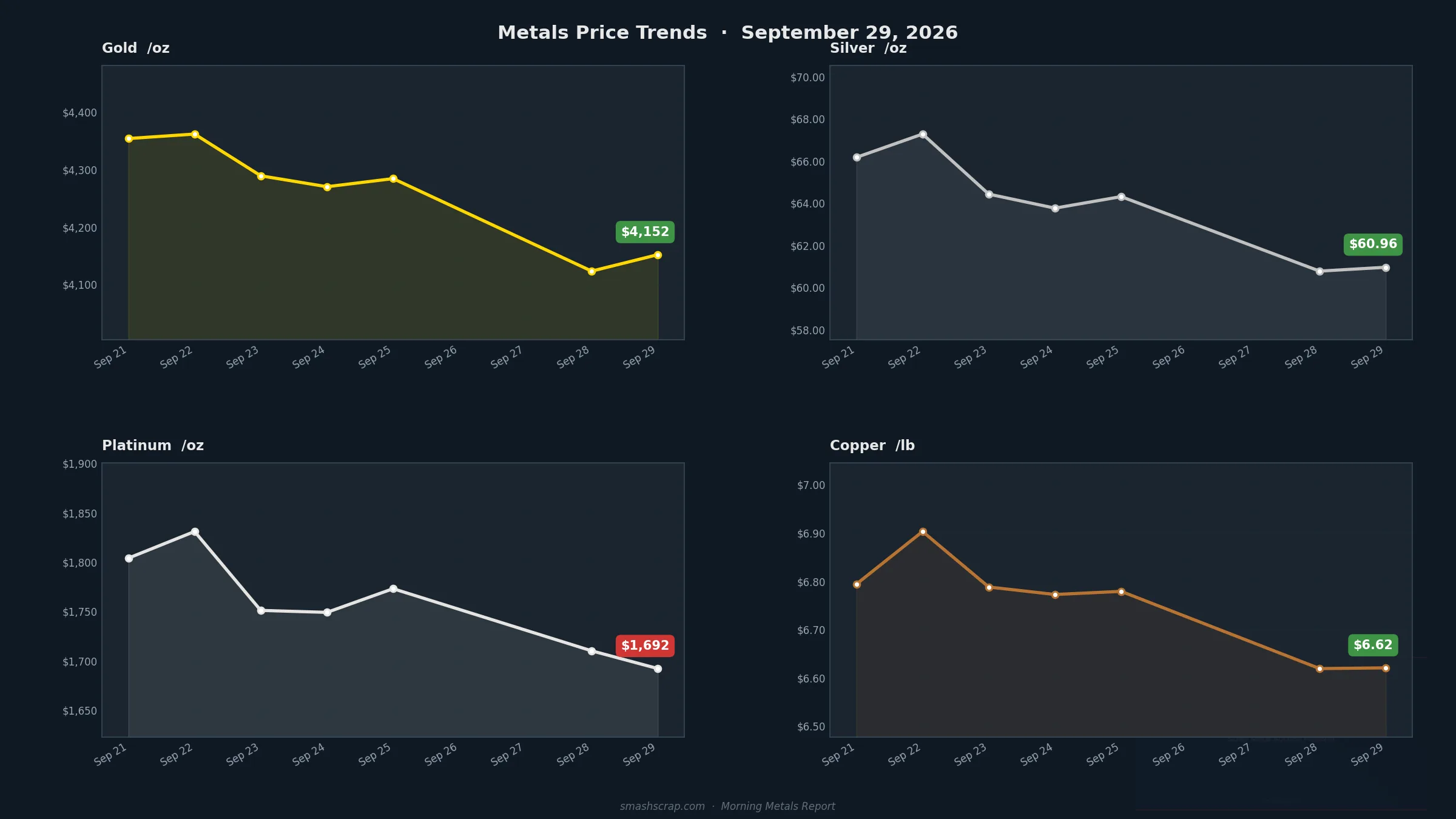
Brandon E-Waste Recycling: 2026 Copper Market Shifts
E-waste recycling in Brandon is sitting at the intersection of two powerful forces: a global copper supply crunch and a domestic scrap market that's changing faster than most yard operators realize. If you're moving copper-bearing material — whether that's wire, motors, circuit boards, or catalytic converters — what's happening upstream in mining and manufacturing is landing directly on your scale ticket.
Copper doesn't care about borders. When Chilean mine output tightens or EV battery production ramps up demand in Europe, the price signal reaches Manitoba within days. The yards that understand this dynamic sell smarter. The ones who don't are still calling one buyer and hoping for the best.
This article breaks down what's driving copper supply shifts in 2026, how those shifts are moving metal recycling prices Canada-wide, and what Brandon-area sellers can do right now to stop leaving money on the table.
---What's Driving the 2026 Copper Supply Crunch
Global copper supply has been under pressure for several years, but 2026 is proving to be a particularly tight cycle. Primary mine production — the kind that feeds raw copper into smelters and refineries — has struggled to keep pace with accelerating demand from EV manufacturing, grid infrastructure buildout, and industrial automation. The result is a tighter concentrate market and elevated pressure on secondary sources, including scrap.
Secondary copper — the kind that comes from recycled wire, motors, electronics, and industrial scrap — has taken on greater strategic importance for smelters and mills. When primary supply tightens, buyers lean harder on scrap feedstock. That's good news for recyclers who are positioned to supply clean, documented, consistently graded material. It's not great news for sellers who show up with an unsorted load and no documentation.
Key factors tightening copper supply in 2026:
- EV and battery manufacturing demand: Electric vehicles use significantly more copper than internal combustion vehicles. Global EV adoption continues to scale, pulling copper out of other end markets.
- Grid modernization spending: North American grid infrastructure upgrades are consuming copper wire and transformer material at an accelerating rate.
- Mine project delays: Several large copper mining projects have faced permitting, environmental, and labour challenges, pushing expected supply online later than forecast.
- Concentrate tightness: Smelter feed availability remains constrained, keeping pressure on secondary material as a substitute feedstock.
For Canadian recyclers, this creates a window. But only if you're selling into real competition — not just accepting the first number you hear.
---How Copper Swings Hit Metal Recycling Prices Across Canada
When copper moves, it doesn't move in isolation. Scrap metal recycling Canada-wide feels the ripple across multiple material categories. Copper-bearing scrap — insulated wire, #1 and #2 copper, electric motors, circuit boards, and copper-clad aluminum — all respond to the same underlying fundamentals. A rise in refined copper prices typically pulls scrap copper grades up with it, because mills and smelters need to source material from somewhere.
But here's what catches a lot of sellers off guard: the spread between what the commodity market is pricing and what a single buyer is offering you can be significant. One buyer has no incentive to pass the full market signal through to your price. A competitive auction does.
Beyond copper itself, watch these connected markets:
- Aluminum scrap prices: Aluminum and copper often move in similar demand environments — both are core to EV and electrification infrastructure. When copper tightens, aluminum demand frequently follows. Aluminum scrap prices in Canada have reflected this correlation through much of 2026.
- Catalytic converter prices: Cats contain platinum, palladium, and rhodium — separate from copper, but part of the same industrial demand story. Palladium price and rhodium price movements are driven by automotive production and emission control demand, and they remain volatile in 2026.
- E-waste and circuit boards: Printed circuit boards are among the richest sources of secondary copper, along with gold and other non-ferrous metals. As copper values rise, the economics of properly processing e-waste improve meaningfully.
Understanding how these markets connect helps you time loads, grade material better, and — critically — know when the number you're being offered doesn't reflect the actual market. Compare scrap metal bids from verified buyers before you commit to any single price.
---E-Waste Recycling in Brandon: What Yards and Sellers Need to Know
E-waste recycling Brandon is a growing category, and it's one that directly benefits from rising copper values. Consumer electronics, industrial control equipment, telecommunications hardware, and even older automotive electronics all contain recoverable non-ferrous material — copper, aluminum, and precious metals in the case of circuit boards and certain components.
Brandon and the surrounding Manitoba region generate a consistent stream of industrial and commercial e-waste. Agricultural equipment electronics, municipal fleet hardware, manufacturing facility upgrades — these all produce recoverable material that too often ends up sorted poorly or sold as a bulk mixed load at a fraction of its actual value.
The issue isn't supply. It's documentation and grading. A buyer bidding on a well-documented lot — photos, weights, component breakdown, serial tracking where applicable — will bid more confidently than one trying to guess what's in the load. That confidence translates directly into price.
Practical steps for maximizing e-waste recovery value:
- Sort before you sell. Separate circuit boards, copper wire, aluminum housings, and steel chassis. Mixed loads price to the lowest component.
- Document the lot. Photos, estimated weights by category, and a basic description of material origin give buyers the information they need to bid competitively.
- Know what you have before you call anyone. SMASH's inventory tool lets you build a documented lot before it goes to auction — so buyers are competing on the same clearly described material.
- Don't default to one buyer. E-waste buyers are not all the same. Some specialize in circuit boards. Others want copper wire and motors. Competition between specialized buyers tends to produce better price discovery.
If you're operating in Brandon and you're not already using a competitive format to sell e-waste and non-ferrous loads, you're pricing in the dark.
---Scrap Metal Auction Format: Why Competition Matters More Than Ever
The case for a scrap metal auction format has never been stronger than in a volatile, supply-constrained copper market. When prices are moving and buyers are actively competing for quality feedstock, the gap between a negotiated single-buyer price and a competitive auction result can be material. Not every load will see dramatic differences, but consistent price discovery over time compounds.
SMASH operates a B2B scrap metal marketplace built specifically for this dynamic. Vetted buyers bid against each other on documented lots. Sellers see real competition. There's no subscription fee — SMASH only wins when the seller wins. Auto-invoicing and documentation tools reduce the administrative friction that keeps smaller yards from selling efficiently.
For Canadian yards navigating 2026's copper volatility, platforms like SMASH deliver something that a phone call to one local buyer never can: a market. Not one buyer's opinion of the market. The market itself.
Industry organizations like the Automotive Recyclers of Canada (ARC) and the Ontario Automotive Recyclers Association (OARA) continue to emphasize documentation, buyer accountability, and transparent pricing as benchmarks for professional recycling operations. The auction model aligns directly with those standards — documented lots, verified buyers, transparent results.
Explore SMASH Recycling's auction platform to see how competitive bidding works for scrap copper, catalytic converters, and non-ferrous loads across Canada.
---What Canadian Scrap Sellers Should Be Watching Right Now
If you're selling scrap metal in Canada in 2026, here's what deserves your attention:
- Copper price direction: Watch LME copper closely. Secondary scrap prices track primary with a lag — knowing where primary is heading helps you decide whether to move material now or hold.
- Catalytic converter prices today: Platinum price, palladium price, and rhodium price are all inputs to cat converter values. These have remained volatile through 2026. Don't sell cats on a hunch — get competitive bids.
- Aluminum scrap prices: Canadian aluminum markets are active. Zorba, twitch, and extrusion grades are all moving. Understand the grade you have before you price it.
- Buyer mix: Are the buyers you're selling to actually competing for your material, or are you calling the same two numbers you've always called? More buyers means better price discovery. It's not more complicated than that.
- Documentation habits: In a tight market, buyers want confidence. A well-documented lot with photos, weights, and a clear material description gets more aggressive bids than a mystery load described over the phone.
For yards in Brandon and across Manitoba, the fundamentals are the same as anywhere in Canada — but the local buyer pool may be smaller, which makes access to a national vetted buyer network through a platform like SMASH even more valuable.
Stay current on market movements and industry trends — read the latest from SMASH Recycling for regular updates on scrap metal prices Canada-wide and auction insights.
---Getting Started: Sell Smarter in a Shifting Market
The copper supply story isn't going to resolve quickly. The structural demand drivers — EVs, grid buildout, industrial automation — are multi-year tailwinds. That means secondary copper will remain in demand, prices will stay active, and the yards that sell with competition and documentation will consistently outperform those that don't.
If you're in Brandon or anywhere across Manitoba, the path forward is straightforward. Sort your material. Document it properly. Put it in front of multiple vetted buyers. And stop accepting a single buyer's number as the market rate — because in 2026, it rarely is.
Ready to see what your loads are actually worth? Join Canada's B2B scrap marketplace on SMASH Recycling and put real competition to work on your next load. No subscription fees. No guessing. Just a market.
Disclaimer: Metal prices fluctuate constantly based on global commodity markets, grade, and buyer demand. Always verify current rates before making selling decisions. The information in this article reflects general market conditions as of August 2026 and should not be taken as financial or pricing advice.
---Frequently Asked Questions
Q: What types of e-waste can I recycle for scrap value in Brandon?
Most copper-bearing electronics have recoverable value — computers, servers, telecommunications equipment, industrial controls, and automotive electronics are common examples. Circuit boards, copper wire harnesses, and aluminum housings are the highest-value components. Sorting by material type before selling almost always improves your return.
Q: How do I know if I'm getting a fair price for my scrap copper in Manitoba?
The honest answer: you don't, if you're only talking to one buyer. Fair price discovery requires competition. A B2B auction platform like SMASH puts your documented load in front of multiple vetted buyers so you can see where the actual market is — not just one buyer's offer.
Q: How do copper supply shifts affect catalytic converter prices today?
Copper and catalytic converter prices are separate markets — cats are driven by platinum, palladium, and rhodium prices, not copper directly. However, they often move in similar demand environments tied to industrial production and automotive manufacturing. Tracking both markets separately gives you the clearest picture of your overall non-ferrous inventory value.
Q: Is a scrap metal auction format right for smaller loads from Brandon-area yards?
Yes — SMASH works for yards of all sizes. Well-documented smaller lots of non-ferrous material, cats, or e-waste can still attract competitive bids from buyers who specialize in exactly that material. The key is documentation and clear grading, not minimum load size.
Q: Where can I find current aluminum scrap prices and metal prices for recycling in Canada?
Metal prices move daily based on LME and COMEX benchmarks, plus regional supply and demand. Platforms like SMASH provide price transparency through actual bid activity on real lots. For general market tracking, following industry publications and commodity indices gives you a baseline — but competitive bids on your actual material remain the best price signal available.
---Follow SMASH Recycling on LinkedIn for regular scrap metal market insights, Canadian pricing updates, and industry news to keep your operation ahead of the market.