Aluminum Recycling Prince George: Online Auctions vs Single
The Old Way of Selling Scrap Is Costing You Money
One phone call. One buyer. One price — take it or leave it. That's still how a lot of scrap moves in Canada, and it's a problem. If you're running a yard or managing loads in Prince George, you've probably felt the frustration of not knowing whether the number you're getting is fair or just convenient for the buyer. The aluminum recycling Prince George market isn't small — the region generates real volume from construction, industrial operations, and automotive dismantling. That volume deserves competition.
The shift happening right now across the Canadian scrap metal market isn't about technology for its own sake. It's about access. Online platforms are pulling more buyers into a single place, and when more buyers compete for your loads, price discovery actually works. That's not a pitch — it's how markets are supposed to function.
Why Buyers Are Moving Online — And Why Sellers Should Follow
Buyers didn't migrate to online scrap platforms because it sounded good. They moved because it's efficient. A vetted buyer in Vancouver or Calgary can now bid on a load of bare bright copper or a pallet of aluminum extrusions sitting in a Prince George yard without making a single cold call. They see photos, weights, documented condition, and they bid. That's it.
From the seller's side, the shift is just as significant. You're not chasing a contact list anymore. You post your load — whether it's a container of shredded aluminum, a batch of catalytic converters, or a mixed non-ferrous collection — and the market comes to you. Platforms like SMASH Recycling's auction platform are built specifically for this. The old rolodex approach never gave you a real market. This does.
Here's what's driving buyers to consolidate on online B2B platforms right now:
- Speed. Bids close fast. Buyers don't want to spend two days calling yards across British Columbia chasing available loads.
- Documentation. Photos, weights, packing lists, and serial tracking reduce disputes. Buyers bid with more confidence when the inventory is clean.
- Vetted counterparties. No one wants to chase payment. Platforms with verified buyer networks reduce that risk on both sides.
- Real price signals. When multiple buyers compete on the same load, the clearing price reflects actual market demand — not one buyer's margin target.
Aluminum Recycling in Prince George: What the Market Actually Looks Like
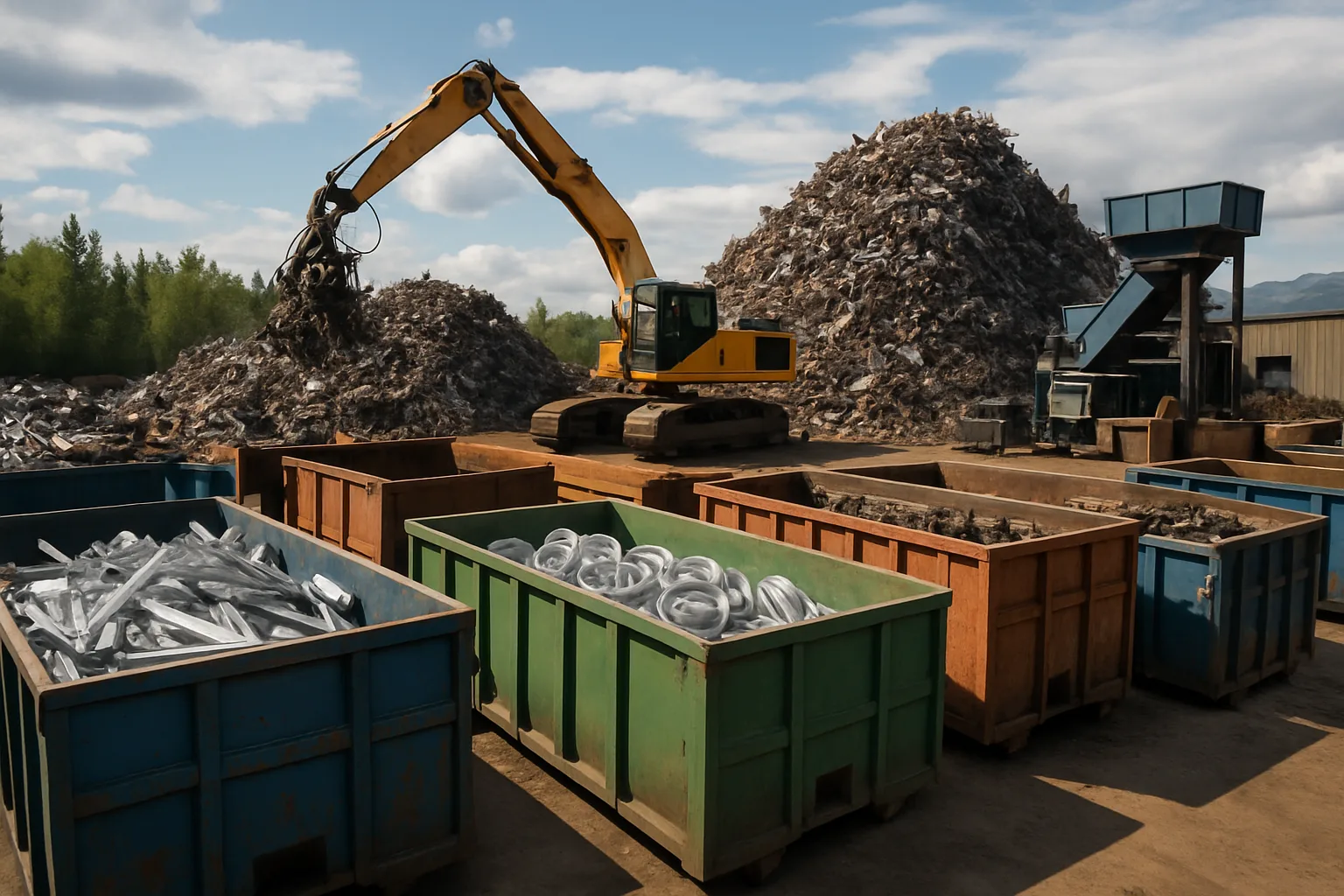
Prince George sits at the intersection of forestry, mining, and heavy industry — all sectors that generate significant aluminum and mixed metal waste. Add in automotive recycling from the surrounding region, and you're looking at a steady stream of material that ranges from aluminum cans and cast aluminum to extrusions, wheels, and sheet stock. Each of those grades carries a different price, and each one responds differently to market conditions.
Aluminum can prices, for example, fluctuate based on commodity cycles tied to global supply, energy costs, and downstream demand from rolling mills. Cast aluminum and extrusion grades follow different curves. Selling everything to one buyer at a flat rate almost certainly means you're leaving money on specific grades. Auction-based platforms let each grade compete on its own merits.
For yards doing any volume of automotive dismantling, the catalytic converter side of the equation matters just as much. Cats carry platinum, palladium, and rhodium — all metals with prices that can swing sharply. The gap between a poor offer and a competitive one on a load of cats can be substantial. That's exactly where competitive bids for your scrap metal make the most difference. Guessing isn't a pricing strategy.
Organizations like the Automotive Recyclers of Canada (ARC) and the Ontario Automotive Recyclers Association (OARA) have long emphasized transparency and standardized practices in how recyclers document and sell recovered materials. That same principle applies directly to how you sell — clean documentation and competitive access go together.
Scrap Metal Inventory Management: Why It's the Foundation, Not an Afterthought
Here's what most sellers underestimate: your ability to get a good price depends heavily on how well you document what you have. A buyer bidding on a load of aluminum extrusions in Prince George is making a decision based on the information you give them. Vague descriptions and no photos mean conservative bids — or no bids at all.
Solid scrap metal inventory management isn't just about organization. It's a direct revenue lever. When your loads are documented with accurate weights, grade classifications, photo evidence, and proper BOLs or packing lists, buyers can bid aggressively because they're not pricing in uncertainty. The platform does the heavy lifting on structure — but the data has to come from you.
SMASH is built around this idea. The inventory tool, VIN lookup for automotive cores, and serial tracking features aren't there for paperwork's sake. They exist because documented loads sell better. Every piece of information you add to a listing is a signal to buyers that the load is real, accurate, and ready to move.
Consider what proper documentation looks like in practice:
- Accurate weights — not estimates, not ranges
- Clear grade separation (don't mix 6061 extrusion with cast if you can avoid it)
- Photos showing the material, not just the container
- Packing lists that match the actual load
- For cats: serial numbers and VINs where available
Scrap Metal Prices in Canada: What's Moving in 2026
The Canadian scrap metal market in 2026 is navigating real complexity. Domestic demand from Canadian steel mills and aluminum smelters competes with export demand, currency effects, and ongoing shifts in North American manufacturing. For British Columbia yards, the Pacific Rim trade dynamic adds another layer — aluminum and copper grades that move into Asian markets follow different price cycles than what feeds into Ontario-based mills.
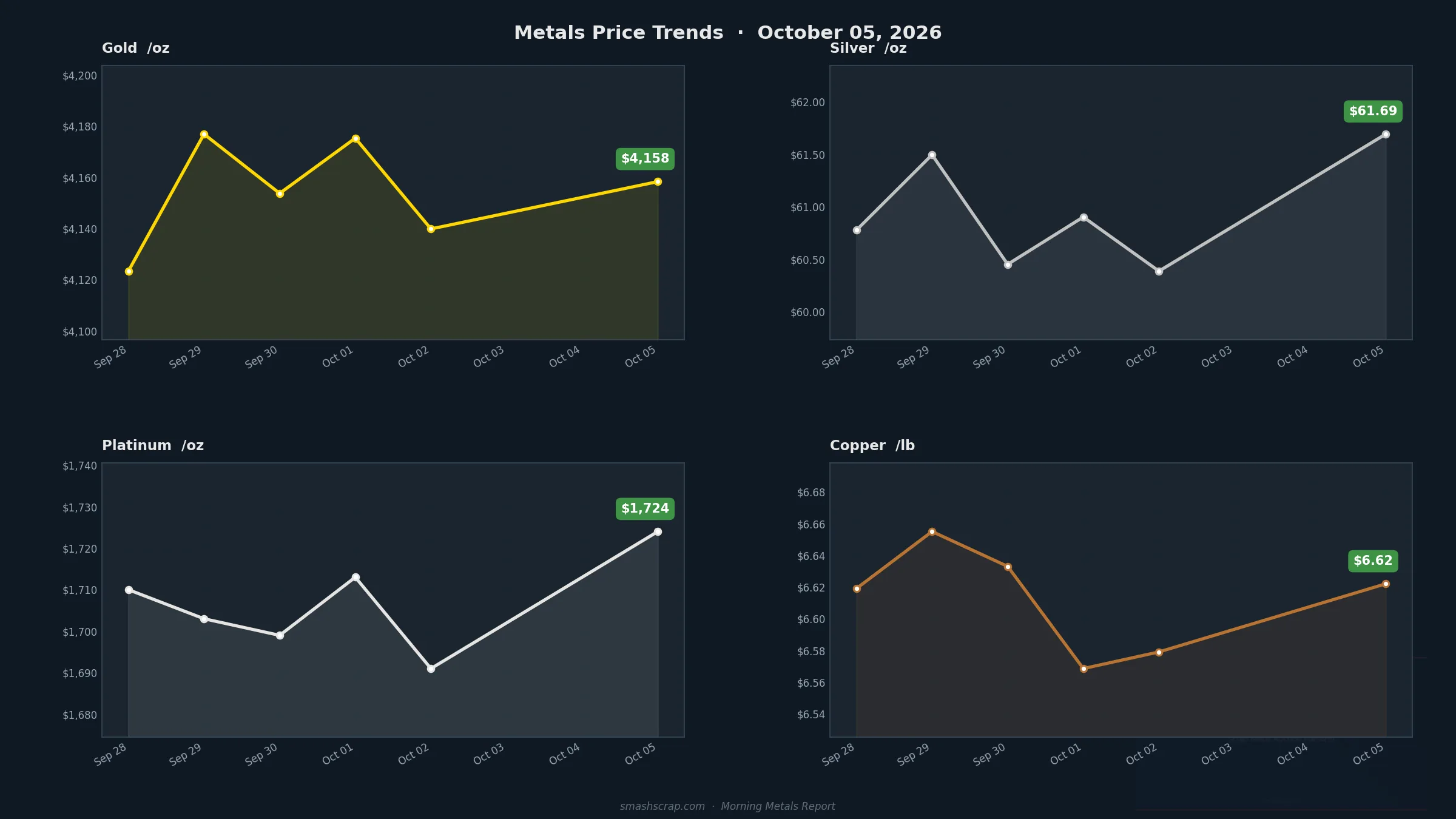
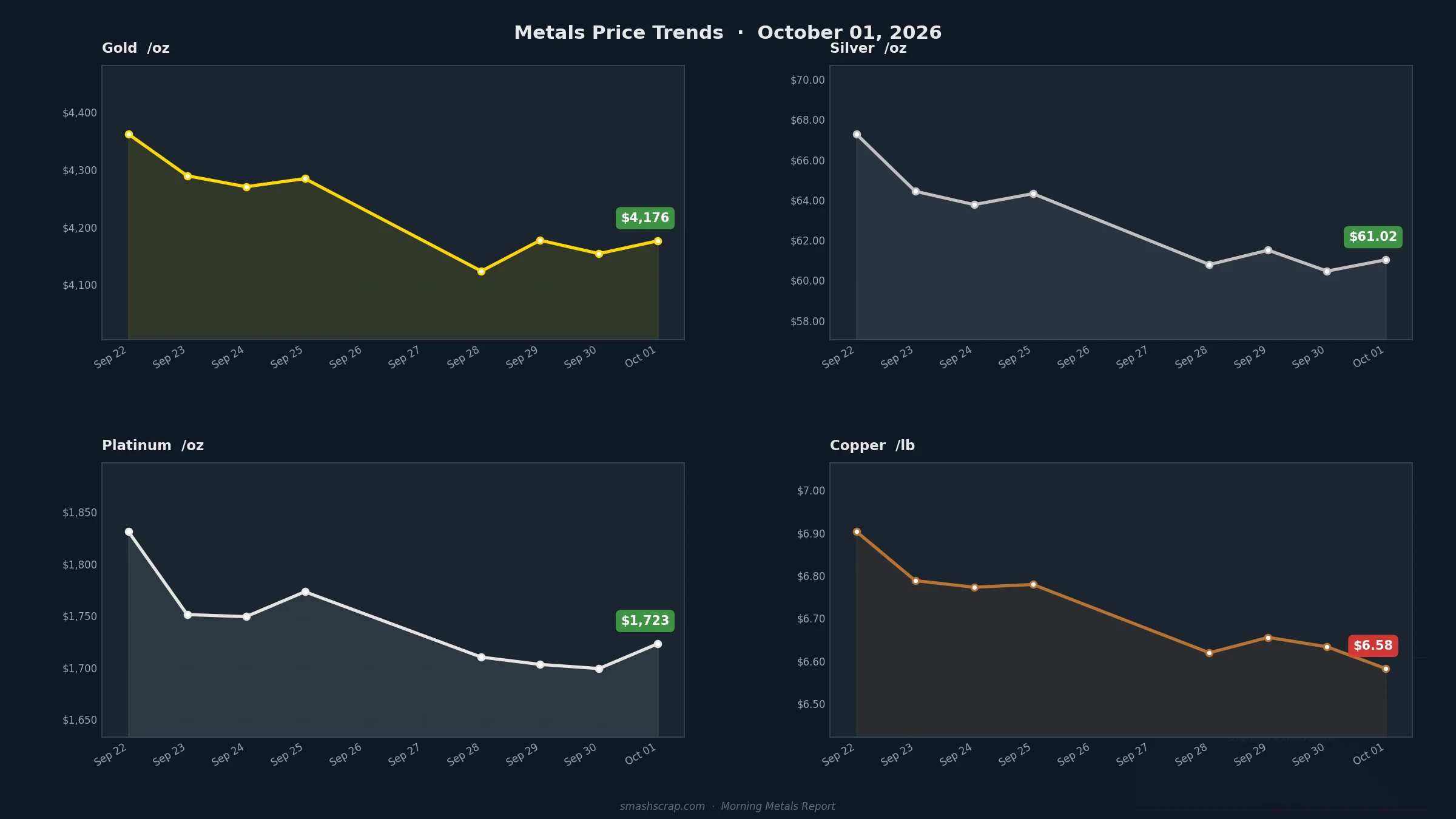
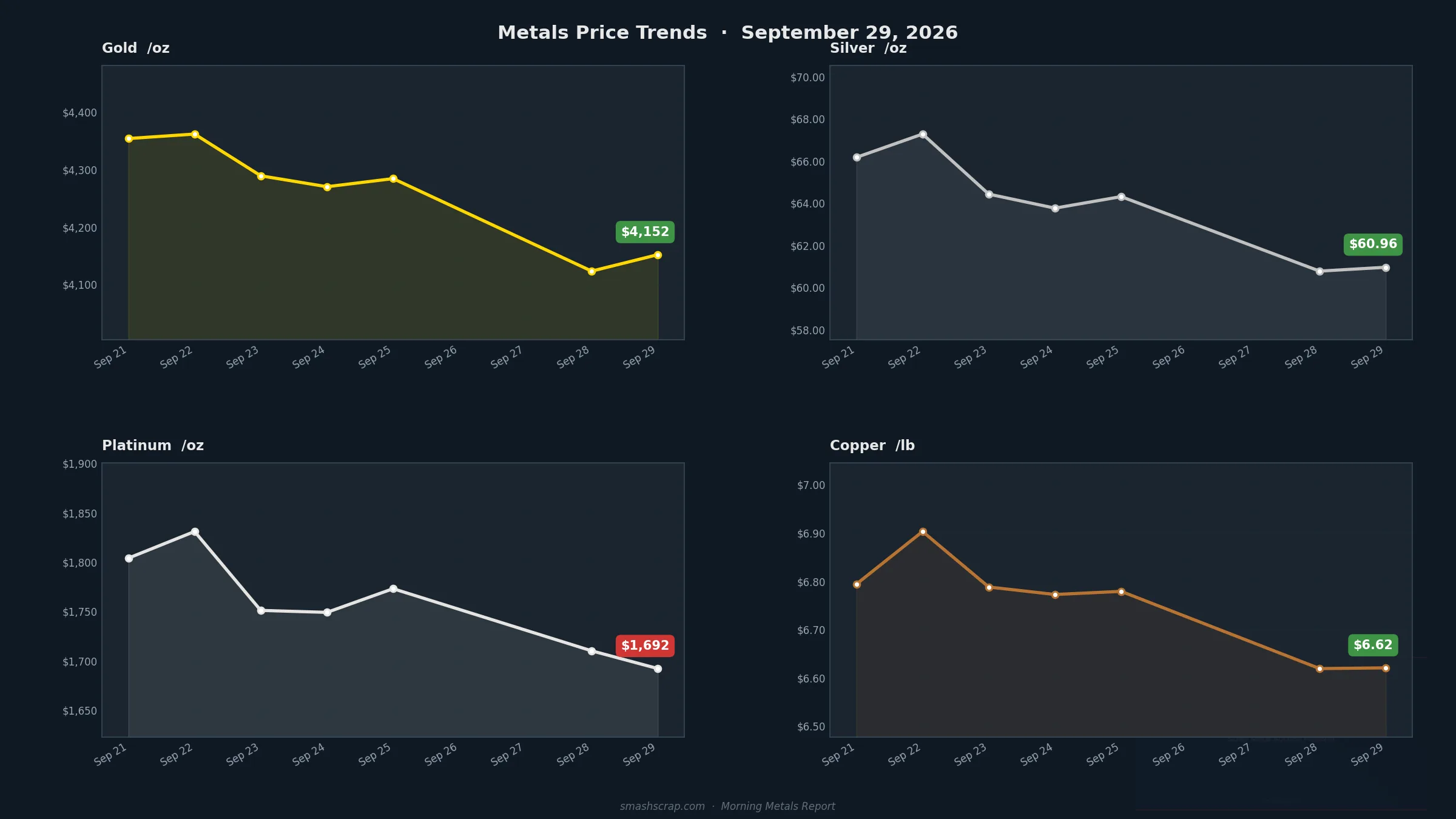
Copper scrap prices remain sensitive to infrastructure build-out and electrification demand. Aluminum is driven in part by energy-intensive smelting costs and recycled content requirements from end-use industries. Platinum, palladium, and rhodium prices — critical for anyone moving catalytic converters — respond to automotive production rates and emission technology trends. None of these move in a straight line.
This volatility is exactly why scrap metal prices Canada per ton vary so much depending on who's buying, when, and where. A static price from a single buyer captures one data point. A competitive auction captures the market. For a yard in Prince George trying to maximize recovery on aluminum loads, copper wire, or a batch of cats, the difference isn't trivial.
Disclaimer: All metal prices fluctuate based on market conditions. Check current rates before making any selling decisions. SMASH does not publish or guarantee specific price levels.
How SMASH Fits Into a Modern Scrap Operation
SMASH isn't a subscription service. There are no monthly fees to access the platform. The model is straightforward: SMASH only earns when a transaction closes, which means the incentive is aligned with getting you the best outcome on every load. No fee to list, no cost to browse buyers — you pay when the deal is done.
For a yard operator in northern British Columbia, that matters. You're not committing to software overhead before you've seen any results. You list a load, vetted buyers compete, and you decide whether the winning bid works for you. Auto-invoicing and documentation support keep the paperwork clean on both sides.
If you want to understand how the platform works before diving in, read the latest from SMASH Recycling — the blog covers market trends, platform updates, and practical guidance for sellers moving different material types. It's written for yard operators, not investors.
The yards winning in the current market aren't the ones with the best rolodex. They're the ones with the most buyers competing for their material. Join Canada's B2B scrap marketplace on SMASH Recycling and find out what your loads are actually worth when the market sets the price.
If you're in or around Prince George, you can also explore Prince George scrap metal services to get started with a platform built for Canadian yards.
The scrap industry is moving online. The question is whether you're selling into that market or still waiting for one buyer to call back.
Frequently Asked Questions
Q: How does aluminum recycling work in Prince George for commercial sellers?
Commercial sellers in Prince George typically accumulate loads of aluminum by grade — extrusions, cast, sheet, or cans — and sell to regional buyers or through brokers. Online platforms like SMASH allow you to list documented loads and receive competitive bids from vetted buyers across Canada, often improving on what a single local buyer offers.
Q: What are aluminum can prices doing in Canada in 2026?
Aluminum can prices in Canada follow the LME aluminum index plus a regional spread, and they've been subject to fluctuation tied to energy costs and recycled content demand. Prices vary by region and buyer. Always check current market rates before committing to a sale, and consider getting multiple bids rather than accepting the first number you're offered.
Q: How do I know if I'm getting a fair price for scrap metal in British Columbia?
The most reliable way to benchmark your price is competition — getting more than one buyer to bid on the same load. A B2B auction platform gives you that without the cold calling. Documented loads with accurate weights and photos attract more serious bids, which gives you a real read on what the market will pay.
Q: Does SMASH charge a monthly fee to list scrap loads?
No. SMASH does not charge subscription or listing fees. The platform earns on completed transactions, so you're not paying upfront to access buyers. This makes it practical for yards of any size to test the platform without financial commitment.
Q: Can I sell catalytic converters through an online scrap auction platform?
Yes. Catalytic converters are one of the most actively traded items on B2B scrap platforms because platinum, palladium, and rhodium prices fluctuate significantly — making competitive bidding especially valuable. Accurate documentation, including serial numbers and VINs where available, helps buyers bid with confidence and typically improves the outcome for the seller.
Follow SMASH on LinkedIn for Canadian scrap metal market updates, pricing trends, and platform news — straight from the people building it.