Auto Recycling Richmond: Secure Payment Terms Guide
Most recyclers obsess over price. But the moment a load ships and payment doesn't arrive on time — or at all — price stops being the problem. Auto recycling Richmond operators, copper yards, and catalytic converter sellers across British Columbia deal with payment disputes more often than they talk about. This weekly market recap digs into how payment terms actually work in B2B scrap, why escrow is becoming a serious conversation in the industry, and what the current market backdrop means for recyclers making large transactions right now.
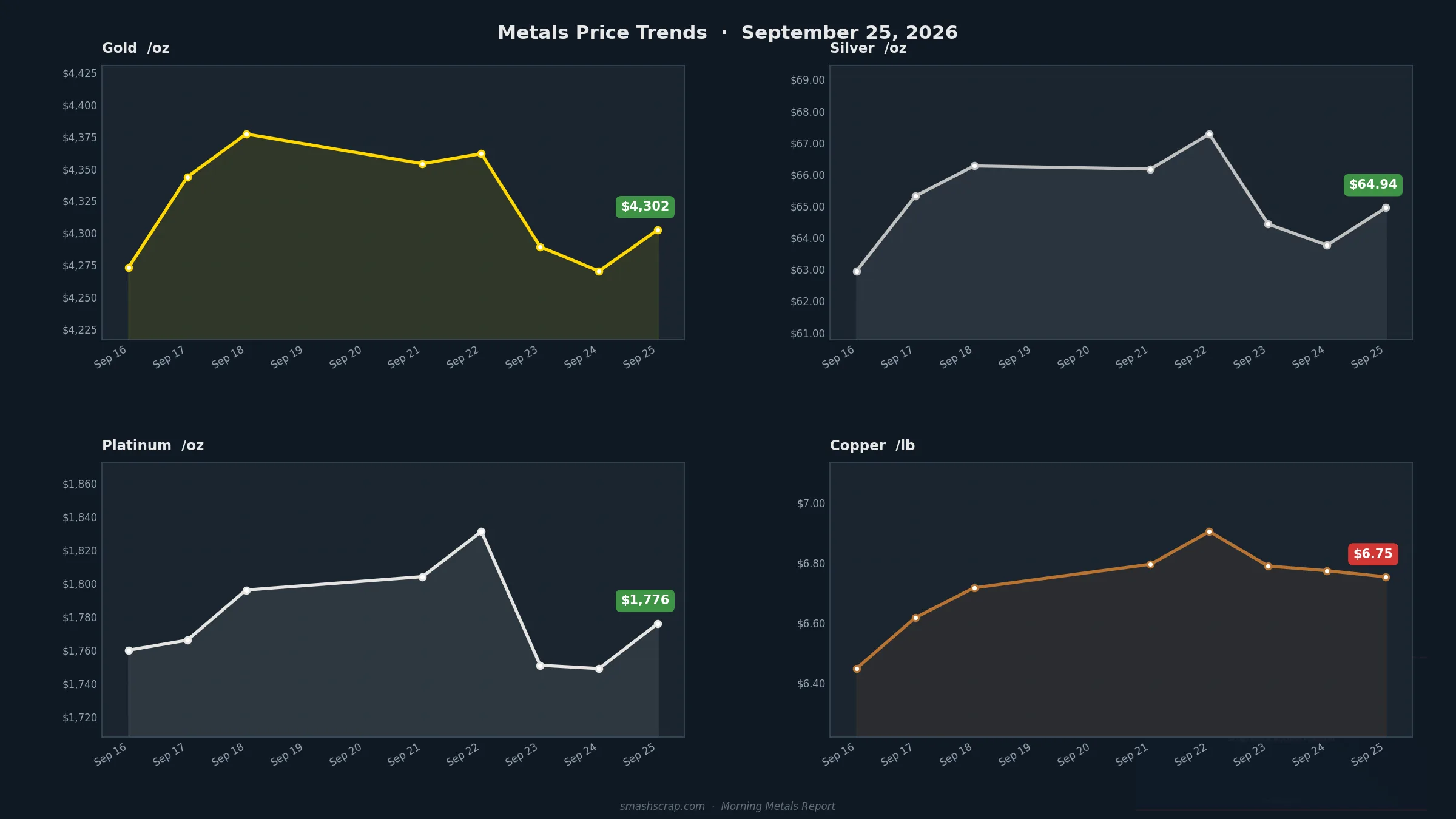
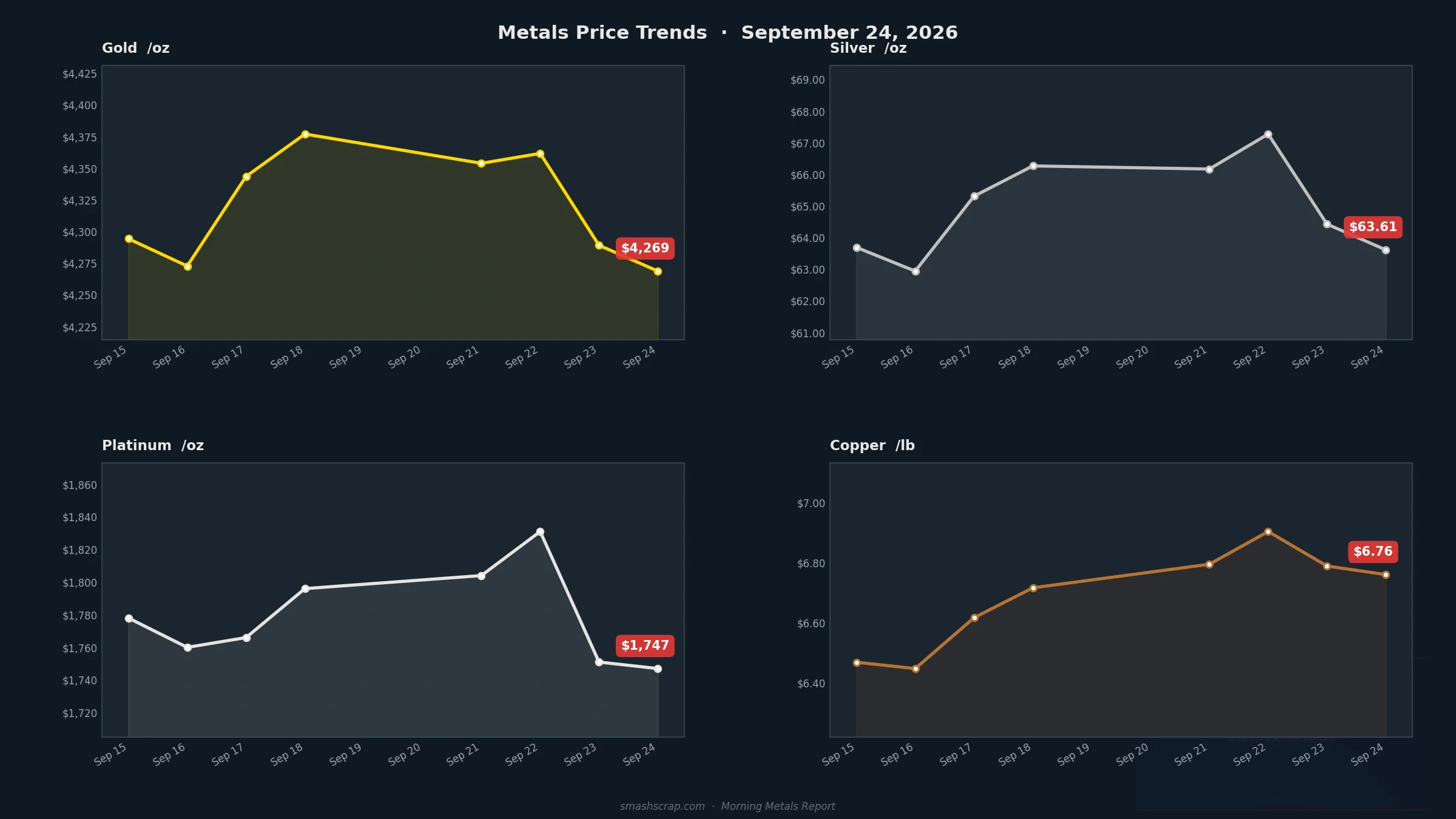
Scrap metal prices today remain volatile. Platinum, palladium, and rhodium — the three PGMs that drive catalytic converter scrap price Canada valuations — have had a turbulent first half of 2026. Copper scrap prices have tracked broader commodity swings tied to infrastructure demand and energy transition spending. When prices move fast, so does counterparty risk. That's when payment terms stop being a formality and start being the difference between a profitable load and a collections headache.
Disclaimer: All price references in this article are general market context only. Scrap metal prices fluctuate daily. Check current rates directly with buyers or through a verified marketplace before making decisions.---
Why Payment Terms Matter More Than Most Recyclers Think
In a one-buyer relationship, payment terms are often whatever the buyer decides. Net-30, net-45, deferred settlement after processing — recyclers accept the terms because they have no leverage. That's the old model. It rewards buyers and penalizes sellers who don't know any better.
In the B2B scrap metal marketplace, payment terms should be negotiated, not inherited. For a yard doing volume — think multiple loads of copper, a steady stream of catalytic converters, or bulk ferrous — a 30-day payment delay compounding across dozens of transactions is a serious cash flow issue. A yard in Richmond, BC moving $200,000 CAD in non-ferrous material per month can't absorb 45-day settlement cycles without feeling it in operating capital.
Here's what every recycler should understand about the main payment term structures in B2B scrap:
- Payment on pickup / at gate: Buyer pays in full when the load leaves the yard. Safest for the seller. Rare for large loads or smelter-direct deals.
- Net-7 / Net-14: Common for established relationships. Acceptable if the buyer is well-vetted and has a track record.
- Net-30: Standard in many industries. In scrap, it's a long time when metal prices are moving. A load priced on Monday can look very different by the 30th.
- Settlement after assay / processing: Common for catalytic converters and complex non-ferrous material. Buyer processes the load, assays the content, then pays based on actual recovered values. Legitimate — but the timeline and transparency standards vary wildly.
- Consignment terms: Seller ships, buyer sells on their behalf, pays when they can. Avoid this unless you have deep trust and a written agreement.
The platform you sell through matters enormously. Explore SMASH Recycling's auction platform to see how structured buyer vetting and transaction documentation change the payment conversation entirely.
---Escrow in Scrap Metal Transactions: Is It Worth It?
Escrow is still uncommon in everyday scrap deals, but the conversation is growing — especially for high-value transactions involving catalytic converters, copper wire, or large non-ferrous loads. The concept is simple: a neutral third party holds funds until both the buyer and seller confirm the terms of the transaction are met. Funds release only when the deal closes properly.
For copper recycling Richmond operators sending large loads to out-of-province or cross-border buyers, escrow creates a layer of protection that a handshake and an invoice don't. For catalytic converter sellers where the final payout depends on assay results, escrow can hold an agreed deposit or floor payment while the processing component settles separately.
Here's when escrow makes the most sense in B2B scrap:
- Transaction value exceeds $25,000 CAD and the buyer relationship is new
- You're selling to an out-of-province buyer for the first time
- The load involves high-value PGM-bearing material (cats, electronic scrap)
- Settlement depends on third-party assay and you need a floor payment guaranteed
- The buyer has no verifiable track record or references
Escrow adds friction, yes. But for a $50,000 load of copper or a full truckload of catalytic converter scrap, that friction is worth it. The legal infrastructure for escrow in B2B commodity transactions exists in Canada — you're not inventing anything new. You're just using the tools available to you.
---Scrap Metal Inventory Management and the Documentation Connection
Here's a payment term reality that most recyclers miss: your documentation directly affects your negotiating position. A buyer receiving a load with a complete packing list, photo documentation, serial tracking for cores, and a VIN-linked inventory for auto parts has far less ground to dispute the payout. Disputes extend timelines. Weak documentation invites them.
Solid scrap metal inventory management isn't just an operational habit — it's a financial protection tool. When your inventory is documented before the load leaves the yard, you've locked in a reference point. If a buyer tries to short-pay or disputes the grade or quantity, your documentation is the counter-argument. No documentation means you're arguing on memory against someone with a scale ticket.
This is especially true for catalytic converter sellers. Cats are graded by serial number. Misidentified or under-graded converters are a common point of payment dispute. When you use serial tracking tools and cross-reference with current catalytic converter prices today, you arrive at the transaction with data — not guesses. That changes the dynamic with buyers.
Yards across British Columbia using platforms that automate this process — photo capture, inventory logging, auto-invoicing — close transactions faster and dispute less. The documentation does the heavy lifting so you don't have to chase payment manually.
---What the Current Market Means for Payment Risk in Mid-2026
Scrap metal prices Canada per pound have been anything but stable through the first half of 2026. Rhodium continues to be the wild card in PGM pricing. Palladium has seen renewed pressure from EV adoption trends affecting catalytic converter demand in internal combustion vehicle production. Platinum has traded in a range that makes pricing converter loads tricky without real-time data.
Copper scrap prices have tracked LME copper with the usual basis adjustments — but infrastructure spending across North America has kept demand relatively firm for clean copper grades. For Richmond yards and others in British Columbia handling copper wire, tubing, and light copper, the pricing environment is workable but requires current data, not last week's quote.
In a volatile market, payment term risk compounds. A buyer who quotes a price based on Tuesday's platinum price and settles on a net-30 basis is effectively giving you exposure to 30 days of price movement in a commodity that can swing significantly in a week. Solutions:
- Price-at-pickup agreements: Lock the payout to the price on the day the load transfers.
- Floor + assay structures: Take a guaranteed floor on pickup, settle the upside after processing.
- Auction format pricing: Let competitive bidding establish the price in real time so you're not guessing the market — the market tells you.
- Auto-invoicing at transaction close: Removes ambiguity about what was agreed and when payment is due.
Organizations like the smashscrap.com platform and Canadian industry bodies including the Automotive Recyclers of Canada (ARC) and the Ontario Automotive Recyclers Association (OARA) continue to push for transaction standards that protect both buyers and sellers. Following their guidelines isn't just good practice — it's a signal to counterparties that you operate professionally.
---How SMASH Approaches Payment Transparency in the Auction Format
The SMASH model is built around a simple principle: if everyone can see what's being sold, documented, and bid on, payment disputes get harder to manufacture. Vetted buyers compete on price. The winning bid is recorded. Auto-invoicing fires when the auction closes. There's no back-channel renegotiation after the fact.
For recyclers in Richmond offering Richmond scrap metal services, listing inventory through SMASH means you're not relying on one buyer's word about what the market is. Multiple buyers competing means price discovery is real, not estimated. And when the transaction is documented from inventory listing through to invoice, the payment conversation starts from a position of clarity.
No subscription fees means you're not paying to participate — SMASH only wins when you do. That's a different alignment than the traditional broker or single-buyer model. Join Canada's B2B scrap marketplace on SMASH Recycling and see what competitive, transparent transactions actually look like for your yard.
Selling volume in non-ferrous, cats, or copper? The platform handles GST/HST documentation, packing lists, and photo documentation so the paper trail is there from day one. That's the foundation that makes clean payment terms enforceable.
Ready to stop guessing and start selling with full transaction visibility? Read the latest from SMASH Recycling for weekly market context, pricing updates, and practical guides for Canadian recyclers.
---Frequently Asked Questions
Q: What payment terms should I expect when selling scrap metal through an auction platform?
Payment terms vary by buyer and platform, but structured marketplaces typically define terms clearly before the auction closes — often payment within 7 to 14 business days of transaction confirmation. Auto-invoicing at close removes ambiguity. Always confirm payment terms are documented before your load ships.
Q: Is escrow practical for auto recycling in Richmond or smaller B2B scrap transactions?
Escrow is most practical for high-value or first-time transactions where you haven't established trust with the buyer. For regular Richmond auto recycling deals with vetted counterparties, strong documentation and defined payment terms in writing are usually sufficient. For loads above $25,000 CAD with new buyers, escrow is worth the added step.
Q: How do catalytic converter scrap prices in Canada affect payment settlement timing?
When catalytic converter scrap price Canada valuations are moving fast — driven by rhodium, palladium, or platinum swings — settlement timing becomes a pricing risk. If your payout is tied to assay results after processing, a 3 to 4 week settlement window exposes you to significant price movement. Negotiate a floor payment at pickup and settle the variable component post-assay to manage that exposure.
Q: What documentation should I have ready before a scrap metal transaction to protect my payment?
At minimum: a complete inventory list with weights and grades, photo documentation of the load, serial tracking for cores or catalytic converters, and a signed or confirmed sale agreement that references the price basis and payment timeline. Platforms with built-in inventory tools and auto-invoicing generate most of this automatically.
Q: How does copper recycling in Richmond get priced accurately in a volatile market?
Copper scrap prices are tied to LME copper pricing with grade and form adjustments applied locally. For Richmond copper recycling, getting an accurate price means working with buyers who quote against current LME data — not last week's price. A competitive auction format lets multiple buyers bid based on real-time market conditions, which tends to produce better price discovery than a single quote from one buyer.
---The B2B scrap market in Canada moves fast. Prices shift, buyers change, and a load that looked straightforward can turn into a payment dispute if you didn't document it properly. The recyclers winning in this market aren't just the ones with the best material — they're the ones who treat every transaction like a business deal, not a handshake. If you're ready to sell with more structure, more transparency, and more buyers competing for your loads, register at smashrecycling.ca and see how the auction model works for yards across British Columbia and beyond.
Follow SMASH on LinkedIn for weekly market recaps, scrap metal price context, and practical industry updates built for Canadian recyclers.