Maximize Scrap Metal Lot Value Vancouver
Stop Leaving Money on the Table: How to Maximize Scrap Metal Lot Value in Canada
Most yards sell scrap the same way they did twenty years ago — one buyer, one call, one price. If that buyer's having a slow week, you absorb the loss. In a market where copper scrap prices, palladium price, and rhodium price can swing hard within a single month, that approach costs you real money. Whether you're running auto recycling in Vancouver, processing catalytic converters in Calgary, or moving non-ferrous loads out of Toronto, the way you document, sort, and sell your material determines how much of the market rate actually lands in your account.
This guide breaks down the practical steps to get more from every load — and why a B2B scrap metal marketplace built around competition changes the math entirely.
Know What You Have Before You Sell It
The single biggest value leak in scrap is selling mixed or undocumented loads. A buyer who can't verify what's in a lot will price it for the worst case. That's not greed — it's risk management. Your job is to eliminate their uncertainty so they can bid confidently.
Start with proper sorting. Separate your ferrous from non-ferrous. Break out your copper grades — bare bright, #1, #2, and insulated wire are not the same thing and shouldn't be quoted together. For copper recycling in Vancouver and across British Columbia, buyers routinely see mixed grades lumped into single quotes, which drives the offer down to the lowest denominator every time.
- Cats and cores: Pull catalytic converters separately. Document make, model, year, and use VIN lookup where available. A verified cat is worth more than an anonymous one — buyers can price it accurately against current catalytic converter prices today for platinum, palladium, and rhodium content.
- Non-ferrous metals: Aluminum, brass, copper, and stainless all need to be segregated. Contaminated loads lose value fast.
- Steel and iron: Even on the ferrous side, shredder feed, HMS 1, and HMS 2 command different prices. Know which is which before you post.
- Photo documentation: Photos aren't optional anymore. Buyers bidding remotely need visual confirmation. Good photos close the gap between what you think your load is worth and what a buyer is willing to pay sight-unseen.
Scrap metal inventory management isn't glamorous work, but it's the foundation everything else builds on. Yards that track serial numbers on cores, document cat grades with photos, and maintain accurate weight records consistently get stronger bids. It's not a coincidence.
Understand the Market Before You Move a Load
Selling scrap without watching the market is like selling a house without checking what the neighbours sold for. Scrap metal prices in Canada per ton fluctuate based on global commodity markets, currency exchange, and regional demand. What copper fetched last month may not be what it fetches today.
Key pricing drivers to track in 2026:
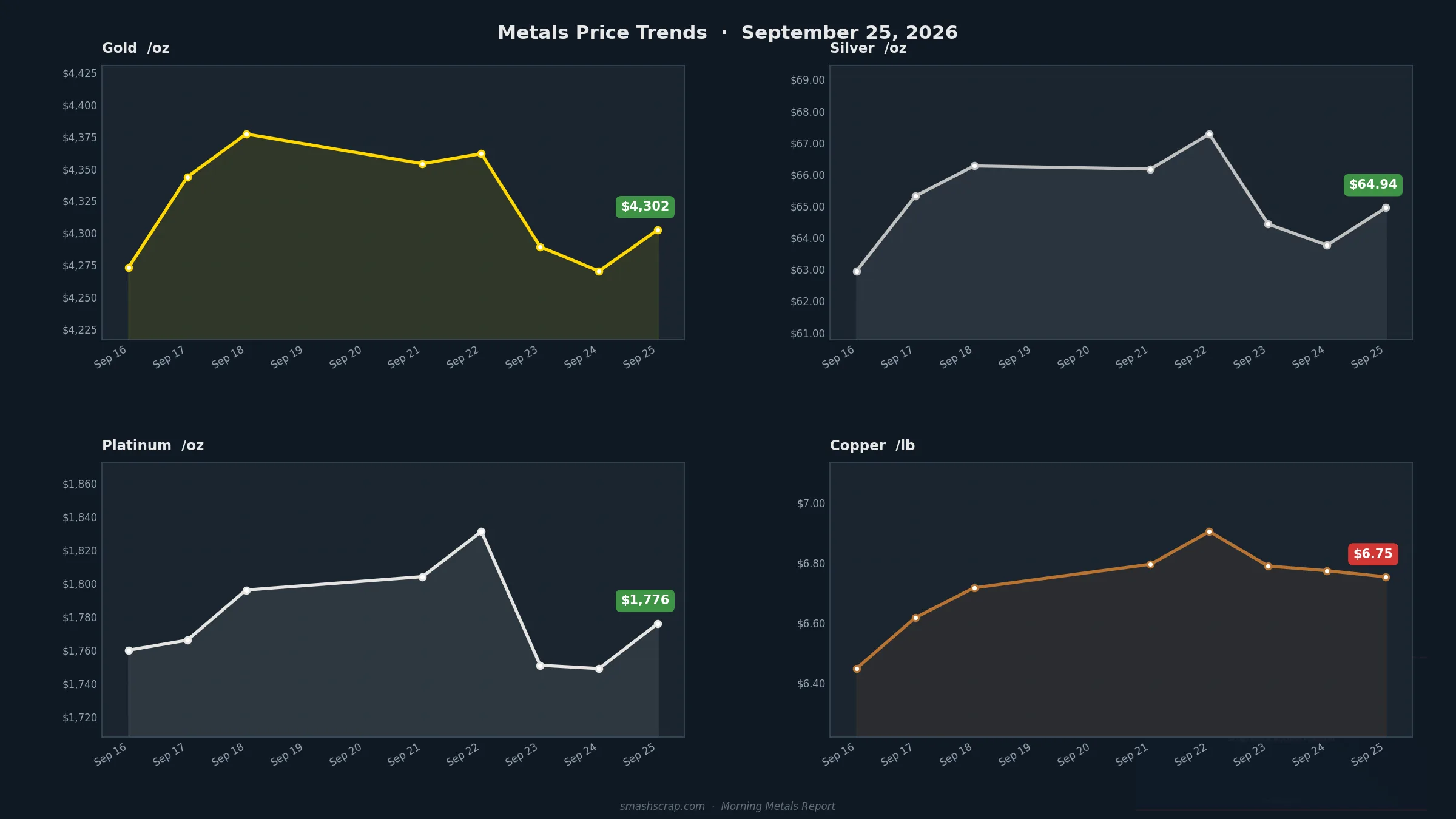
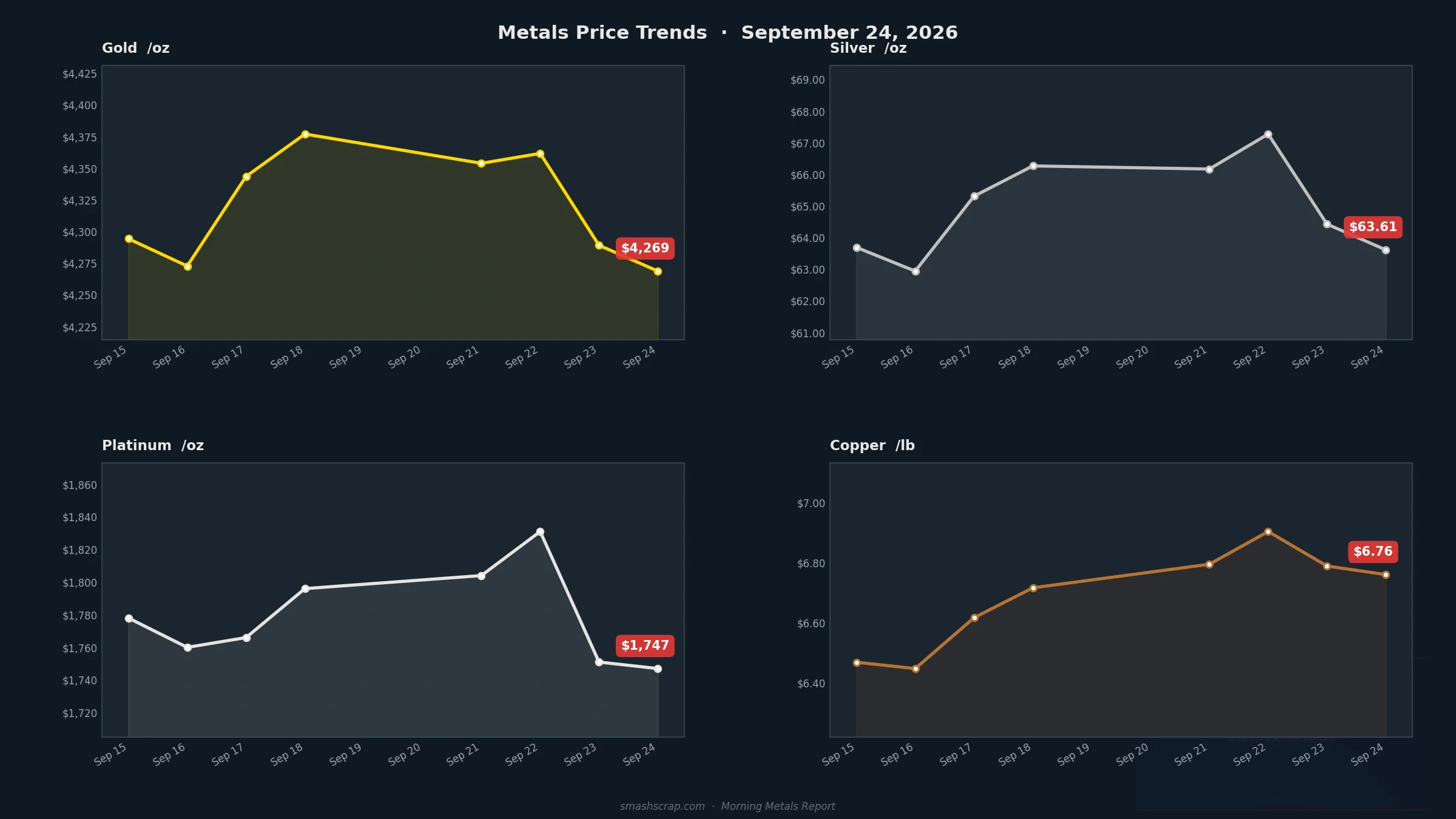
- Platinum, palladium, and rhodium: These PGM prices directly determine catalytic converter values. Rhodium in particular is volatile — it can move significantly in short windows. If you're sitting on a large cat inventory, timing matters.
- Copper scrap prices: Global demand from manufacturing, EV infrastructure buildout, and energy grid investment keeps copper in the conversation. British Columbia yards near port access have a logistics advantage on export-grade material.
- Steel and iron: Domestic mill demand drives HMS pricing. Watch for mill restocking cycles and construction activity in your region.
- Currency: CAD/USD movement affects export competitiveness. A weaker Canadian dollar can make your material more attractive to cross-border buyers.
You don't need to be an economist. But you do need to know whether today is a good day to sell or a day to hold. Platforms that give you access to multiple buyers provide better price discovery than a single phone call ever will — more buyers means better price discovery, full stop.
Why Auto Recycling in Vancouver Has Unique Advantages
Vancouver sits at a geographic sweet spot. Port access means export-grade non-ferrous material — copper, aluminum, and stainless — has options that landlocked yards don't. Proximity to Asian markets historically drives premium interest in high-grade copper and aluminum. For Vancouver scrap metal services, that geography translates into real competitive advantages when you're selling to a vetted buyer pool rather than one local contact.
British Columbia also has a dense automotive ecosystem. End-of-life vehicles, fleet turnover, and construction equipment cycling through the Lower Mainland generate consistent cat and non-ferrous volume. Yards processing auto recycling in Vancouver are sitting on material that buyers across North America want access to — they just need the right platform to find it.
Industry organizations like the Automotive Recyclers of Canada (ARC) and the Ontario Automotive Recyclers Association (OARA) have pushed hard on documentation standards, parts tracking, and environmental compliance. Yards that align with those standards — photo documentation, VIN lookup, serialized tracking — aren't just doing good compliance work. They're building inventory records that make buyers more confident and bids more competitive. If you're not already operating to those standards, 2026 is the year to close that gap.
Scrap Metal Inventory Management: The System That Pays You Back
A disorganized yard leaves money everywhere. Mislabeled bins, undocumented cats, and eyeballed weights all compress your margins before a buyer ever sees your material. Building a real inventory system isn't a luxury — it's the difference between guessing and knowing what you're worth.
Here's what a functional scrap metal inventory management setup looks like in practice:
- Weight documentation: Certified scale tickets attached to every load. No exceptions. Buyers pricing remotely need to trust your numbers.
- Photo standards: Minimum three photos per lot — overview, close-up of grade indicators, and any condition notes. For cats, capture the substrate and serial number.
- VIN and serial tracking: For automotive material, VIN lookup connects a cat or part to a known vehicle profile. That data increases buyer confidence and supports accurate pricing against current catalytic converter prices.
- Grade segregation: Document every grade change. Mixed loads priced at the lowest grade cost you money. Clean segregation is worth real dollars per ton.
- Digital records: Paper logs don't scale. A digital system means you can pull lot history, compare realized prices, and make better decisions about when and how to sell.
SMASH's platform is built around this kind of documentation. When you list a lot, you're not just posting a description — you're building a verified record that buyers can bid against with confidence. That confidence shows up in competitive bids. Explore SMASH Recycling's auction platform to see how inventory tools translate directly into better price discovery.
How Competitive Auctions Change the Price Discovery Game
The old way: call your regular buyer, get a number, take it or leave it. The SMASH way: list your documented lot, let vetted buyers compete, watch price discovery happen in real time.
This isn't theory. Competition reveals the market. When multiple buyers see the same well-documented lot — verified weights, grade photos, cat serials, clean BOLs — they price it accurately because they have the information to do so. Remove that competition and you're back to one buyer's opinion of what your material is worth on that particular day.
For yards running auto recycling in Vancouver and across Canada, the scrap metal auction format means your geography stops being a ceiling. A buyer in Ontario, Quebec, or across the border can see your lot and bid competitively against local players. That reach matters — especially for high-value non-ferrous loads and cats where even small price differences per unit add up fast across a large inventory.
SMASH handles auto-invoicing and documentation on the back end, so once a lot sells, the paperwork moves with the material. No chasing buyers for packing lists or arguing over weight tickets after the fact. If you want to understand how yards across Canada are using this approach, read the latest from SMASH Recycling for real industry context.
There are no subscription fees. SMASH only wins when the seller wins. That alignment matters — you're not paying monthly for a platform that may or may not perform. The model is built around results.
What to Do Right Now to Get More From Your Next Load
You don't need to overhaul your entire operation overnight. Start with these steps before your next sale:
- Sort before you list. Even rough segregation by grade significantly improves what buyers are willing to offer.
- Document with photos. Three photos minimum per lot. Make it a standard operating procedure, not an afterthought.
- Pull your cats separately. Verify make, model, and year. Use VIN lookup where possible. List them as a documented line item, not buried in a mixed load.
- Check market conditions. Know where scrap metal prices today sit before you commit to a sale. Copper, platinum, palladium, and rhodium prices are live — treat them that way.
- Sell into competition, not a single phone call. One buyer means one price. Multiple buyers mean market price.
If you're running a yard in Vancouver, British Columbia, or anywhere across Canada and you're still relying on a single buyer relationship to move your material, you're leaving the market's money on the table. smashscrap.com and join Canada's B2B scrap marketplace on SMASH Recycling — register, list your first lot, and let the market tell you what your material is actually worth.
Frequently Asked Questions
Q: How does auto recycling in Vancouver differ from other Canadian markets?
Vancouver's port access gives local yards logistics options that inland markets don't have, particularly for export-grade copper and aluminum. The Lower Mainland also generates high volumes of end-of-life vehicles, which means consistent catalytic converter and non-ferrous supply. Connecting that supply to a broad buyer pool — rather than a single local contact — is where the real value opportunity sits.
Q: What are the current scrap metal prices in Canada per ton?
Scrap metal prices in Canada fluctuate based on global commodity markets, regional demand, and CAD/USD exchange rates. Copper, platinum, palladium, and rhodium prices in particular can move significantly week to week. Always check current market rates before committing to a sale — posted prices on a single buyer's sheet are rarely the full picture. Disclaimer: Prices listed anywhere on this site are for reference only and may not reflect current market rates. Verify current pricing before selling.
Q: How do I get better prices for my catalytic converters?
Documentation is the biggest lever. Verified make, model, year, and substrate photos allow buyers to price your cats accurately against current platinum, palladium, and rhodium values rather than discounting for uncertainty. Selling into a competitive auction format rather than to a single buyer also ensures you're getting market price, not one buyer's margin-protected offer.
Q: What does scrap metal inventory management actually involve for a yard?
At a minimum: certified weights, grade segregation, photo documentation per lot, and digital records you can reference across sales. For automotive material, VIN lookup and serial tracking add another layer of verification that buyers value. Yards with clean inventory records consistently attract stronger bids because buyers can price with confidence rather than guessing.
Q: Is SMASH available to yards outside of Vancouver and British Columbia?
Yes. SMASH serves recycling yards and buyers across Canada. The platform is built for B2B transactions at scale — whether you're in Vancouver, Calgary, Toronto, or anywhere in between. The vetted buyer network means your material gets exposure to competitive bidders regardless of where your yard is located.
Stay current on scrap metal market trends, auction results, and industry news — follow SMASH on LinkedIn for regular updates from Canada's B2B scrap marketplace.