Seasonal Metal Prices Sherbrooke: Winter Supply Shifts
Why Canadian Winters and Seasonal Demand Hit Scrap Metal Prices Harder Than You Think
Most yard operators know metal prices move. Fewer understand why they move when they do — and in Canada, the calendar is one of the most underrated price drivers in the business. If you're one of the automotive recyclers Sherbrooke relies on, ignoring seasonal patterns means leaving money on the table every single year.
This isn't theory. It's pattern recognition built from watching Canadian markets cycle through freeze-thaw, construction booms, and mill demand shifts year after year. Understanding those patterns doesn't guarantee a better price — but it gives you a fighting chance to time your loads and make smarter decisions about when to hold and when to move.
How Canadian Winters Physically Change Scrap Metal Supply
Winter in Quebec isn't just cold. It's operationally disruptive. Ground freezes, roads get weight restrictions, and moving heavy loads of ferrous or non-ferrous material becomes more expensive and more complicated. For scrap metal recycling Sherbrooke operations, that means January and February often see reduced intake volumes — fewer cars coming in, fewer demolition loads, fewer industrial surpluses hitting the market.
When supply contracts, the math changes. Mills and processors still need material. If fewer yards are shipping, buyers may compete harder for the loads that do move. That dynamic can create short windows of better price discovery — but it's inconsistent, and it depends heavily on what the mills are carrying for inventory themselves.
There's also a physical reality to winter scrap: ice, snow, and road salt accelerate corrosion on vehicles and structural steel. Cars that sit in Sherbrooke yards through a Quebec winter accumulate rust and deterioration faster than yards in milder climates. That affects the quality grading of your inventory and, in turn, what buyers are willing to bid on documented versus undocumented loads.
- Road weight restrictions (typically March–April in Quebec) limit how much material can be hauled per trip, pushing logistics costs up.
- Reduced demolition activity in winter means structural steel and mixed ferrous volumes dip across the region.
- Cold-weather automotive accidents spike in November through February, which can push end-of-life vehicle volumes up — a counterbalancing factor for automotive recyclers.
- Battery and fluid handling becomes more complex at low temperatures, adding processing time to every unit.
The Spring Surge: When Scrap Metal Inventory Management Becomes Critical
Come April and May, everything moves at once. Construction restarts. Demolition projects that were paused through winter kick back into gear. Haulers who held loads waiting for road bans to lift flood the market simultaneously. The result is a seasonal surge in supply that can compress prices right when you're ready to sell everything you've been sitting on.
This is exactly where scrap metal inventory management separates the operators who capture value from those who don't. If you've been stockpiling shredder feed, copper wire, cores, or cats through the winter, dumping everything at once in a crowded spring market is rarely the right call. Staging your releases — matching load timing to buyer demand signals — matters.
Platforms like SMASH give you a structural advantage here. Instead of calling one buyer and taking whatever they offer on a given Tuesday in April, you're putting documented loads in front of multiple vetted buyers simultaneously. Competition can help reveal the actual market. That's not hype — that's how price discovery is supposed to work.
If you're not already using a structured approach to inventory and sales timing, explore SMASH Recycling's auction platform and see how documented loads attract more serious bids from buyers who know exactly what they're bidding on.
Non-Ferrous Metals: Copper, Platinum, Palladium, and Rhodium Don't Follow the Same Seasonal Rules
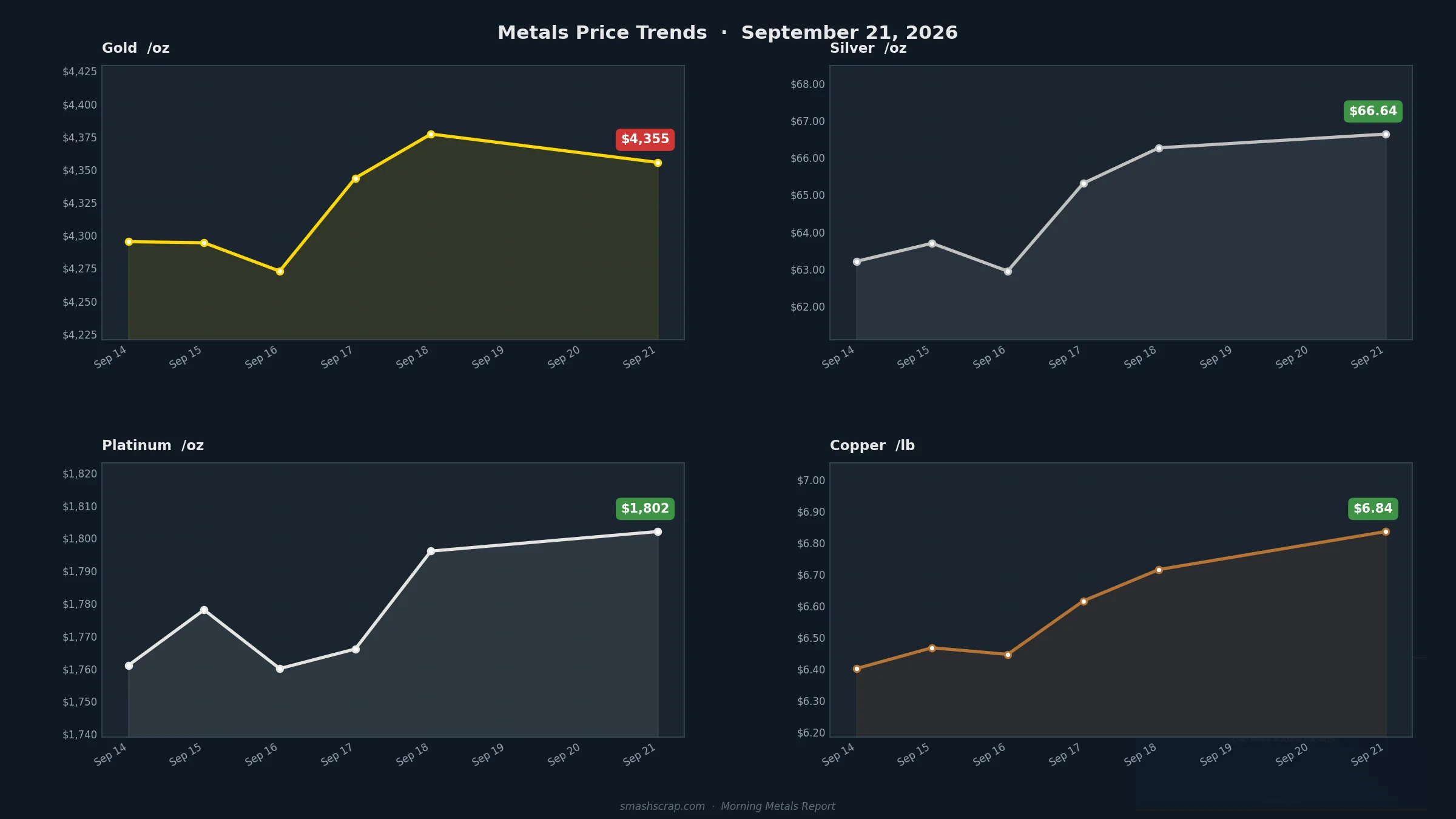
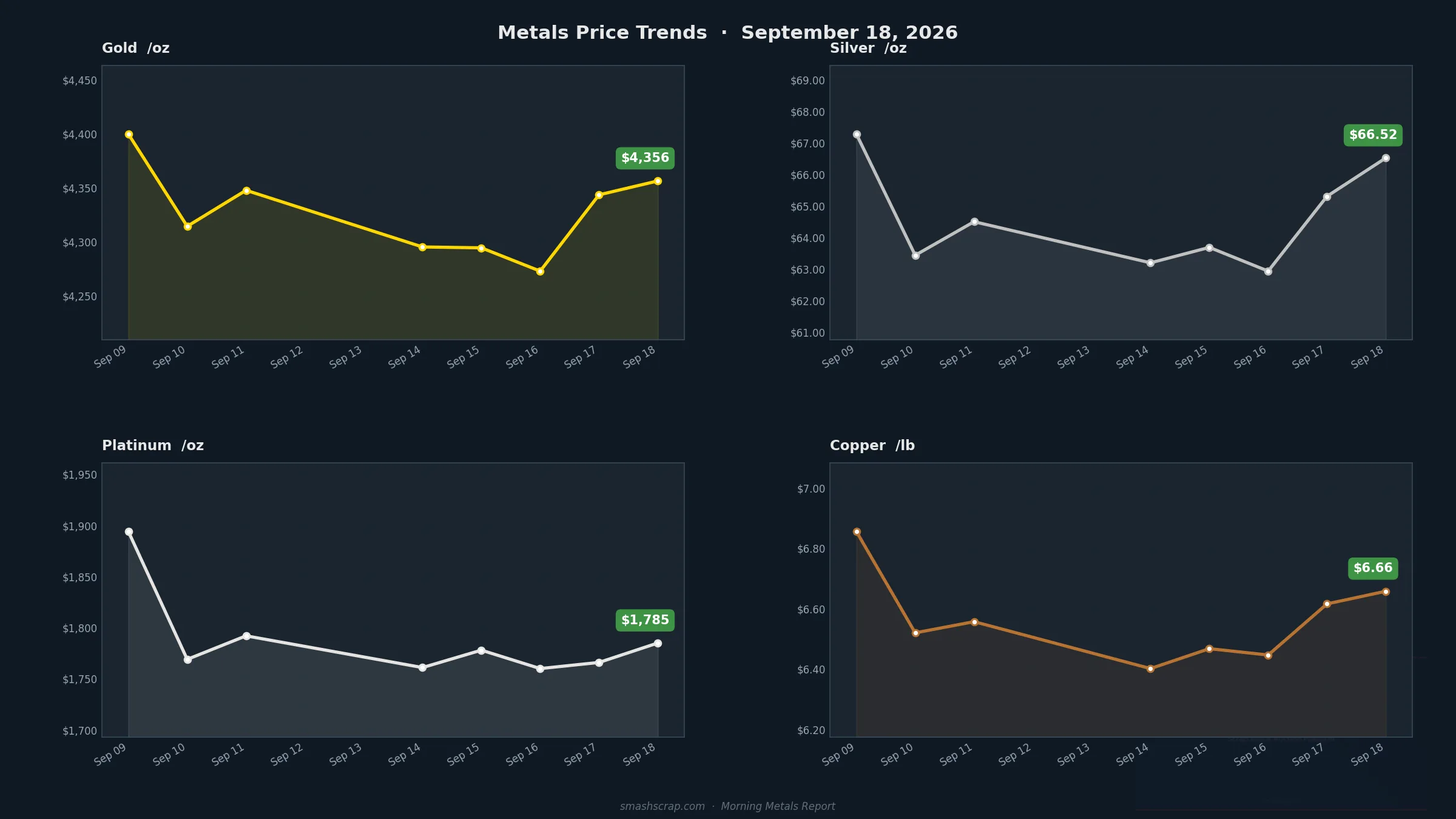
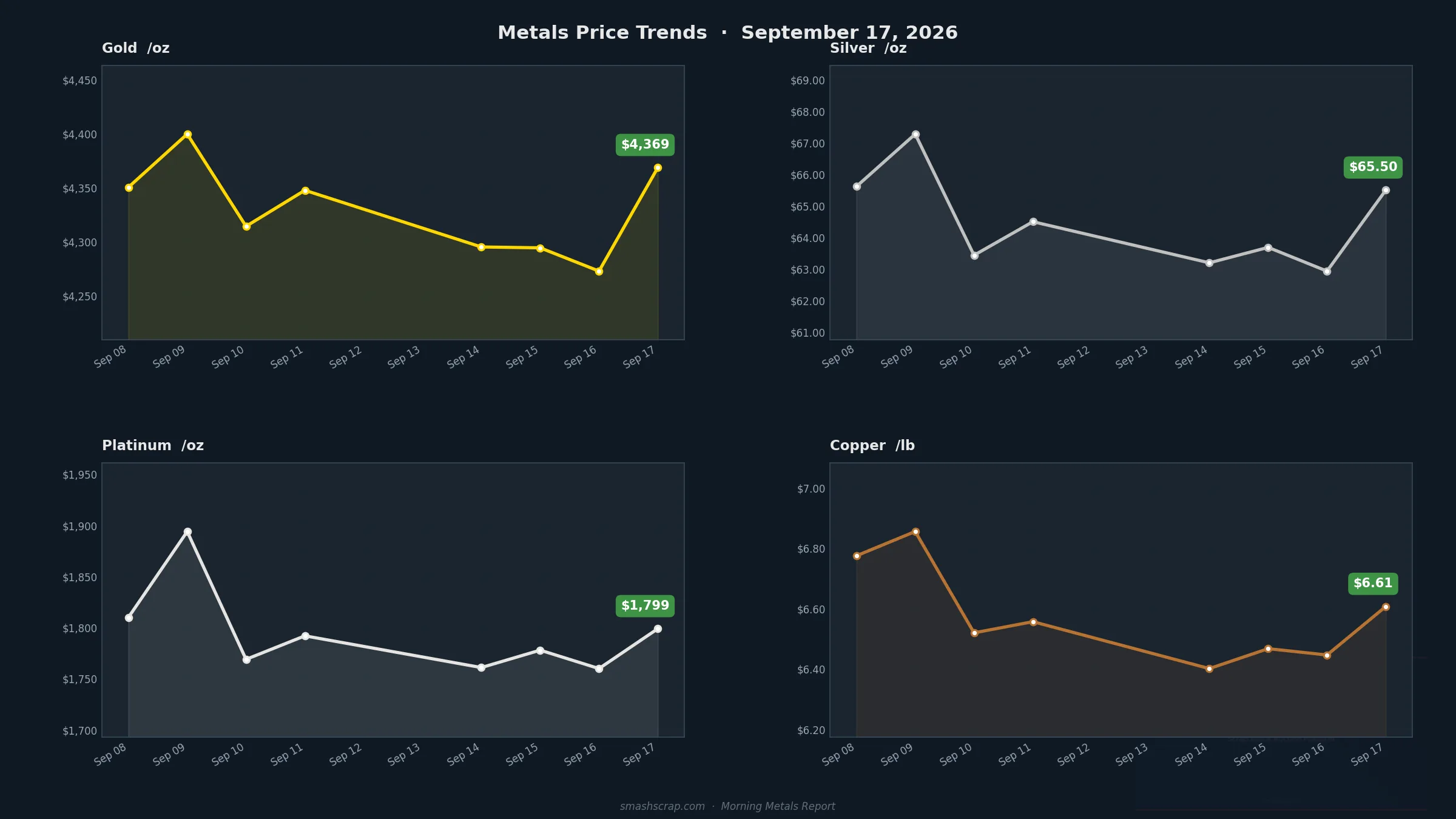
Ferrous scrap — shredder feed, HMS, structural steel — has a relatively predictable seasonal rhythm tied to North American mill activity and construction cycles. Non-ferrous is different. Copper scrap prices, platinum price, palladium price, and rhodium price are driven by global commodity markets, currency movements, and industrial demand that doesn't care what month it is in Sherbrooke.
That said, there are seasonal patterns worth knowing:
- Copper: Construction-driven demand tends to lift copper pricing in spring and summer. Is copper recyclable? Absolutely — and it's one of the highest-value materials in any recycling yard. Wire, pipe, and motor windings all carry meaningful value. But copper also tracks global manufacturing demand closely, particularly from China, which adds volatility that has nothing to do with Canadian seasons.
- Catalytic converters: PGM markets (platinum, palladium, rhodium) are globally priced and can shift significantly week to week. Automotive recyclers holding cats should watch PGM spot prices closely — catalytic converter prices today may look very different in 30 days. Documenting your cats with serial tracking and photo documentation isn't optional if you want competitive bids from serious buyers.
- Aluminum: Strong year-round demand from automotive and packaging sectors provides relative price stability, but summer construction activity can nudge extrusion grades higher.
The SMASH auction format is particularly well-suited to non-ferrous loads precisely because buyer competition on documented, serialized material — especially cats and cores — tends to produce better price discovery than a single phone call ever will. Sell your scrap metal on the SMASH marketplace and let vetted buyers compete on your actual inventory, not their guess of what you have.
What Automotive Recyclers in Sherbrooke Should Be Tracking Right Now
June in Quebec sits in a market sweet spot. Road restrictions are long gone. Construction demand for steel and copper is active. End-of-life vehicle volumes tend to stabilize after the spring accident surge. This is a reasonable window to move inventory that's been sitting — but only if you're moving it strategically.
Here's what automotive recyclers Sherbrooke operations should be tracking heading into summer 2026:
- PGM spot prices: Watch platinum, palladium, and rhodium daily if you're sitting on a significant cat inventory. These markets are volatile and direction can shift on macro news.
- Steel mill utilization rates: North American mill output affects ferrous demand. Lower utilization means less appetite for shredder feed.
- USD/CAD exchange rate: Most commodity metals price in USD. A stronger Canadian dollar narrows the spread for Canadian sellers receiving payment in CAD.
- Local competition timing: If every yard in the Eastern Townships moves material at the same time, supply spikes and bids soften. Stagger where you can.
- Buyer creditworthiness: In a volatile market, getting paid matters as much as the price you negotiate. SMASH's vetted buyer network helps filter out the tire-kickers and credit risks before they waste your time.
Industry organizations like the Automotive Recyclers of Canada (ARC) and the Ontario Automotive Recyclers Association (OARA) publish guidance and best practices for Canadian recyclers navigating market conditions. Staying connected to those networks — alongside data-driven tools — keeps you ahead of the curve. Read the latest from SMASH Recycling for ongoing market context and platform updates.
Why Documented Inventory Beats Gut Feel in Every Season
Whether it's February and you're trying to move a load between snowstorms, or it's June and you're clearing spring accumulation, the single biggest factor in what buyers bid is how well-documented your inventory is. Undocumented loads get discounted. Always. Buyers price in uncertainty when they can't verify what they're buying.
Photo documentation, VIN lookup, serial tracking on cats and cores — these aren't administrative overhead. They're price discovery tools. A buyer who can verify exactly what they're bidding on bids with more confidence. More confidence means less discount-padding. That's money directly back to your yard.
For Sherbrooke scrap metal recycling operations handling a mix of ferrous, non-ferrous, and automotive-sourced material, the SMASH inventory tool lets you build documented loads that tell buyers exactly what they're getting — and then puts that documentation in front of multiple vetted buyers at once. If you're still describing loads verbally over the phone, you're flying blind in a data-driven market.
If you're searching for a scrap depot near me that connects to a broader buyer network, or if you're looking to upgrade how you sell material beyond a single local contact, the Sherbrooke scrap metal services page has the details on how SMASH serves this region specifically.
Seasonal Timing Won't Save a Bad Sales Process
Understanding price seasonality gives you an edge. But it doesn't fix a broken sales process. If you're still relying on one buyer, one phone call, and one price — and accepting it because that's how it's always worked — you're leaving competitive pressure on the table every single time.
The old way made sense when there was no better option. There is now. A SMASH scrap metal auction puts your documented load in front of multiple vetted buyers simultaneously, lets competition do the work, and handles auto-invoicing and GST/HST documentation on the back end. No subscription fee. No monthly commitment. We only win when you sell.
Seasonal awareness combined with a transparent, competitive sales process is the actual formula. Not one without the other. If you want to be one of the sharper automotive recyclers Sherbrooke buyers consistently come back to, start with how you're selling — then layer in the market timing. Join Canada's B2B scrap marketplace on SMASH Recycling and run your next load through the platform to see the difference competitive bidding makes.
Disclaimer: Scrap metal prices fluctuate based on global commodity markets, exchange rates, and supply-demand conditions. Always verify current rates before making selling decisions. Nothing in this article constitutes financial or trading advice.
Frequently Asked Questions
Q: Do scrap metal prices actually change by season in Quebec?
Yes — seasonal patterns are real, though not perfectly predictable. Canadian winters reduce supply from construction and demolition sources, while spring surges in activity can temporarily compress prices as large volumes hit the market simultaneously. Automotive recyclers in Sherbrooke and across Quebec experience these cycles directly in their intake and sales volumes.
Q: Is copper recyclable, and does it hold value year-round?
Copper is fully recyclable and one of the highest-value non-ferrous metals you'll handle in a Canadian yard. It maintains strong demand year-round driven by construction and electrical sectors, though global manufacturing trends — particularly from Asian markets — add volatility. Always document copper loads thoroughly to capture the best bids from buyers.
Q: How do catalytic converter prices change seasonally?
Catalytic converter prices track PGM spot markets — platinum, palladium, and rhodium — which are globally priced and can shift significantly in short periods based on macro conditions, not Canadian seasons. The best approach for automotive recyclers is to document cats with serial numbers and photos, then sell through a competitive auction format to get accurate price discovery rather than relying on a single buyer quote.
Q: How does SMASH help scrap yards in Sherbrooke sell at better prices?
SMASH puts documented loads in front of multiple vetted buyers simultaneously through an auction format, which can help reveal the actual market price rather than accepting a single buyer's offer. For Sherbrooke yards dealing with seasonal inventory swings, this means more competitive bidding on every load — whether that's shredder feed in spring or a batch of cats heading into summer. There's no subscription fee; SMASH earns only when sellers do.
Q: What should I look for when searching for a scrap depot near me in the Sherbrooke area?
Beyond physical proximity, look for buyers who are transparent about pricing, pay reliably, and can handle the types of material you specialize in — ferrous, non-ferrous, or automotive-sourced. Connecting your yard to a broader B2B marketplace like SMASH expands your buyer pool beyond whoever is local, which is especially valuable when local market conditions are soft or supply is heavy.
Stay current on Canadian scrap metal market conditions and platform updates by following SMASH on LinkedIn: follow SMASH Recycling on LinkedIn for industry insights, price context, and news that matters to Canadian recyclers.