Metal Recycling Prices Regina: Grading's Impact
Why Scrap Metal Grading Determines What You Actually Get Paid
Most yards leave money on the table before the first bid is ever placed. Not because their material is bad — because it's described badly. In a competitive B2B auction environment, how you grade and document your loads directly affects buyer confidence, bid counts, and final sale price. If you're listing scrap in Canada and wondering why metal recycling prices Canada-wide vary so much for seemingly similar material, grading is usually the answer.
This isn't paperwork for the sake of paperwork. Grading is how buyers justify their bids. A well-graded load tells a buyer exactly what they're getting. A poorly graded one forces them to pad in risk — and that risk comes straight out of your price.
What Scrap Metal Grading Actually Means for Canadian Sellers
Grading is the standardized language of the scrap industry. It tells buyers the composition, cleanliness, and condition of your material before they ever touch it. Every major material category has its own grading structure, and buyers in a B2B auction are bidding based entirely on those descriptions.
In Canada, most sellers and yards reference grading standards aligned with the Institute of Scrap Recycling Industries (ISRI) Scrap Specifications Circular — the industry's closest thing to a universal dictionary. Organizations like the Automotive Recyclers of Canada (ARC) and the Ontario Automotive Recyclers Association (OARA) reinforce documentation and grading expectations specifically for automotive-sourced material, which makes up a significant portion of Canadian auction listings. Following their best practices keeps your listings credible and your buyers confident.
Common grading categories you'll encounter in Canadian auction listings include:
- Ferrous grades: #1 HMS (Heavy Melting Steel), #2 HMS, shredded steel, cast iron, turnings
- Copper grades: Bare bright, #1 copper, #2 copper, copper breakage, light copper
- Aluminum grades: Zorba, Twitch, painted siding, cast aluminum, extrusion, irony aluminum
- Catalytic converters: Sorted by OEM type, substrate condition (intact vs. blown), and whether they've been XRF-tested
- Stainless and specialty alloys: 304, 316, 430 — all require grade confirmation before meaningful bids come in
Getting this right matters whether you're running a full-service recycling yard in Regina or selling a single pallet of non-ferrous cores from a shop in rural Saskatchewan. The grade is the bid.
How Grading Affects Copper Scrap Prices and Non-Ferrous Bids
Copper is one of the most grade-sensitive materials in the scrap market. The spread between bare bright and #2 copper can be significant — and that gap widens when buyers are bidding remotely without the ability to physically inspect the load. Bare bright means clean, uncoated, unalloyed wire with no insulation. #1 copper includes clean tubing and bus bars. #2 copper covers everything with solder, paint, or minor contamination.
Misgrading copper — intentionally or not — is one of the fastest ways to damage your reputation on an auction platform. A buyer who wins a load listed as bare bright and receives #2 copper won't bid on your next listing. Accurate grading protects the relationship, and on a transparent platform like SMASH, your listing history is visible. Consistency builds trust. Inconsistency kills it.
The same logic applies to aluminum. Aluminum recycling in Regina and across Saskatchewan tends to involve a lot of automotive-sourced material — cast wheels, transmission housings, engine blocks — mixed in with lighter sheet and extrusion. These grades carry very different values. A load described as "mixed aluminum" signals to a buyer that they need to do their own sorting, which gets priced accordingly. Break it out. Label it correctly. Let the grade do the work.
Catalytic Converter Grading: The Highest-Stakes Category in Auto Salvage Canada
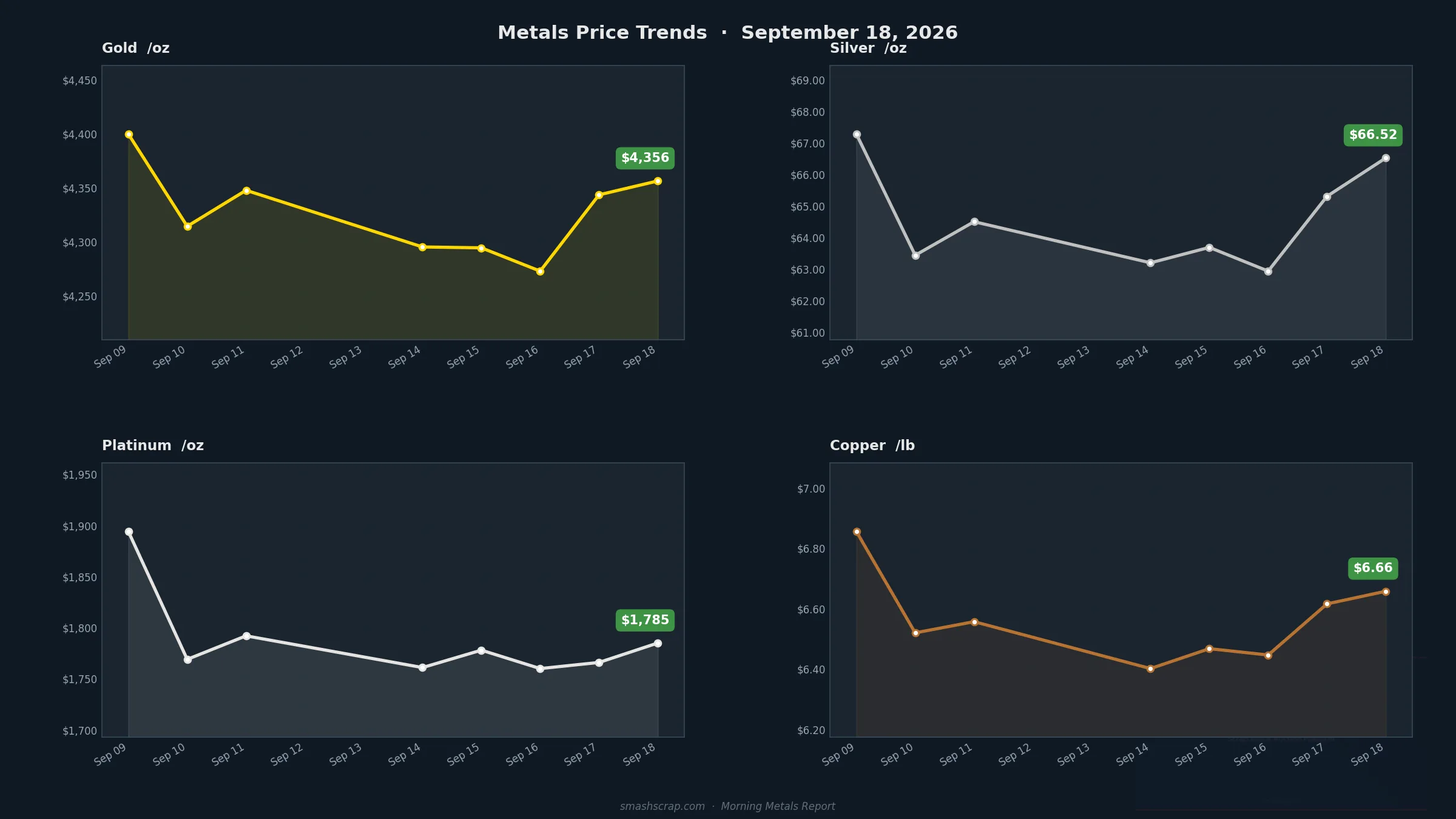
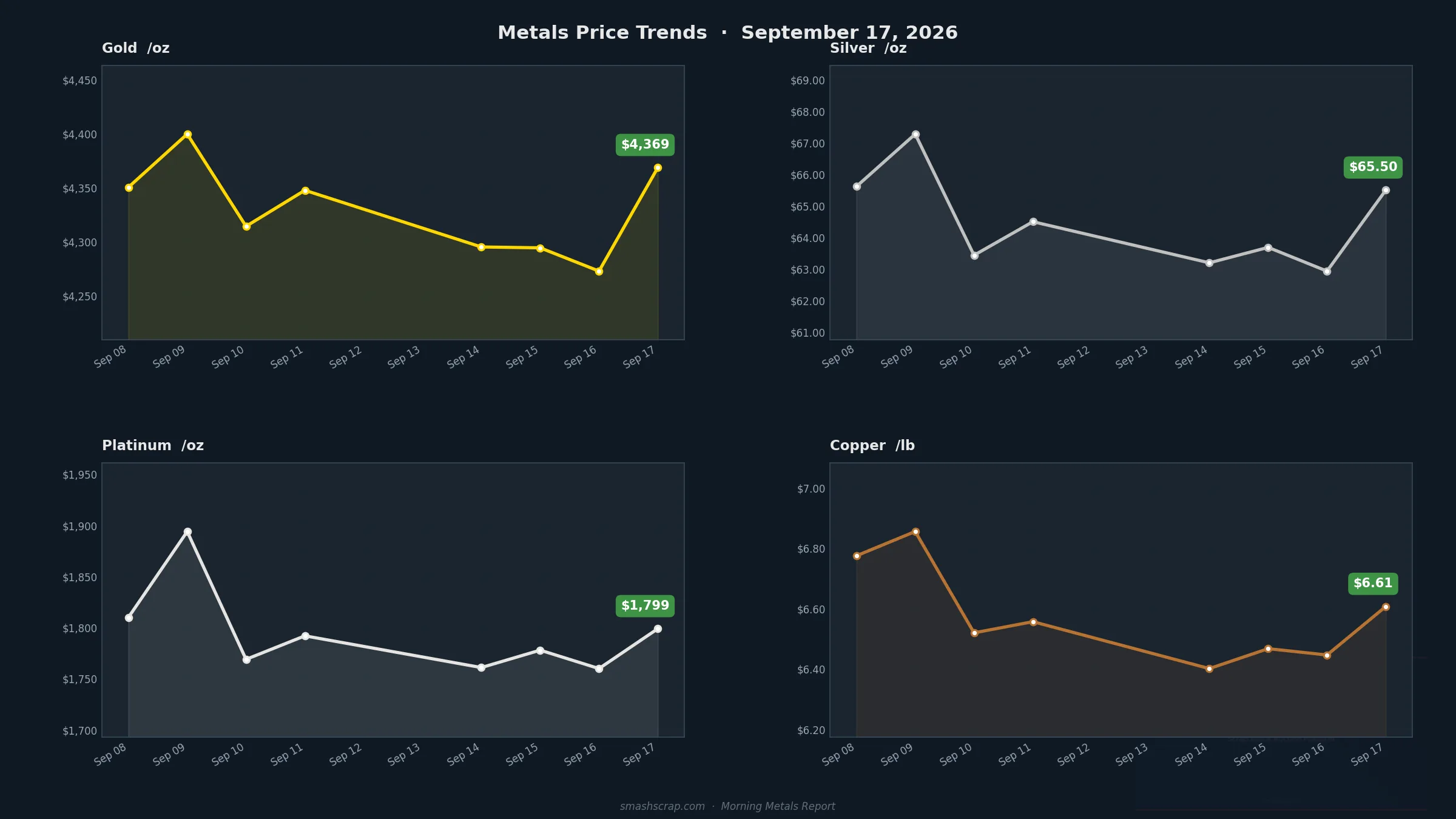
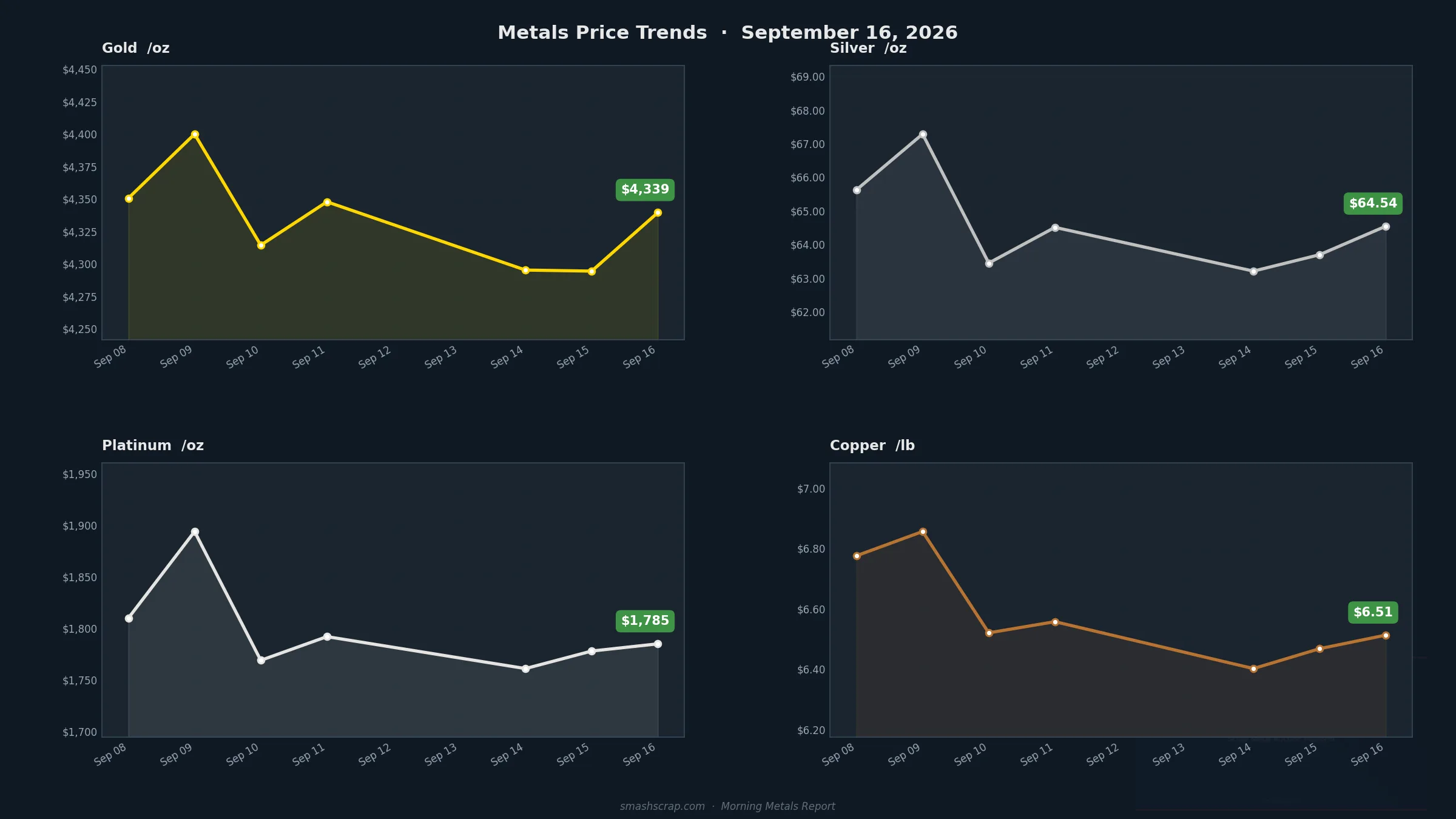
If you're handling cats, you already know the stakes are different. Platinum, palladium, and rhodium prices are volatile, and catalytic converter prices today can swing meaningfully week to week based on PGM (platinum group metal) market conditions. That volatility makes accurate grading even more critical — buyers pricing cats are working with tight margins and need to know exactly what's in the substrate.
When you list catalytic converters for auction, your grading should include:
- OEM identification: Make, model, year where possible. VIN lookup tools can help establish this for automotive-sourced cats.
- Substrate condition: Intact, cracked, blown, or rattled out. A blown cat has a fraction of the PGM value of an intact one.
- XRF assay data: If you have it, include it. Assay-backed listings attract serious buyers and typically see stronger price discovery.
- Sort type: Domestic vs. import, aftermarket vs. OEM. These distinctions are non-negotiable for accurate bidding.
- Photo documentation: Both ends of the substrate, the housing condition, and any identifying marks.
Platforms like SMASH Recycling's auction platform support serial tracking and photo documentation built into the listing workflow. That structure exists precisely because cats are the category where documentation pays the most — and where vague listings cost the most. If you want to sell catalytic converters online at a price that reflects actual PGM content, the listing has to back it up.
For auto salvage operations across Canada — from dismantlers in Saskatchewan to full-service recyclers in larger markets — the ability to document and grade cats properly is increasingly the difference between competitive bids and lowball offers. The ARC and OARA have both pushed for better documentation standards in automotive recycling, and that pressure is moving the whole industry toward better practices.
Building Auction Listings That Attract Serious Buyers
A grade without documentation is just a claim. On a B2B scrap metal marketplace, buyers need more than your word — they need evidence. The best auction listings combine accurate grading with supporting data: weights, photos, assay results where available, and clear descriptions of any contamination or mixed material.
Here's what a strong auction listing looks like in practice:
- Material type and grade: Specific, not vague. "#1 Copper tubing, clean, no fittings" beats "copper."
- Estimated weight: Gross vs. net, with tare weights documented where applicable.
- Photos: Multiple angles. Show the whole load, not just the best corner.
- Contamination disclosure: If there's dirt, moisture, or mixed material, say so. Buyers price known risks better than unknown ones.
- Location and logistics: Where is the material? Loading access? BOL ready?
- Packing list or inventory sheet: Especially for multi-grade loads or containers.
When you build listings this way, you're not just being thorough — you're creating competition. Buyers who have confidence in what they're bidding on bid harder. More competition means better price discovery. That's the whole point of an auction format, and it only works when the listing earns that trust upfront. If you're sourcing or selling material in Regina, connecting with Regina scrap metal services through SMASH gives you access to vetted buyers who expect and reward this level of documentation.
Metal Recycling Prices Saskatchewan: Why Local Grading Practices Matter Nationally
Saskatchewan yards often deal with a specific mix of materials — agricultural equipment, mining-adjacent scrap, automotive dismantling, and construction material. That mix creates grading challenges that aren't always reflected in national price guides. Metal recycling prices Saskatchewan-wide can look different from Ontario or B.C. not just because of freight costs, but because the material profile is different.
Agricultural cast iron grades differently than automotive cast. Heavy wall pipe from an industrial site grades differently than structural steel from a demolition. When you're listing Saskatchewan material on a national or North American auction platform, your grade descriptions need to communicate that specificity clearly — not assume buyers know your local context.
This is where the standardization push from organizations like ARC becomes practical. A buyer in Toronto or Chicago bidding on a Saskatchewan load is relying entirely on your listing. ISRI-aligned grade names create a shared language that crosses those geographic gaps. Use them consistently. Join Canada's B2B scrap marketplace on SMASH Recycling and you'll see how vetted buyers respond when listings speak their language.
For current market context and grading updates, read the latest from SMASH Recycling — the blog covers grade-specific pricing trends and auction best practices regularly. And if you're operating across borders or want a broader view of the market, North America's B2B scrap metal auction platform covers the full continental picture.
Get Your Grades Right Before Your Next Listing Goes Live
Grading isn't a formality. It's the foundation of every competitive bid you'll ever receive. Yards that invest time in accurate descriptions, solid photo documentation, and consistent grade standards build reputations that attract better buyers over time. In a transparent auction environment, that reputation compounds — and so do the results.
If you're ready to list material properly and let real market competition determine your price, SMASH is built for exactly that. No subscriptions, no guessing, no single-buyer relationships where the power only flows one direction. Just documented loads, vetted buyers, and an auction format that rewards sellers who do the work upfront. Register at smashrecycling.ca and put your next load in front of a market that's ready to bid on it.
Disclaimer: Metal recycling prices fluctuate based on global commodity markets, grade, volume, and buyer demand. Always check current rates before listing or selling material.
---Frequently Asked Questions
Q: How do metal recycling prices in Canada compare between grades of the same material?
The spread between grades can be significant. Bare bright copper typically pays more per pound than #2 copper, and the difference grows when buyers are bidding remotely without physical inspection. Accurate grading ensures you're paid for what you actually have — not a blended average.
Q: What do catalytic converter buyers look for in an auction listing?
OEM identification, substrate condition (intact vs. blown), XRF assay data if available, and clear photos of both ends of the converter. The more documentation you provide, the more confidence buyers have — and confident buyers bid more competitively on platinum, palladium, and rhodium content.
Q: Where can I sell scrap metal in Regina on a competitive platform?
SMASH Recycling connects Regina-area sellers with vetted buyers through a transparent auction format. You can list material, document grades, and let competition determine your price — without locking into a single-buyer arrangement. Visit smashrecycling.ca to get started.
Q: Are metal recycling prices in Saskatchewan different from the rest of Canada?
They can be. Freight costs, material mix, and local buyer availability all affect net pricing in Saskatchewan. Listing on a national auction platform expands your buyer pool beyond your local market, which supports better price discovery regardless of where you're located.
Q: What grading standards should Canadian scrap sellers follow?
Most Canadian buyers and platforms reference ISRI Scrap Specifications Circular grade names as a baseline. For automotive-sourced material, the Automotive Recyclers of Canada (ARC) and Ontario Automotive Recyclers Association (OARA) both publish guidance on documentation and grading best practices worth reviewing.
---Follow SMASH on LinkedIn for ongoing scrap metal market insights, grade-specific pricing updates, and auction platform news across Canada and North America.