Aluminum in Everyday Products: What to Keep Separate
From a drink can to a renovation offcut, aluminum turns up in more places than most people expect. It can be rolled into foil, formed into a window-frame profile or cast into a vehicle component. Recognizing those uses is helpful. Keeping the different products separate is the next useful step.
Watch our 47-second video, Aluminum All Around Us, for a look at common examples. This guide explains what to notice before you arrange recycling or describe a business load.
Start with the product, not its colour
Silver-coloured metal is not a material grade. Even products that contain aluminum can include other metals, coatings and non-metal parts. Describe what the item is and what is attached rather than treating the whole object as one clean material.
Common aluminum products around you
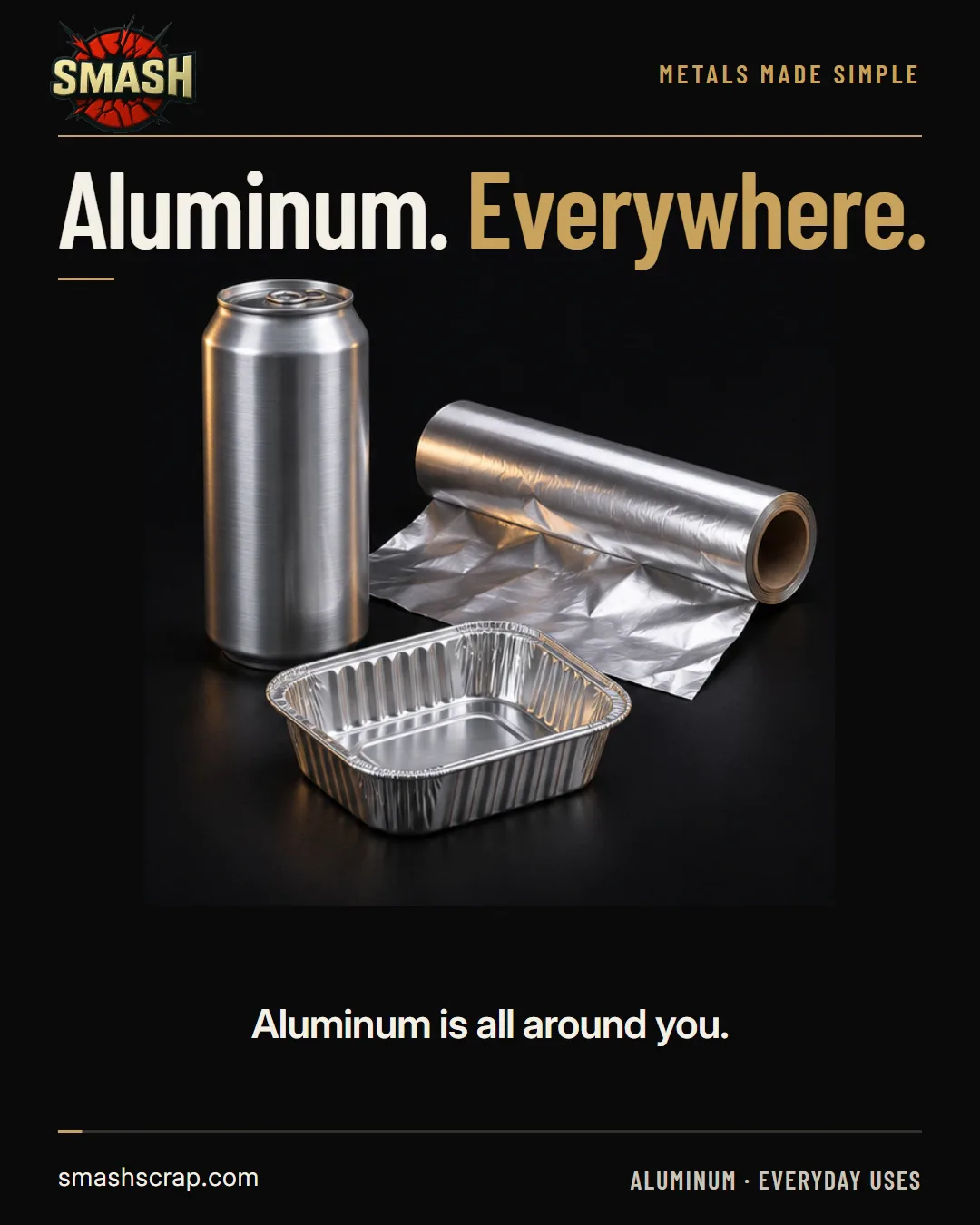
- In the kitchen: Beverage cans, foil and food trays show how thin rolled aluminum becomes useful packaging. Follow your local program's directions for containers and foil; acceptance and preparation can differ.
- On buildings: Gutters, siding, window frames and other extrusions are common applications. A complete window can also contain glass, seals, plastic thermal breaks and fasteners.
- In vehicles: Aluminum alloys are used in wheels, cast engine components and some body panels. A wheel with a tire and a bare wheel are different assemblies to describe to a recycler.
- Inside electronics: Some laptop casings and heat sinks contain aluminum. Heat sinks move heat away from components, while the complete device contains other materials that need appropriate electronics recycling.
Three distinctions that help a recycler understand your load
Packaging versus heavier components. Keep cans and similar packaging identifiable instead of mixing them into a pile of construction or vehicle parts.
Extrusions versus castings. A shaped window-frame offcut and a cast vehicle part are different product forms. Keep clear groups and let your recycler confirm the suitable commercial description.
Bare material versus mixed assemblies. Show attached rubber, steel, plastic or glass in your photographs. Do not assume a complete assembly will be handled the same way as a separated component.
Why aluminum recycling matters
According to the International Aluminium Institute, recycling aluminum uses about 95% less energy than primary aluminum production. That general comparison is based on its global production-energy data for 2019. Keeping recoverable material in circulation helps return it to manufacturing.
A practical preparation checklist
- Organize what you already have. Keep recognizable types separate where practical and avoid introducing unrelated material into a sorted group.
- Take clear photographs. Include a wider view of the load and closer views of the products, coatings and attached parts.
- Ask before changing the item. Confirm the receiving recycler's acceptance and preparation requirements before stripping, cutting or dismantling it. Use the appropriate collection route for packaging, electronics or business scrap.
- Describe uncertainty. If you do not know the alloy or grade, say so. A clear description is more useful than a guessed classification.
Find the SMASH platform for your country
For a Canadian business load, explore SMASH Recycling's Canadian auction platform. If your material is in the United States, visit SMASH Scrap's U.S. auction platform. Review the relevant sale terms before proceeding.
The useful question is not simply “Is there aluminum in it?” It is “What product is this, what else is attached, and how does the receiving recycler want it prepared?”
Sources and video notes
- The Aluminum Association: Processing 101
- Aluminum Extruders Council: Thermal Management
- International Aluminium Institute: Automotive
- International Aluminium Institute: Facts About Aluminium
The video and cover contain AI-generated product illustrations and synthetic narration. They are examples of common applications, not actual inventory or a physical material test.