Scrap Metal Grading: Surrey Auctions Bid Higher
Why Scrap Metal Grading Makes or Breaks Your Auction Listing
Here's a problem every yard operator knows but nobody talks about enough: two sellers list the same material, same weight, same week — and one gets significantly better bids. The difference usually isn't luck. It's grading. How you classify and document your scrap before it hits a scrap metal auction determines how confident buyers feel, and confident buyers bid higher. This is especially true in competitive B2B markets like Surrey, British Columbia, where buyers have options and they're not going to overpay for a listing they can't trust.
This week's roundup breaks down scrap metal grading for Canadian auction listings — what it means, why it matters, and how to do it in a way that gets your loads taken seriously. Whether you're listing copper, cores, catalytic converters, or a mixed ferrous load, the grading game is the same. Get it right and buyers come to you. Get it wrong and you're leaving money on the table — or worse, getting chargebacks.
What Scrap Metal Grading Actually Means for Canadian Sellers
Grading is the process of sorting and classifying scrap metal by type, purity, and condition — before it goes to auction. It's not bureaucracy. It's communication. When a buyer in another province bids on your load, they're bidding on your description. If your description is vague, they'll price in the risk. If your description is accurate and documented, they'll bid based on value. That's a real, meaningful difference in what you take home.
In Canada, common grading standards align loosely with ISRI specifications (Institute of Scrap Recycling Industries), which define grades like #1 Copper, #2 Copper, Bare Bright, Breakage, and so on across dozens of material categories. Canadian buyers — particularly sophisticated ones operating across multiple provinces — expect sellers to use recognized grade names or clearly explain what they have if it falls outside a standard category. Organizations like the Automotive Recyclers of Canada (ARC) and the Ontario Automotive Recyclers Association (OARA) have reinforced best practices around documentation and material classification, especially for auto-sourced scrap like cores, cats, and non-ferrous metals pulled from end-of-life vehicles.
Key grading categories Canadian sellers deal with most:
- Bare Bright Copper — uncoated, unalloyed copper wire, no insulation, clean
- #1 Copper — clean copper pipe or solid wire, no solder, no paint
- #2 Copper — copper with minor oxidation, solder, or coating
- #1 Heavy Melting Steel (HMS) — thick-gauge ferrous, no coatings, ¼ inch or more
- Radiator Grades — copper/brass, aluminum, or mixed radiators each carry different values
- Catalytic Converter Grades — based on platinum group metal (PGM) content: platinum, palladium, and rhodium levels vary by vehicle and unit type
Misgrading isn't just a buyer problem — it comes back on the seller. Disputes, short payments, and lost relationships all trace back to listings that didn't match the material. Grade accurately and you build the kind of reputation that keeps buyers coming back.
Catalytic Converter Grading: The Most Important Category to Get Right
Catalytic converter pricing is the most complex, most volatile, and most misunderstood category in scrap metal today. Catalytic converter prices today are directly tied to the spot prices of platinum, palladium, and rhodium — three precious metals whose values can shift substantially week over week. As of mid-2026, PGM markets have continued to respond to global supply dynamics, particularly from South Africa and Russia, and palladium price and rhodium price movements have been a recurring theme in market conversations across North American recycling yards.
For automotive recyclers in Surrey and across British Columbia, cats are often the highest-value item pulled from end-of-life vehicles. Getting the grade wrong — or not grading at all — is expensive. Here's what proper cat listing looks like:
- VIN-based identification — knowing the year, make, and model the cat came from lets buyers assess PGM content with real data
- Serial number or part number tracking — many cats have traceable codes that identify the unit precisely
- Photo documentation — clear photos of the unit from multiple angles, including the code stamp if visible
- Condition notes — is the substrate intact? Any damage, missing baffles, or aftermarket replacement?
- Lot composition — are you selling individual high-grade units, a mixed lot, or foil/substrate material?
Buyers pricing platinum, palladium, and rhodium content into a bid need this information. Without it, they discount. Platforms like join Canada's B2B scrap marketplace on SMASH Recycling are built specifically to capture this level of detail before a listing goes live — so buyers see documented inventory, not vague descriptions, when they open the auction.
Scrap Metal Inventory Management: The Step Before the Listing
You can't grade what you haven't inventoried. Solid scrap metal inventory management is what separates a professional yard from a pile of guesses. When you're running volume — multiple loads, multiple categories, vehicles in different states of teardown — documentation discipline is what keeps your auction listings accurate and your buyer relationships clean.
For yards doing serious volume in Surrey or anywhere else in British Columbia, an inventory process should capture:
- Material type and grade — confirmed at intake, not guessed at listing time
- Weight or estimated weight — scale tickets where available; estimated weight with clear notation where not
- Source vehicle data — year, make, model, VIN for automotive-sourced non-ferrous
- Photos — taken at intake or when the load is staged, before shipping
- Condition flags — contamination, mixed grades, oversized pieces, anything a buyer needs to know
SMASH's inventory tool is built around this workflow. You document the load before it goes to auction. Buyers see the documentation when they bid. That's how you stop the "it wasn't what was listed" conversation before it starts. explore SMASH Recycling's auction platform to see how inventory management connects directly to your auction listings.
Good inventory habits also protect you legally and operationally. The ARC and OARA both emphasize documentation standards as part of responsible recycling practice — and as regulatory oversight of the automotive recycling sector continues to evolve in 2026, having a clean paper trail matters more than ever.
How Grading Drives Real Competition in B2B Scrap Auctions
Here's what happens when you list a well-graded load on a B2B scrap metal marketplace: buyers don't have to guess. When buyers don't have to guess, they compete on price instead of padding bids for risk. That's the whole mechanism. Competition can help reveal the market — and more buyers means better price discovery. But only if your listing gives them something to compete on.
A vague listing — "mixed non-ferrous, approx. 500 lbs, various grades" — leaves buyers with too many variables. They'll either pass or lowball. A documented listing — "#2 Copper, 480 lbs scale-verified, photo attached, sourced from commercial demo project, no insulation over 10%" — gives a buyer everything they need to move with confidence. That confidence shows up in the bid.
The SMASH scrap metal auction format is designed around this principle. Vetted buyers see your documented inventory. They bid competitively because the risk is low and the information is clear. Auto-invoicing kicks in when the auction closes, so there's no paperwork scramble on either side. For scrap metal recycling Surrey operators running regular volume, this is a fundamentally different experience than calling one buyer and hoping for a fair number.
If you're looking for scrap metal recycling for cash near me, or more precisely — looking to maximize what you're paid for your scrap — the starting point isn't finding a buyer. It's having documented, graded inventory that any serious buyer wants to bid on. find the best price for your scrap on SMASH and see what competition actually does for your bottom line.
This Week in Canadian Scrap: What Yards Should Be Watching
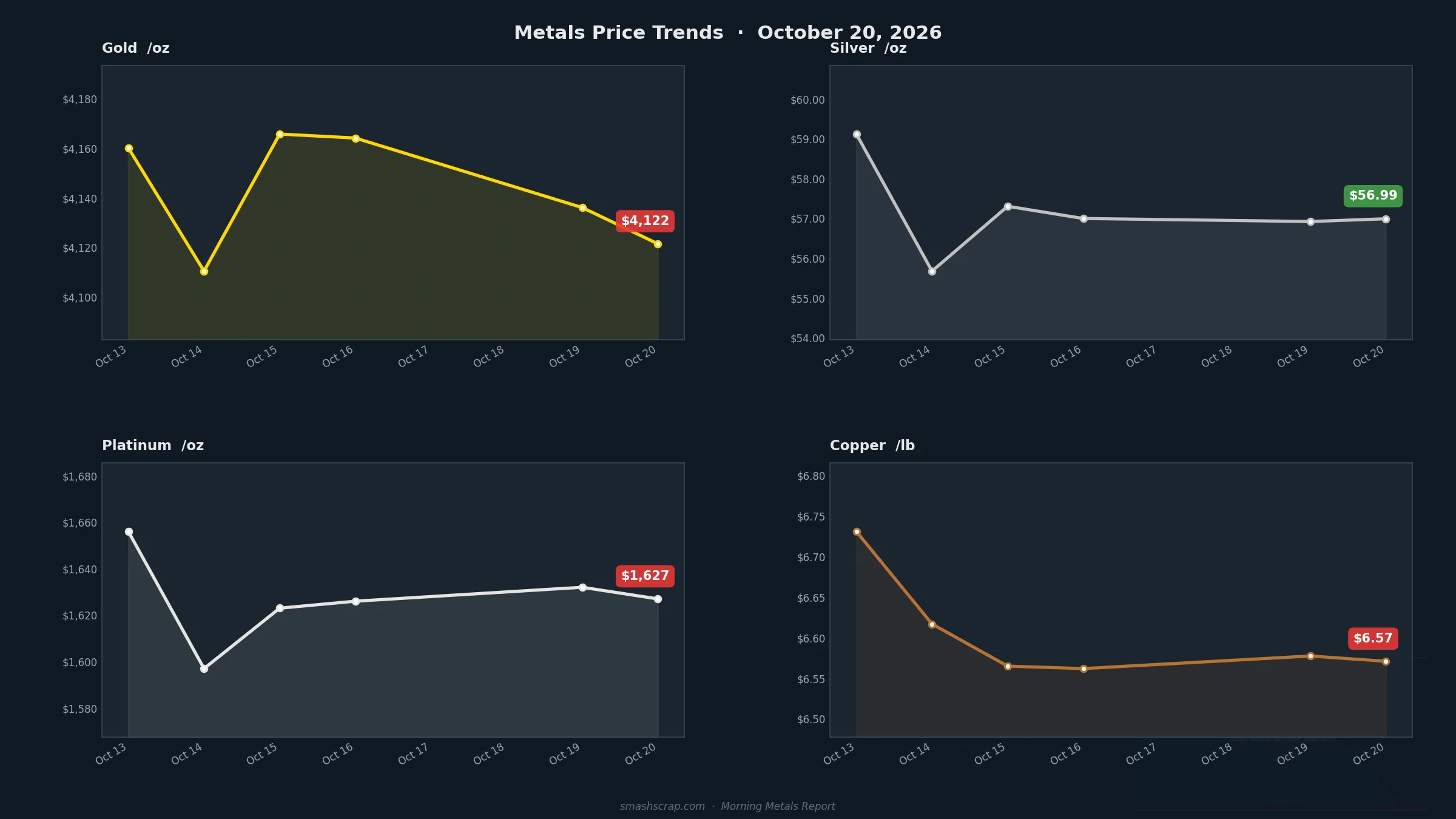
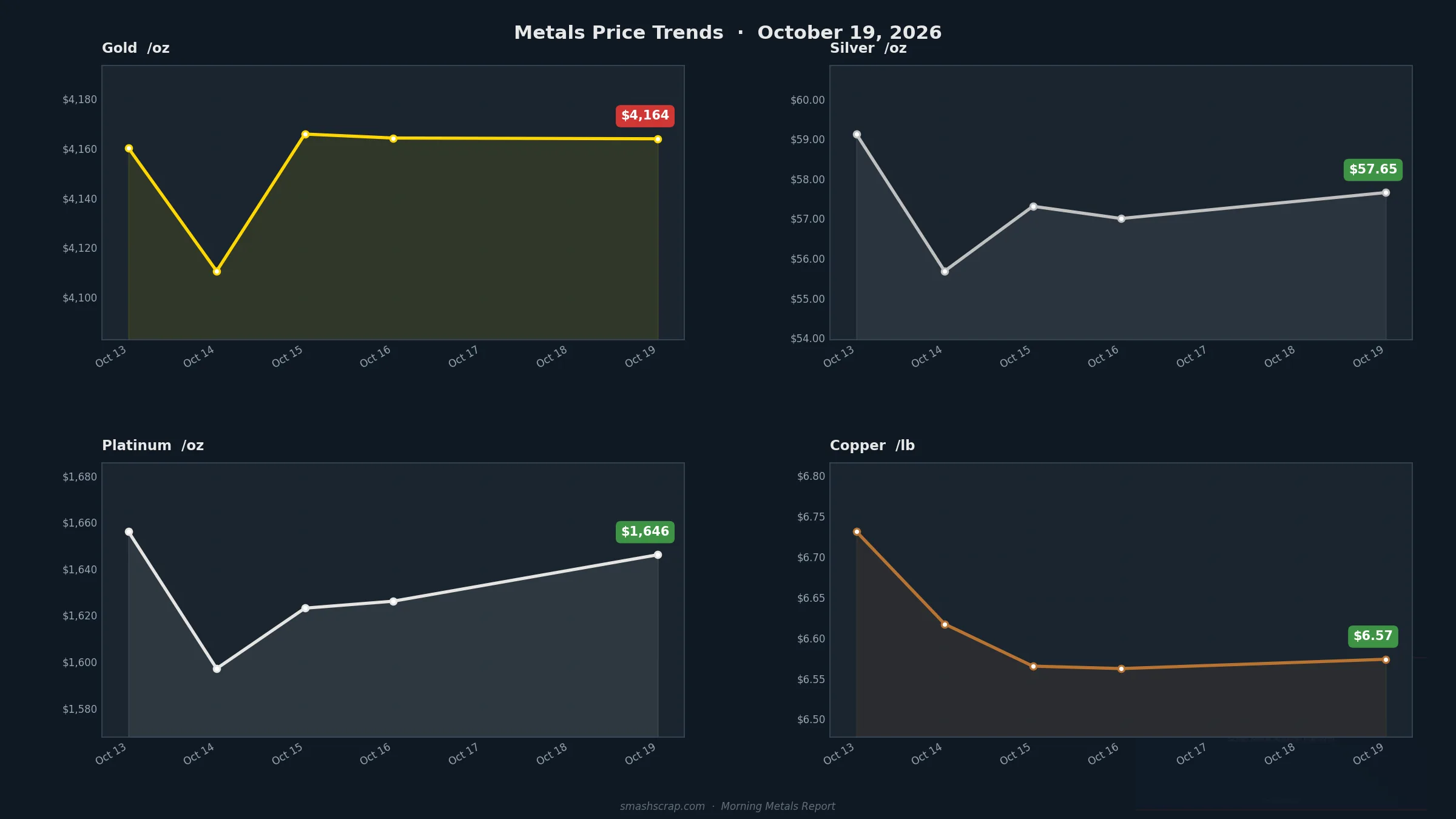
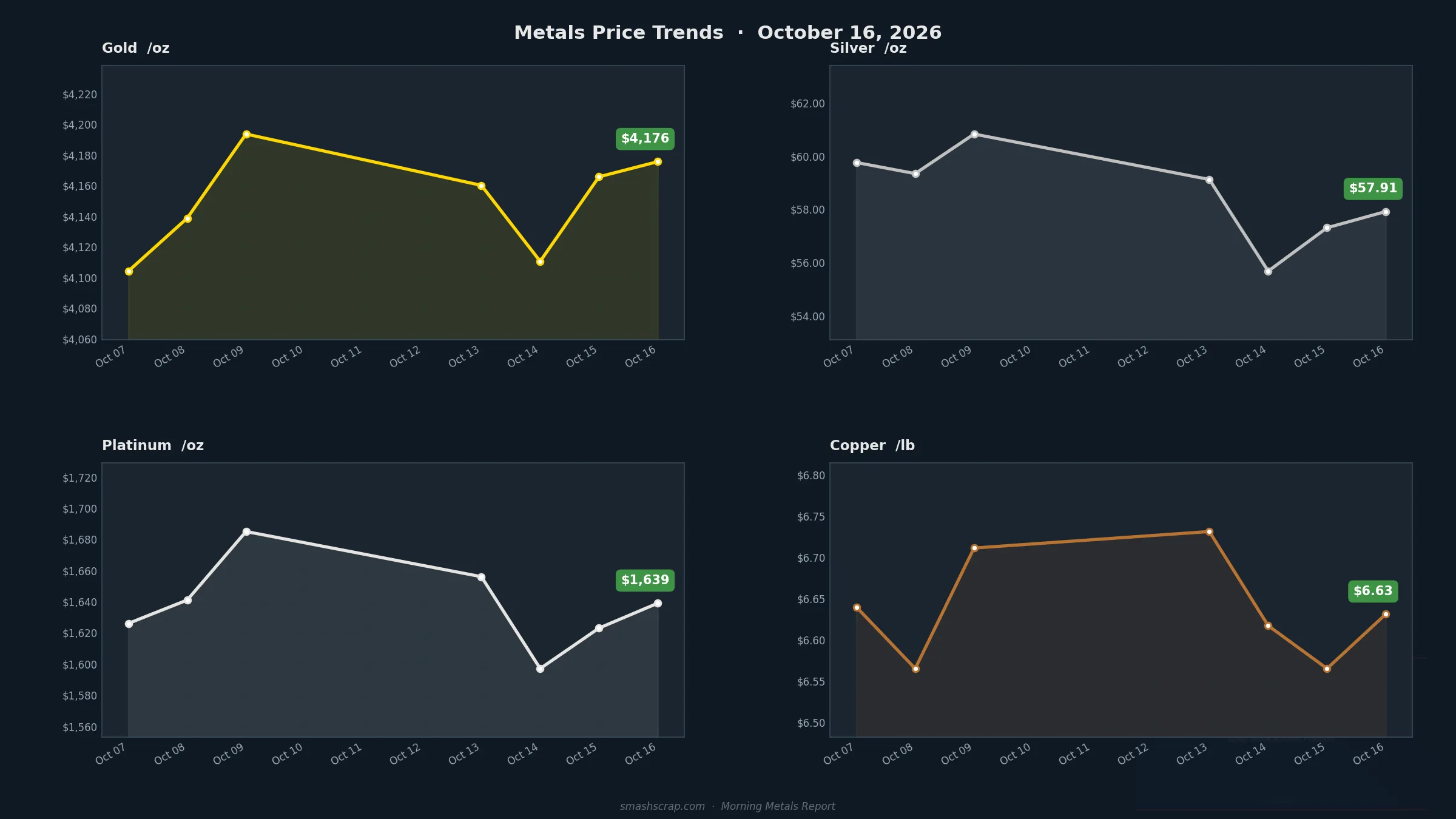
Markets in mid-2026 have kept yards busy making sense of PGM volatility, copper price movement, and continued shifts in the ferrous markets tied to North American steel demand. Copper scrap prices have remained a focal point for non-ferrous operators — particularly for yards moving high volumes of #1 and #2 copper from construction and demolition sources. Platinum price and palladium price continue to be driven by automotive demand signals and mine supply updates, which means cat grading accuracy matters more, not less, in this environment.
For auto wreckers in Canada, the recurring message from market watchers is the same: documented, graded material moves faster and commands better pricing than mystery loads. Buyers who are sophisticated enough to participate in a B2B auction are sophisticated enough to know the difference — and they bid accordingly.
Surrey's recycling sector sits in a strong position geographically, with access to buyers across the Lower Mainland, Vancouver Island, and beyond. Yards offering Surrey scrap metal services that combine solid grading practices with a transparent auction platform are positioned well as the market continues to reward documentation and penalize guesswork. Stay current on what's moving and what's paying by checking the latest from SMASH Recycling each week.
Disclaimer: Scrap metal prices fluctuate daily based on commodity markets, regional demand, and material grade. Always verify current pricing before making decisions — do not rely on historical figures as a guide to today's rates.
If you're running a yard in British Columbia or anywhere across Canada and you're still selling scrap through a single buyer and a phone call, it's worth asking what you're leaving on the table. The grading work you do upfront pays for itself in the auction. SMASH is built for exactly that — no subscription fees, vetted buyers, full transparency. When you're ready to run your inventory the right way, join Canada's B2B scrap marketplace on SMASH Recycling and see what documented, competitive auctions actually look like.
Frequently Asked Questions
Q: What does scrap metal grading mean for automotive recyclers in Surrey?
Grading means classifying your scrap by type, purity, and condition before it goes to auction or sale. For automotive recyclers in Surrey, this typically covers non-ferrous metals like copper and aluminum, catalytic converters graded by PGM content, and ferrous materials sorted by gauge and contamination level. Accurate grading leads to better bids and fewer disputes with buyers.
Q: How do I know what grade my catalytic converters are?
Catalytic converter grades are based on the platinum, palladium, and rhodium content inside the unit — which varies by vehicle make, model, and year. VIN lookup and serial number tracking are the most reliable ways to identify a unit. Platforms like SMASH include VIN lookup and serial tracking tools specifically to help sellers document cats accurately before listing.
Q: Do scrap metal prices in Surrey differ from the rest of Canada?
Base commodity prices (copper, platinum, palladium, etc.) are set by global markets, so they don't change by city. Regional factors like transportation costs, local buyer competition, and volume availability can affect net returns. Running your scrap through a B2B auction platform exposes your load to a broader pool of vetted buyers, which can improve price discovery regardless of your location.
Q: What is the SMASH scrap metal auction and how does it work for Canadian sellers?
SMASH is a B2B scrap metal auction platform where Canadian sellers list documented inventory and vetted buyers bid competitively. Sellers upload photos, weights, grades, and relevant vehicle data. Buyers see the full listing and bid based on that information. When the auction closes, auto-invoicing handles the paperwork. There are no subscription fees — SMASH only earns when the seller sells.
Q: Are there industry standards for scrap metal grading in Canada?
Most Canadian buyers reference ISRI grade specifications as the baseline for non-ferrous and ferrous classifications. Industry organizations like the Automotive Recyclers of Canada (ARC) and the Ontario Automotive Recyclers Association (OARA) promote documentation and best-practice standards for automotive-sourced scrap. Aligning your grading language with recognized standards makes your auction listings more credible to experienced buyers.
Follow SMASH on LinkedIn for weekly market insights, scrap metal price updates, and industry news relevant to Canadian recycling yards and buyers.