Metal Recycling Vancouver: Auctions Beat Spot Prices
If you're doing metal recycling near me Vancouver searches trying to figure out whether you're leaving money on the table — you probably are. The spot-price model has been the default for decades, but it was never built for sellers. It was built for buyers who wanted a quick, cheap transaction with no competition in the room. Lot-based auctions change the equation entirely.
This week's market recap breaks down exactly why the auction format outperforms spot-price selling for scrap yards, auto recyclers, and industrial sellers across British Columbia and the rest of Canada — and what the shift means for your bottom line in 2026.
---The Spot-Price Model: Who It Actually Favours
Here's the honest version of spot-price selling: one buyer quotes you a number, you take it or you don't. There's no competitive pressure, no transparency, and no way to know if that quote reflects the actual market or just what that buyer wants to pay today. In most cases, it's the latter.
Scrap yards in Vancouver and across British Columbia have been operating this way for years — calling the same two or three buyers, getting quotes that feel close enough, and moving loads out the door. It's fast. It's familiar. And it quietly costs you money on every single transaction.
The problem isn't that spot pricing is dishonest. The problem is structural. When one buyer controls the pricing conversation, there's zero incentive for them to offer more than the minimum you'll accept. That's not a conspiracy — it's just how markets work without competition.
---What Lot-Based Auctions Actually Do Differently
A lot-based auction doesn't just change who buys your scrap. It changes the entire dynamic of the transaction. Instead of one buyer making a take-it-or-leave-it offer, you get multiple vetted buyers competing against each other for your specific load.
That competition matters for several reasons:
- Price discovery becomes real. More buyers means better price discovery. You stop guessing what the market is and start seeing it directly.
- Buyers bid on documented inventory. When your load is photographed, catalogued, and serialized — buyers bid with confidence. Documented inventory gives buyers more confidence, and confident buyers bid higher.
- Specialty materials get properly valued. Cats, cores, non-ferrous loads, and mixed metals often get lumped into generic spot quotes. In an auction format, those line items get individual attention from buyers who actually want them.
- You set the timeline. You're not chasing callbacks. The auction runs, bids come in, and you review offers on your schedule.
For yards running volume — multiple loads of copper scrap, catalytic converters, or auto cores per week — the compounding difference between a competitive auction and a single spot quote adds up fast over a quarter.
---Scrap Metal Prices in British Columbia: Why Transparency Matters Right Now
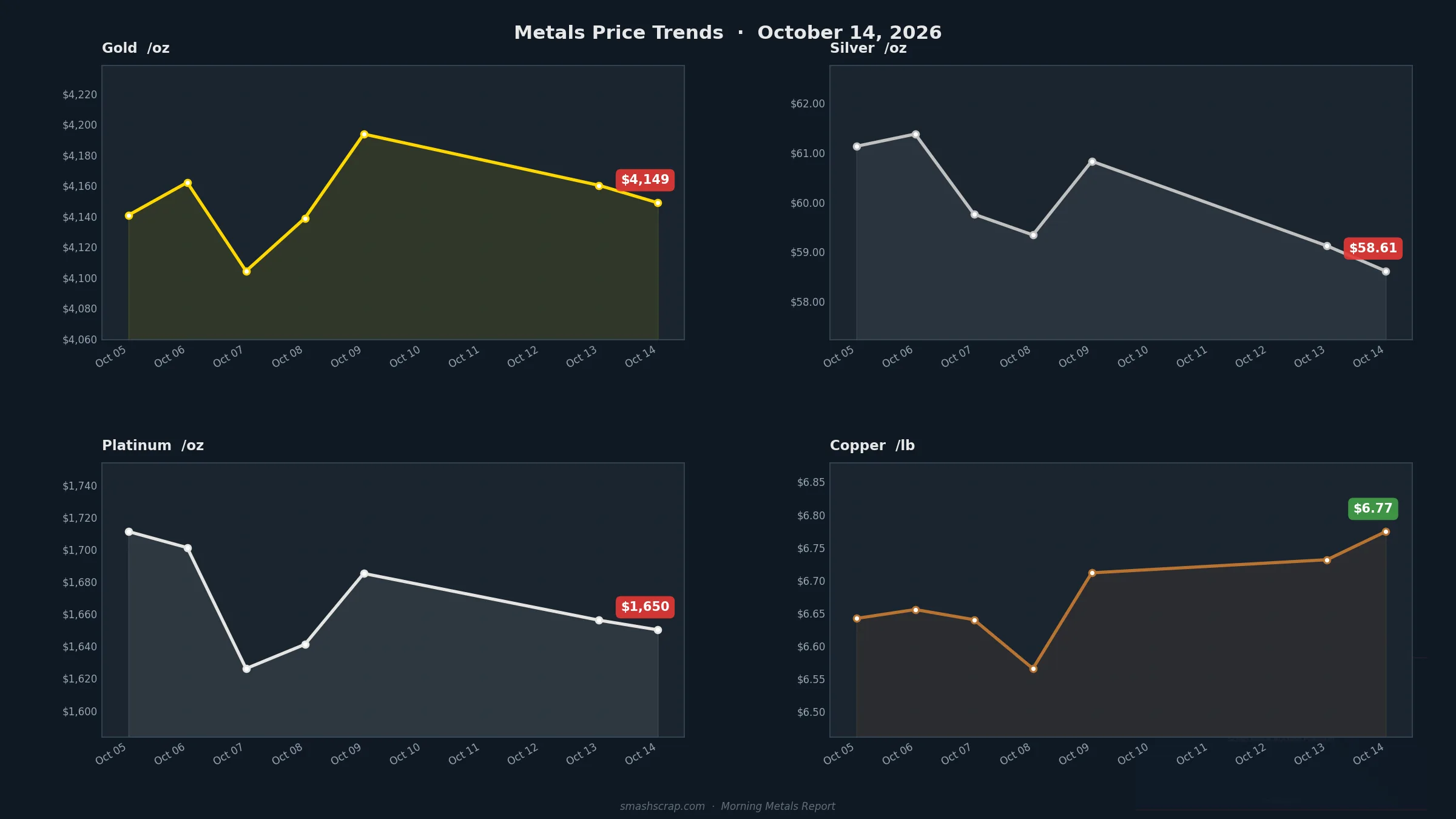
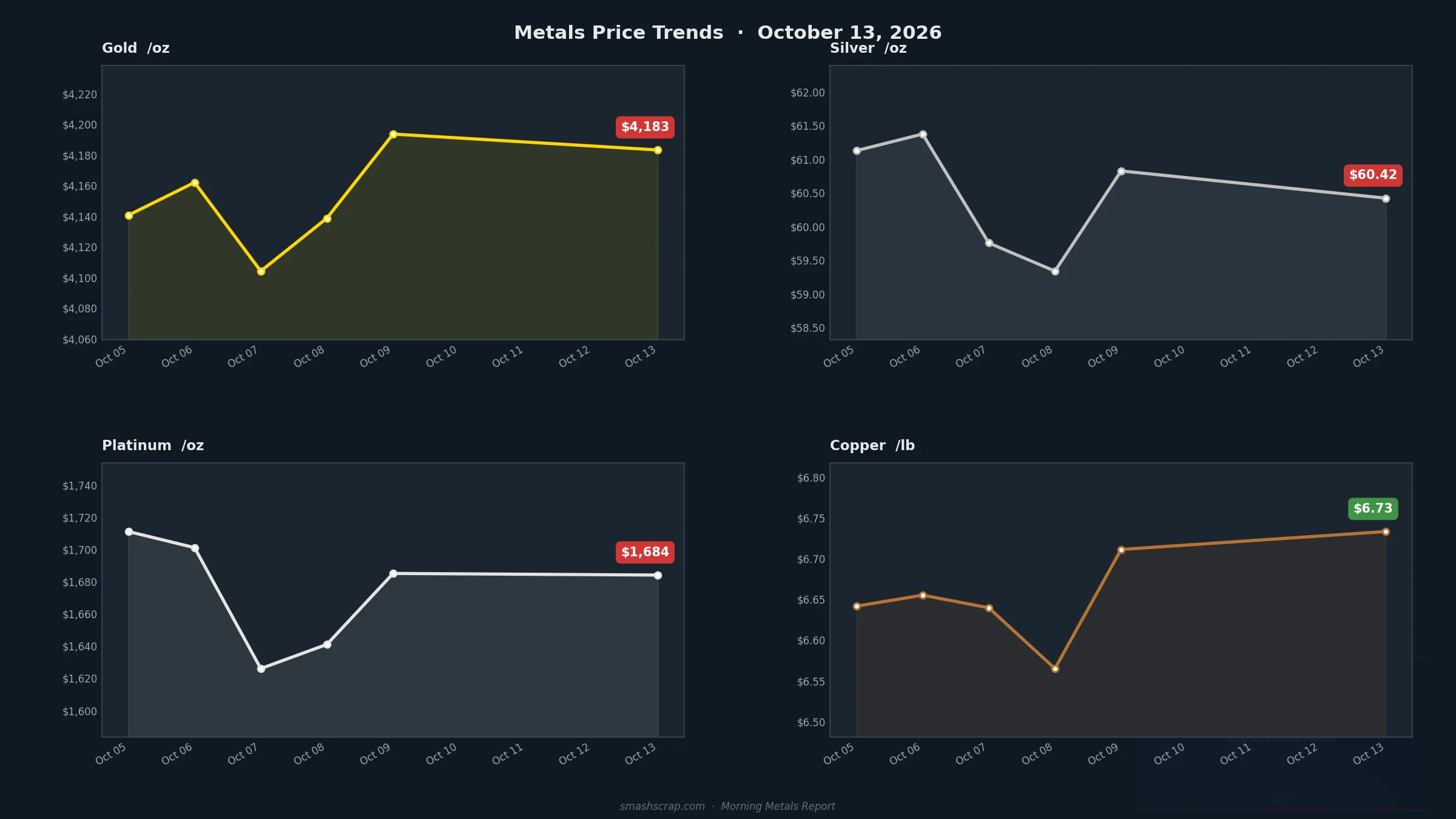
In 2026, metal recycling prices British Columbia are moving with real volatility. Platinum, palladium, and rhodium prices have been shifting week to week as industrial demand and global supply chains continue to recalibrate. Copper scrap prices have followed a similar pattern — up in some regions, flat in others, driven by construction activity and electrical manufacturing demand.
When prices are moving this fast, locking in a spot quote from a single buyer is a gamble. That buyer knows where the market is. You might not. A lot-based auction on a platform like SMASH Recycling's auction platform gives you real-time competitive bids that reflect actual market conditions — not one buyer's margin calculation.
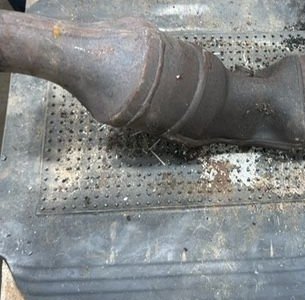
This matters especially for high-value materials. If you're sitting on a load of catalytic converters, the spread between a low spot quote and a competitive auction result can be significant. Catalytic converter prices today are driven by the PGM content inside — platinum, palladium, and rhodium — and buyers who specialize in cats will often outbid a general scrap buyer who's pricing for safety.
Disclaimer: Metal prices fluctuate daily based on global commodity markets. Always verify current rates before selling. SMASH auction results reflect live competitive bids, not guaranteed prices.
---Auto Recycling Vancouver: Where Lot Auctions Make the Biggest Difference
Auto recycling in Vancouver sits at an interesting intersection of volume and value. Yards processing end-of-life vehicles are handling everything from shredder-ready bodies to high-value components — engines, transmissions, catalytic converters, copper wiring harnesses, and aluminum wheels. That's not one product. That's a dozen different buyer segments in one vehicle.
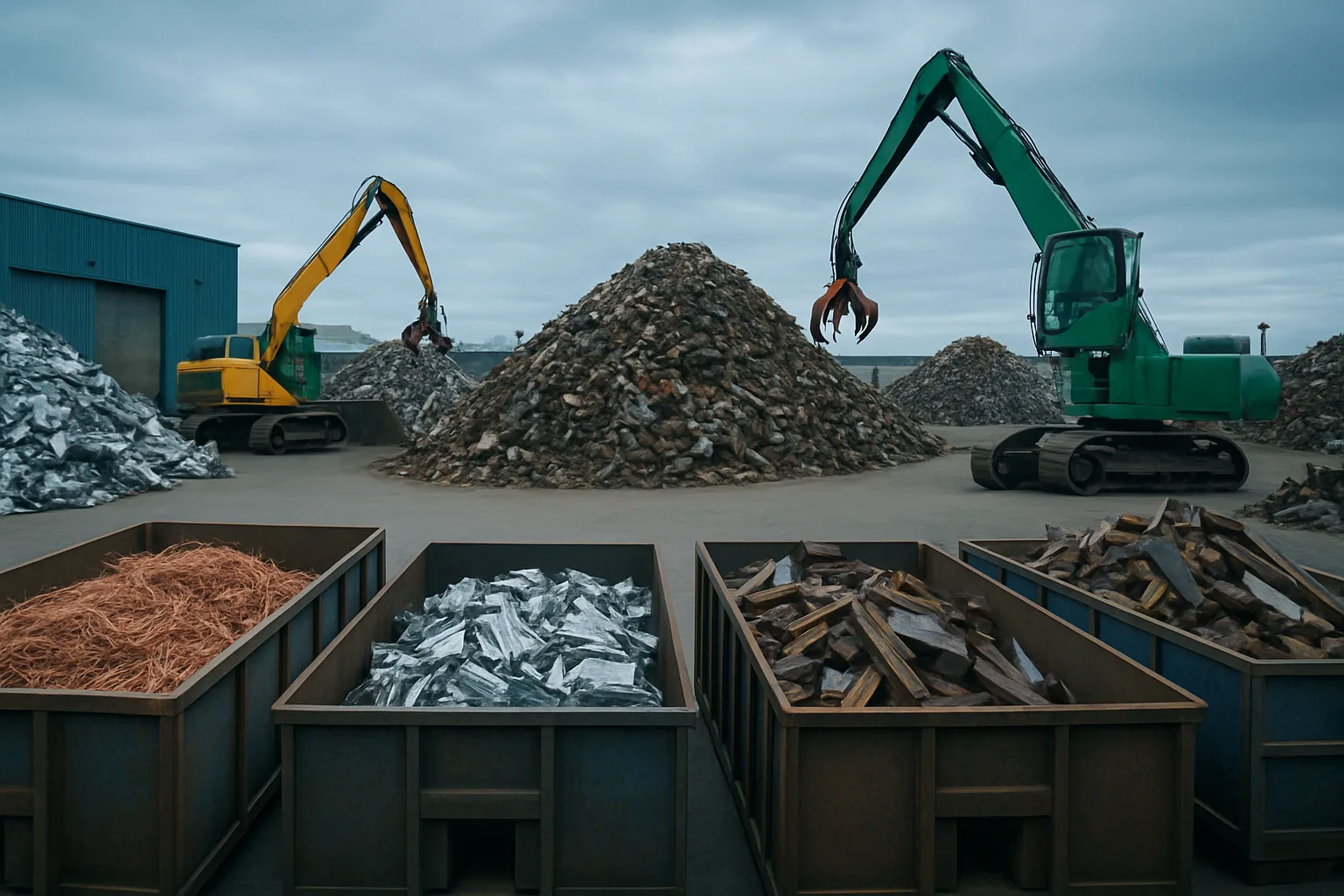
Spot-price selling collapses all of that into a single number. A lot-based auction lets you break your inventory into lots that match actual buyer demand. Your cats go to a cat specialist. Your non-ferrous goes to a non-ferrous buyer. Your ferrous shred goes where the best ferrous bid is. The result is a more accurate reflection of what your inventory is actually worth.
Organizations like the Automotive Recyclers of Canada (ARC) and the Ontario Automotive Recyclers Association (OARA) have long advocated for better transparency and documentation standards in the Canadian auto recycling sector. A documented, lot-based auction approach aligns directly with those standards — VIN lookup, serial tracking, and photo documentation create a paper trail that protects both buyer and seller.
If you're running Vancouver scrap metal services and still sending loads out the door on a handshake and a phone call, you're operating in a way that the industry has been trying to move past for years.
---Sell Scrap Metal Online: The Operational Case for Auction Platforms
Beyond price, there's a real operational argument for moving to an online lot-based auction model when you want to sell scrap metal online. The admin work that comes with spot selling — chasing buyers, re-quoting loads, sorting out disputed weights, losing paperwork — is a hidden cost that doesn't show up on your P&L but absolutely shows up in your team's time.
An auction platform like Canada's B2B scrap marketplace on SMASH Recycling handles the heavy lifting through built-in tools:
- Inventory tool — catalogue your loads before they go to auction
- VIN lookup and serial tracking — critical for auto recycling compliance and buyer confidence
- Photo documentation — buyers see exactly what they're bidding on, which reduces disputes after the sale
- Auto-invoicing — once a lot sells, the paperwork generates automatically
- GST/HST/PST handling — tax documentation built into the transaction, not a separate headache
No subscription fees. SMASH only wins when the seller wins. That alignment matters — you're not paying for a platform that makes money whether or not your loads actually sell.
For yards across British Columbia, Manitoba, and the rest of Canada running regular volume, these tools reduce administrative drag while improving the quality of every transaction. Find the best price for your scrap on SMASH and see what competitive bidding looks like for your specific inventory.
---Weekly Market Snapshot: August 30, 2026
This week's scrap metal market across Canada continued to show mixed signals. Non-ferrous metals — particularly copper and aluminum — held relatively firm, supported by ongoing infrastructure spending in several provinces. Ferrous markets remained softer, with mill demand varying by region.
For auto recyclers, the catalytic converter market remains active. Platinum price movements have been the primary driver this week, with palladium trading in a tighter range than earlier in 2026. Rhodium price volatility, which characterized much of mid-2026, has moderated somewhat — though buyers are still pricing in risk on larger lots.
If you've been holding cat inventory waiting for a better window — competition can help reveal the market. An auction format lets you test actual buyer appetite rather than accepting one buyer's read on where prices are heading.
For the most current Canadian scrap metal prices and auction results, read the latest from SMASH Recycling — updated weekly with market context for Canadian sellers.
---Frequently Asked Questions
Q: How does a lot-based scrap metal auction work for a yard in Vancouver?
You catalogue your inventory — loads, lots, or individual high-value items like catalytic converters — and list them on the SMASH platform. Vetted buyers across Canada bid competitively during the auction window. When the auction closes, you review the top bids and proceed with the sale. The platform handles invoicing and documentation automatically.
Q: Is metal recycling near me Vancouver different from other Canadian markets?
Vancouver's scrap market has its own dynamics — port access, proximity to Asian export markets, and a strong auto recycling sector all influence local pricing. That said, a competitive auction format levels the playing field regardless of where you're located, because vetted buyers from across North America can bid on your loads remotely.
Q: How do catalytic converter prices today affect what I should accept for my cats?
Catalytic converter prices are tied directly to platinum, palladium, and rhodium spot prices — which can shift meaningfully week to week. Accepting a flat spot quote without knowing what competitive buyers would actually pay is risky when PGM prices are moving. An auction format gives you real bids based on current market conditions rather than one buyer's margin calculation.
Q: Do I need a subscription to sell on SMASH?
No. SMASH operates without subscription fees. The platform earns when transactions close successfully — which means there's a direct incentive to deliver genuine competition and real results for sellers.
Q: How does auto recycling in Vancouver connect to national platforms like SMASH?
Vancouver yards — like any Canadian auto recycler — can list inventory on SMASH and reach vetted buyers across the country. The platform's VIN lookup, serial tracking, and photo documentation tools are particularly useful for automotive lots where buyers need confidence in what they're bidding on before the auction closes.
---The old way of selling scrap — one buyer, one call, one number — made sense when there was no alternative. There's an alternative now. If you're ready to see what your inventory actually fetches in a competitive market, join Canada's B2B scrap marketplace on SMASH Recycling and find out what real price discovery looks like for your yard.
Follow SMASH on LinkedIn for weekly market updates, scrap metal price insights, and auction platform news across Canada.