Fair Prices for Etobicoke Automotive Recyclers
Why Transparent Pricing Is the Biggest Problem Facing Canadian Scrap Sellers Today
Ask any experienced scrap seller in Etobicoke what their biggest frustration is, and you'll likely hear the same answer: they never quite know what their material is actually worth. One yard quotes low, another quotes high, and without a clear market benchmark, sellers are left guessing whether they're getting a fair deal or leaving serious money on the table. In Canada's B2B scrap metal marketplace, that information gap costs sellers thousands of dollars every year.
Transparent pricing isn't just a nice feature — it's the foundation of a functioning scrap market. When automotive recyclers in Etobicoke and across Ontario can see real-time competitive bids, they make better decisions, build stronger relationships with buyers, and ultimately run more profitable operations. This article breaks down exactly why pricing transparency matters and how modern auction platforms are changing the game.
The Hidden Cost of Opaque Scrap Metal Pricing in Ontario
For decades, scrap metal pricing in Canada has operated largely on handshake deals, phone calls, and relationships built over years. That system worked when material volumes were modest and competition was limited. But the market has changed. Scrap metal inventory management has become more complex, with sellers managing everything from shredded steel and copper wire to high-value catalytic converters — each carrying its own pricing variables tied to global commodity markets.
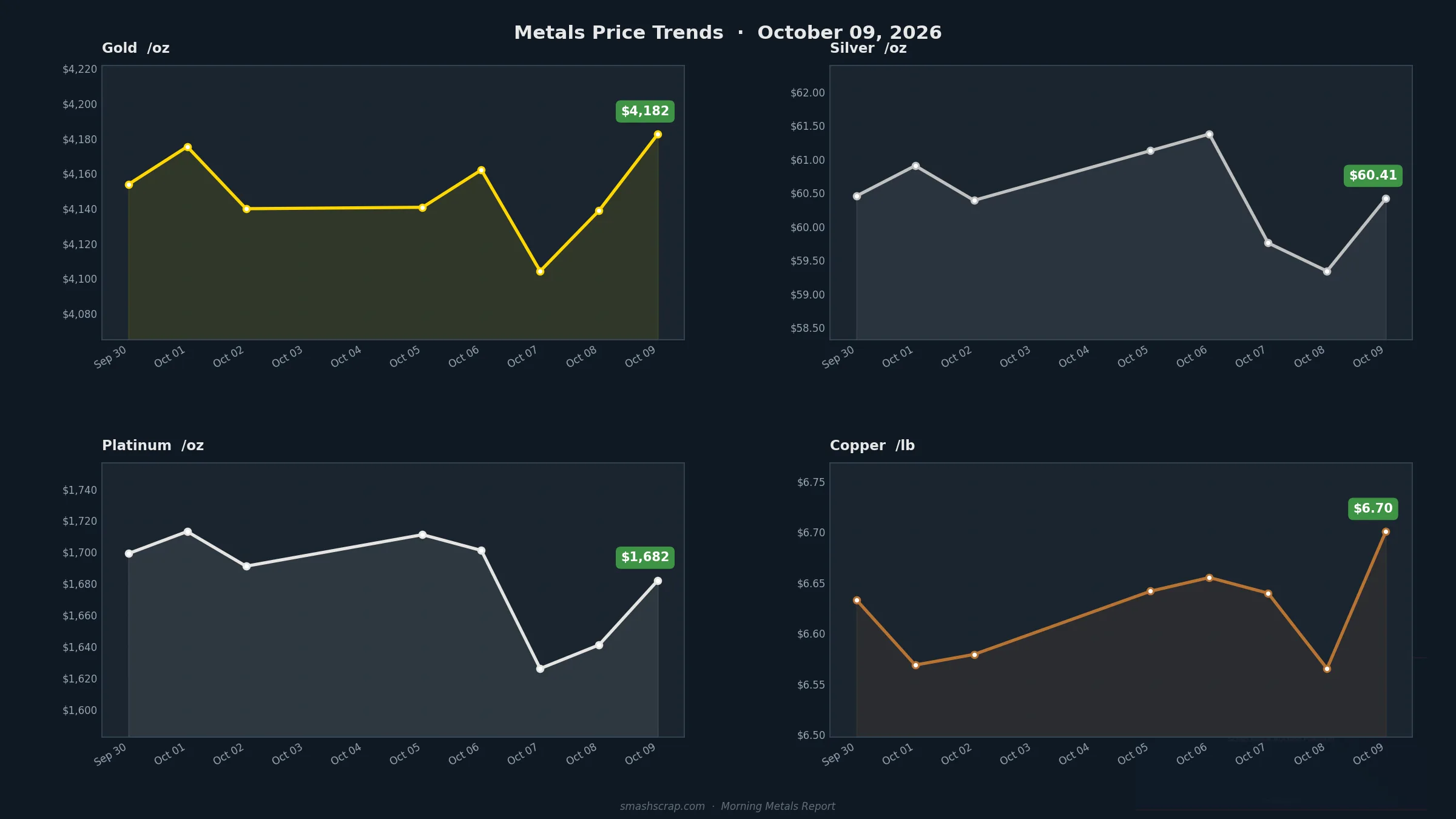
When buyers control the pricing conversation without any competitive pressure, sellers absorb the loss. Consider catalytic converters as an example. A single catalytic converter can contain meaningful quantities of platinum, palladium, and rhodium — three of the most volatile precious metals on the market. Platinum prices, palladium prices, and rhodium prices fluctuate daily based on global supply chains, automotive production trends, and industrial demand. If a seller walks into a yard without knowing current PGM (platinum group metal) spot values, they have no leverage. A buyer offering a flat rate has every incentive to keep that rate low.
The same principle applies across the board. Copper scrap prices shift with global demand cycles. Steel fluctuates with infrastructure spending. Without access to live market data and competitive bidding, Ontario scrap sellers are essentially negotiating blind.
How Auction Platforms Create Honest Markets for Scrap Metal Recycling in Etobicoke
The logic of an auction is straightforward: when multiple qualified buyers compete for the same lot, the seller discovers the true market value of their material. No guesswork, no single buyer setting the terms. The SMASH scrap metal auction marketplace applies exactly this principle to the Canadian B2B scrap market, giving sellers access to a network of vetted buyers who bid openly on listed inventory.
For scrap metal recycling in Etobicoke specifically, this matters enormously. Etobicoke sits in one of Ontario's most active industrial corridors, with automotive dismantlers, recycling yards, and metal processors all competing for the same buyer relationships. When a local recycler lists a batch of catalytic converters or a load of copper scrap through a competitive platform, they're no longer limited to whoever answers the phone in their network. They're reaching buyers across the province — and often across the country.
This shift changes the entire dynamic of a transaction:
- Sellers see multiple bids in real time, giving them a live snapshot of actual market demand.
- Buyers compete on merit, not just on relationships or geographic proximity.
- Price discovery happens publicly, creating a reference point that benefits both sides over time.
- High-value materials like catalytic converters reach specialized buyers who understand PGM content and price accordingly.
The result is a more efficient market — and more revenue staying with the seller where it belongs.
Can You Recycle Catalytic Converters? What Etobicoke Sellers Need to Know
Yes — and if you're not actively managing your catalytic converter inventory, you're likely leaving significant value behind. Catalytic converters are among the most valuable items in any automotive recycler's inventory because of the precious metals locked inside. Platinum, palladium, and rhodium serve as the active catalysts that neutralize vehicle emissions, and even a single converter from a common passenger vehicle can contain measurable quantities of all three metals.
Automotive recyclers in Etobicoke deal with catalytic converters constantly — whether they're processing end-of-life vehicles, buying cores from shops, or managing bulk lots from fleet dismantlers. The challenge isn't sourcing them. The challenge is getting accurate pricing for them. Because PGM values change daily, a converter you price on Monday could be worth meaningfully more or less by Friday.
This is where platforms like SMASH solve a real operational problem. Instead of calling a single refiner or relying on a static price sheet, sellers can list converter lots and let buyers — including specialized converters buyers who track PGM markets closely — submit competitive bids. If you've ever wondered whether you're getting the right price for your cores, a competitive auction removes that uncertainty entirely. Explore SMASH Recycling's auction platform to see how catalytic converter listings work in practice.
Disclaimer: Catalytic converter prices fluctuate daily based on platinum, palladium, and rhodium spot rates. Always check current market values before listing or selling.
Scrap Metal Inventory Management: Why Organization Drives Better Prices
Transparent pricing doesn't just depend on the platform — it also depends on the seller. Disorganized inventory, incomplete material descriptions, and inconsistent grading are among the top reasons sellers underperform on value, even on competitive platforms. Buyers price risk. If they don't know exactly what they're bidding on, they'll discount aggressively to protect themselves.
Effective scrap metal inventory management is the foundation of strong auction results. Before listing any material — whether it's shredded copper, stainless steel, or a batch of catalytic converters — serious sellers should be doing the following:
- Grade and sort materials accurately. Mixed loads almost always sell for less than sorted, graded lots. Separate your #1 copper from #2. Identify your converter types by vehicle make and catalytic content where possible.
- Document weights and quantities. Buyers need accurate lot sizes to bid confidently. Approximate numbers create hesitation; precise measurements create trust.
- Photograph the material. Visual documentation reduces disputes and increases buyer confidence, especially for high-value lots.
- Track market timing. Listing copper when copper scrap prices are trending upward, or catalytic converters when palladium prices are elevated, puts you in the best position to capture peak demand.
- Maintain compliance records. Organizations like the Ontario Automotive Recyclers Association (OARA) and the Automotive Recyclers of Canada (ARC) set important standards around responsible recycling and material documentation. Following their frameworks not only keeps your operation compliant — it signals professionalism to buyers.
When your inventory is organized and your listings are accurate, buyers bid with confidence. That confidence translates directly into better prices for you.
Finding the Right Buyers: Beyond the Scrap Depot Near Me Search
There's nothing wrong with using a local scrap depot. For small volumes of common materials, convenience matters. But if you're running a volume operation — an automotive recycling yard, a demolition contractor, or a metal processor — limiting yourself to whatever scrap depot is nearest is a strategy that costs you money at scale.
The "scrap depot near me" search makes sense for a homeowner cleaning out a garage. For a business moving tonnes of material weekly, the better question is: which buyers across Canada will pay the most for what I have? A buyer in Hamilton, Toronto, or Mississauga may offer significantly more than your nearest local yard, especially for specialty materials like catalytic converters, insulated copper wire, or stainless steel. But you'd never know that without access to a broader marketplace.
This is precisely the gap that joining Canada's B2B scrap marketplace on SMASH Recycling fills. Instead of calling five different yards and comparing quotes manually, sellers post their material once and let qualified buyers come to them. For high-value, time-sensitive materials, this approach consistently surfaces better prices than any single local quote would. And for sellers in Etobicoke and across Ontario, it means your geographic location no longer limits your buyer pool.
To read the latest from SMASH Recycling on market trends, pricing updates, and best practices for B2B scrap selling, the blog is updated regularly with actionable intelligence for serious sellers.
Frequently Asked Questions
Q: How does transparent pricing help automotive recyclers in Etobicoke specifically?
Automotive recyclers in Etobicoke operate in a competitive market where material values — especially for catalytic converters and ferrous metals — change frequently. Transparent auction pricing gives local recyclers access to competitive bids from buyers across Ontario and Canada, ensuring they're not limited to the rates offered by a single local buyer. It removes the information asymmetry that has historically favoured buyers.
Q: Can you recycle catalytic converters through an online auction platform?
Yes. Catalytic converters are among the most valuable materials you can list on a B2B scrap auction platform. Because they contain platinum, palladium, and rhodium — metals with daily-fluctuating spot prices — they benefit enormously from competitive bidding. Specialized buyers who track PGM markets closely will often bid significantly higher than a general scrap yard offering flat-rate pricing.
Q: What is scrap metal inventory management and why does it matter for pricing?
Scrap metal inventory management refers to how a seller organizes, grades, documents, and tracks their scrap materials before selling. Strong inventory management directly improves auction results because it gives buyers accurate, reliable information — which reduces the risk discount they'd otherwise build into their bids. Sorted, well-documented lots consistently outperform mixed, poorly described ones.
Q: How do scrap metal prices today affect what I should list on SMASH?
Current market prices should always inform your listing strategy. When copper scrap prices are elevated, prioritize listing copper lots quickly to capture peak demand. When palladium or platinum prices are high, catalytic converter lots become especially competitive. Monitoring daily commodity prices helps you time listings for maximum returns. Always check current rates before listing, as prices fluctuate constantly.
Q: Is SMASH suitable for smaller automotive recyclers, or only large operations?
SMASH is designed for the full range of B2B scrap sellers in Canada — from independent automotive recyclers in Etobicoke to large-scale processing operations across Ontario. The platform's value is that it connects any verified seller to a national buyer network, regardless of lot size. Even a single batch of catalytic converters can attract competitive bids from qualified buyers who specialize in exactly that material.
If you're serious about getting fair market value for your scrap material, the first step is putting your inventory in front of buyers who compete for it. Join Canada's B2B scrap marketplace — register at smashrecycling.ca and start selling with the transparency your operation deserves.
Stay ahead of the market — follow SMASH on LinkedIn for real-time industry updates, scrap metal market insights, and platform news delivered directly to your feed.