Dartmouth Catalytic Converter Auctions: Beyond a Single Buyer
The Old Way of Selling Scrap Metal Is Costing Canadian Recyclers Real Money
One phone call. One buyer. One price — take it or leave it. That's how most Canadian recyclers have sold catalytic converter recycling Canada loads for decades. And for decades, it worked well enough that nobody asked hard questions. That's changing fast.
Across the country — from Dartmouth, Nova Scotia to the yards in Alberta and B.C. — recyclers are waking up to a simple truth: if only one buyer sees your load, you don't actually know what your load is worth. You know what one buyer was willing to say out loud. That's not the same thing.
Online auctions are flipping that model. More Canadian recyclers are moving their catalytic converters, non-ferrous loads, and cores onto platforms like SMASH Recycling's auction platform — and discovering what competitive bidding actually feels like. This article breaks down why, and what the switch looks like in practice.
Why Catalytic Converter Recycling in Canada Has Always Been Complicated
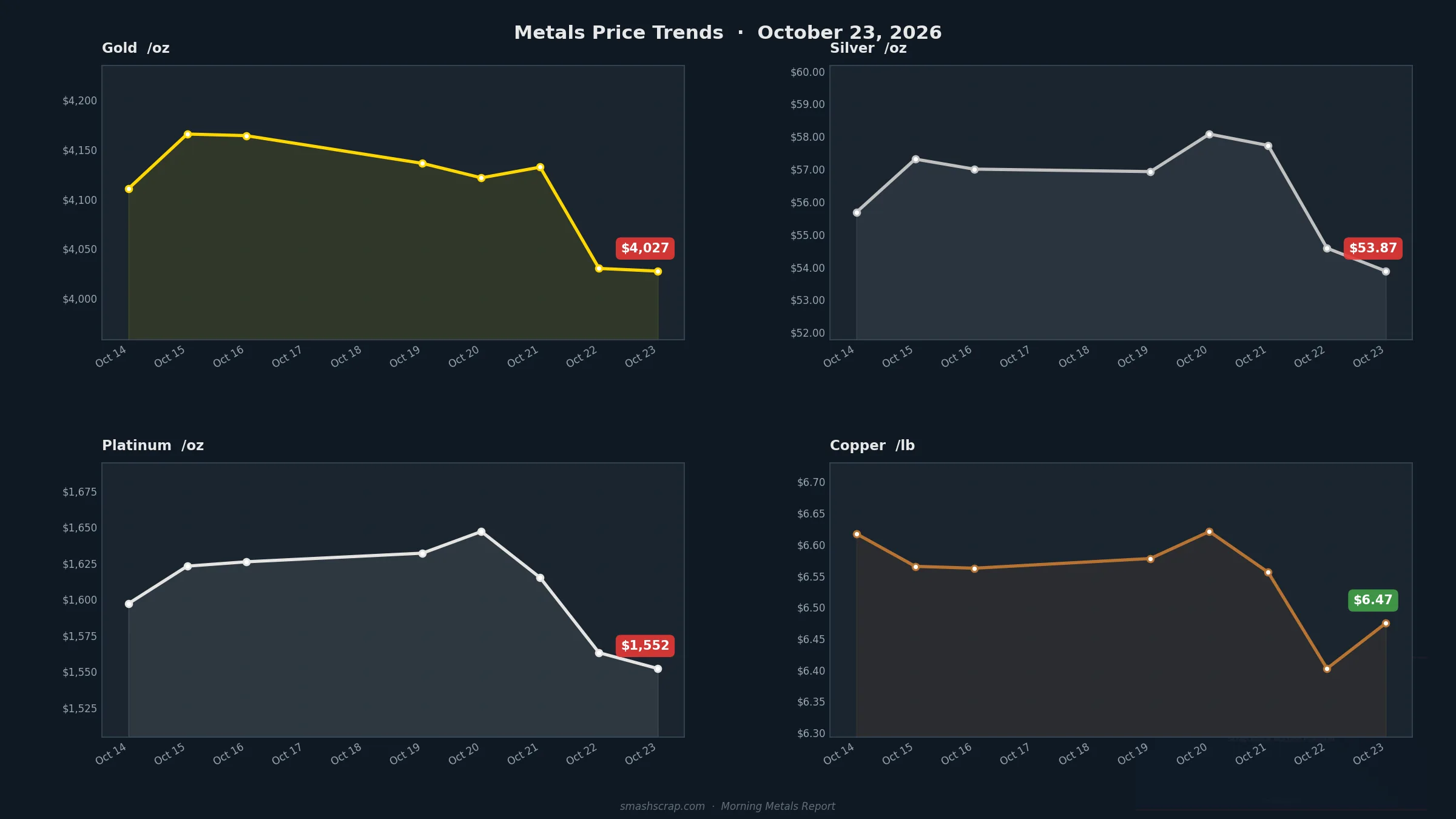
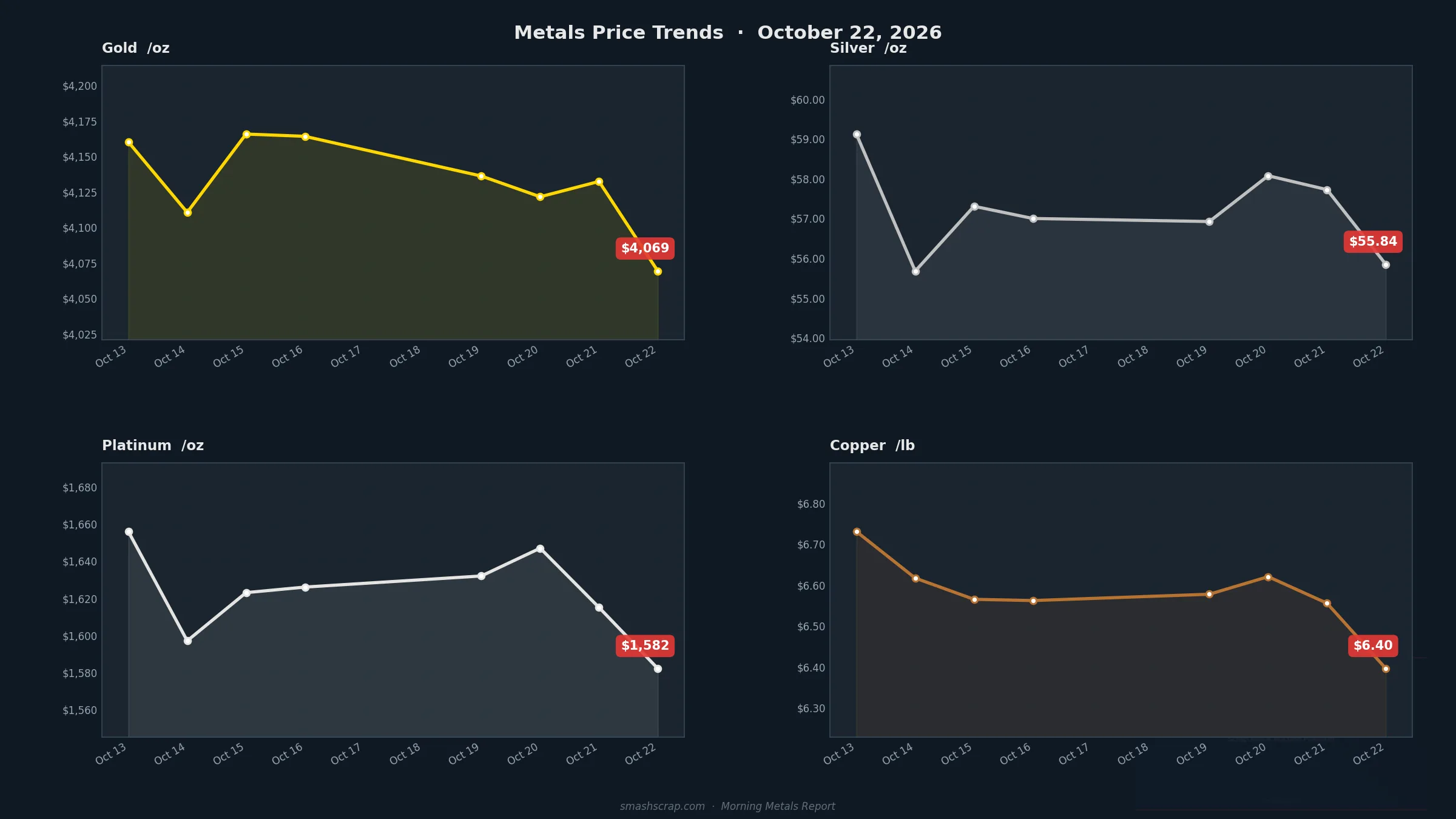
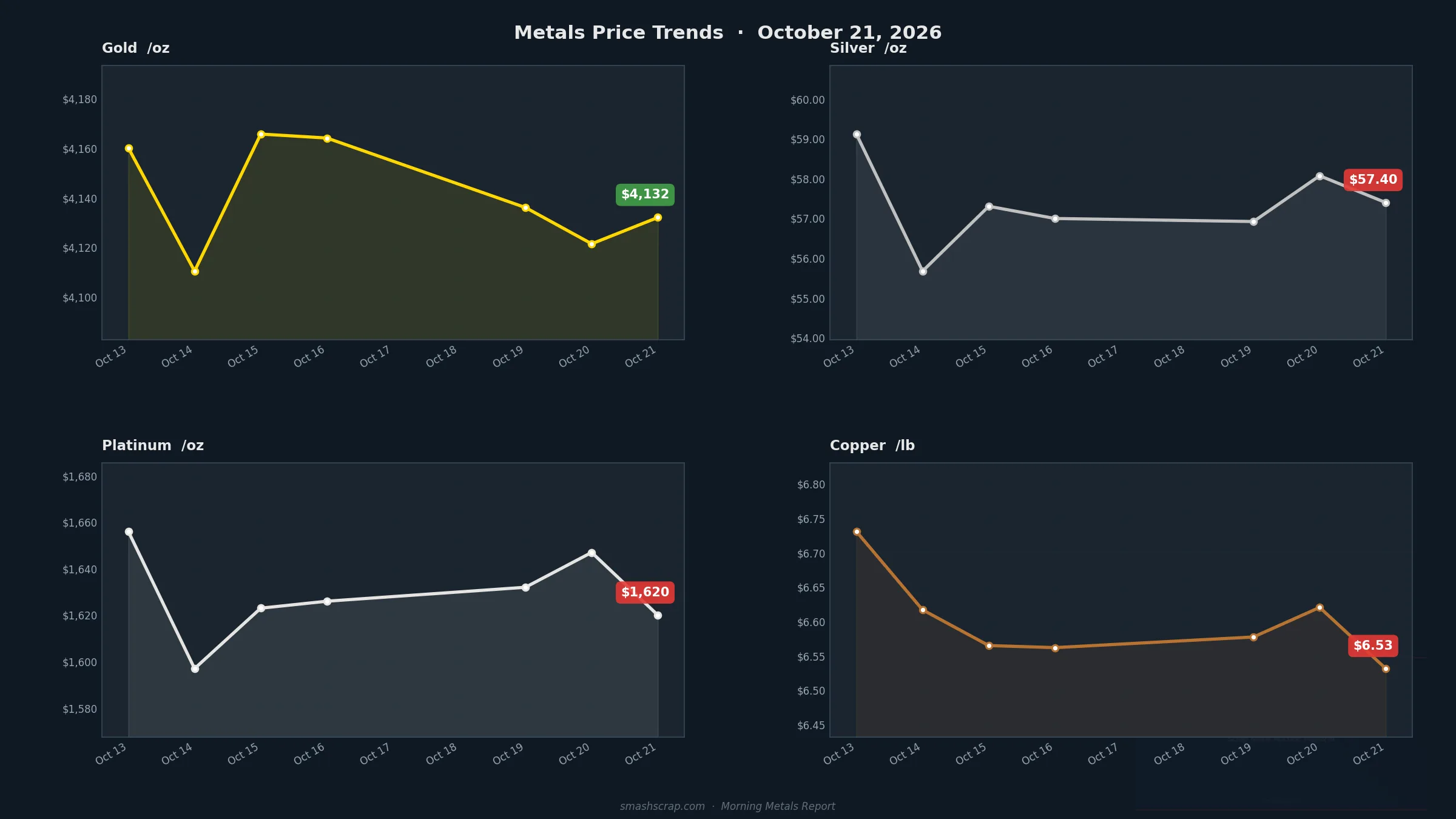
Catalytic converters sit at the intersection of three volatile commodities: platinum, palladium, and rhodium. These platinum group metals (PGMs) swing hard. Palladium has moved dramatically over multi-year cycles. Rhodium has seen some of the wildest price swings of any commodity on earth. When those prices shift, the spread between what a single buyer offers and what the market would actually pay can be significant.
That spread is the problem. A recycler in Dartmouth running 50 to 200 cats a week isn't a small operation — but without price transparency, they're flying blind. They don't know if today's offer reflects current platinum prices, today's palladium price, or last week's numbers conveniently quoted as if nothing changed. That information asymmetry has always favoured buyers. Online auctions start closing it.
Canadian regulations around precious metal recovery are also tightening. Industry organizations like the Ontario Automotive Recyclers Association (OARA) and the Automotive Recyclers of Canada (ARC) have pushed for better documentation, serial tracking, and chain-of-custody practices — especially for high-value components like catalytic converters. Transparent auction platforms align with those standards better than a cash-in-hand phone call ever could.
What Online Auctions Actually Do Differently for Sell Scrap Metal Online Sellers
When you list a load on an auction platform, the mechanics change completely. You're no longer negotiating — you're presenting documented inventory to a pool of vetted buyers and letting competition do the work. That's a different posture. It puts information on your side instead of theirs.
Here's what a proper scrap auction process looks like in practice:
- Photo documentation — Every converter photographed, every load documented. Buyers bid on what they can see, not what you describe over the phone.
- VIN lookup and serial tracking — Catalytic converters tied to vehicle records. Legitimate provenance builds buyer confidence and justifies stronger bids.
- Inventory tool — Organize your load before it goes live. Buyers see a structured, credible listing — not a rough count and a verbal estimate.
- Vetted buyers only — No tire-kickers. The buyers in the room are qualified, serious, and competing against each other.
- Auto-invoicing — When the auction closes, paperwork follows automatically. BOLs, packing lists, and GST/HST handling built in.
Each of those steps adds confidence to the transaction — and confident buyers bid closer to actual market value. That's the core mechanic. More confidence, more competition, better price discovery. As SMASH Scrap — where verified buyers bid on your metal — the platform is built specifically to create that environment for Canadian recyclers.
Metal Recycling Prices in Nova Scotia and Why Transparency Matters
If you're running a yard in Nova Scotia — whether you're in Dartmouth, Truro, or Sydney — you've likely felt the geographic squeeze. Fewer local buyers. Less competition per load. That means less leverage when you're negotiating. You take what's offered because the next buyer is three hours away and probably quoting the same number anyway.
Metal recycling prices in Nova Scotia don't have to be determined by geography anymore. An online auction opens your load to buyers across Canada — and for high-value materials like cats and non-ferrous metals, national buyers compete on the same terms as local ones. Your location stops being a liability.
This matters for scrap metal prices Canada per pound calculations too. When platinum, palladium, and rhodium prices are moving — and they always are — a buyer 2,000 kilometres away might be more motivated today than your regular local contact. Online auctions surface that motivation. Your single local buyer doesn't disappear. They just lose their monopoly on your load.
For recyclers searching for a scrap metal depot near me open now, the reality is that physical location still matters for drop-off — but the pricing conversation no longer needs to happen face-to-face with whoever picks up the phone first. That shift is significant.
Why Automotive Recyclers in Dartmouth Are Paying Attention to B2B Marketplaces
Automotive recyclers in Dartmouth deal with a steady stream of end-of-life vehicles, stripped cores, and catalytic converter inventories. The business is volume-driven — efficiency matters as much as price-per-unit. Old-school selling costs time as well as money. Multiple calls, no-shows, renegotiated prices after the truck arrives — it's friction that adds up.
B2B scrap metal marketplaces reduce that friction. You list once. Buyers come to you. The auction format creates a defined close — no endless back-and-forth. When the bid period ends, you know your number. Auto-invoicing means the paperwork moves with the deal, not two days after it.
Organizations like ARC have long advocated for professional standards in automotive recycling — consistent documentation, environmental compliance, and fair trade practices. A structured B2B marketplace platform reinforces those standards by making every transaction traceable, documented, and verifiable. That's not just good for business. It's what serious buyers expect.
If you want to understand how the shift is playing out across the industry, read the latest from SMASH Recycling — the blog covers market movements, platform updates, and practical guidance for Canadian recyclers.
How SMASH Scrap Fits Into the Canadian Recycling Market in 2026
The B2B scrap metal marketplace space has matured. In 2026, the question isn't whether online auctions work — it's whether you're using one. SMASH was built for this: a platform where Canadian yards list inventory, vetted buyers compete, and every transaction is transparent from listing to invoice.
There's no subscription fee. SMASH only wins when the seller wins. That alignment matters — it means the platform is built to close deals, not collect monthly payments whether loads move or not.
For catalytic converters specifically, SMASH's serial tracking and photo documentation tools give buyers what they need to bid with confidence. A well-documented cat load with clear photos and verified vehicle data gets treated differently than an ambiguous description over the phone. Documented inventory gives buyers more confidence — and confident buyers bid harder.
For recyclers looking to sell catalytic converters online — whether you're managing a high-volume automotive operation or clearing a backlog of accumulated inventory — the platform gives you structure, reach, and competition that a phone call never will. Join Canada's B2B scrap marketplace on SMASH Recycling and see what competitive bidding looks like for your loads.
Making the Switch: What Canadian Recyclers Need to Know Before Their First Auction
Switching to online auctions doesn't mean abandoning everything you know. It means adding a channel — one that puts more eyes on your inventory and more competition behind your price. Here's what to expect when you start:
- Document your inventory properly. Photographs, serial numbers, and condition notes aren't just bureaucracy — they're what gets buyers to bid confidently. Skimping here hurts your outcome.
- Understand the PGM market basics. You don't need to trade futures, but knowing roughly where platinum price, palladium price, and rhodium price sit when your auction runs helps you evaluate bids intelligently.
- Let competition work. The instinct to call your regular buyer and pre-negotiate is hard to shake. Resist it. More buyers means better price discovery — that's not a tagline, it's mechanics.
- Use the tools available. VIN lookup, serial tracking, photo uploads — these features exist because they improve outcomes. Use them on every load.
- Check your paperwork requirements. BOLs, packing lists, GST/HST documentation — auto-invoicing handles most of this, but know what your province requires for high-value scrap transactions.
The learning curve is short. Most recyclers who go through their first auction on SMASH find the process straightforward — and the results give them a clear benchmark for what their loads are actually worth in a competitive market. That benchmark alone changes how you approach every future sale.
The old way served buyers. It's time your selling process served you. Register at smashrecycling.ca and put your next load in front of buyers who compete for it — because that's exactly how price discovery is supposed to work.
Frequently Asked Questions
Q: How does catalytic converter recycling in Canada work through an online auction?
You document your catalytic converter inventory — photos, serial numbers, vehicle data — and list it on the platform. Vetted buyers review your listing and place competing bids during an auction window. When the auction closes, the highest bid wins and auto-invoicing handles the paperwork. It's a structured, transparent alternative to calling a single buyer and accepting whatever number they quote.
Q: What affects catalytic converter prices today in Canada?
Catalytic converter prices are driven primarily by the platinum group metals inside them — platinum, palladium, and rhodium. These commodity prices fluctuate daily based on global supply, demand, and currency movements. The make and model of the vehicle also affects value, since different converters carry different PGM loadings. Always check current rates before listing — prices from last week may not reflect today's market.
Q: Are there automotive recyclers in Dartmouth using online auction platforms?
Yes. Automotive recyclers in Dartmouth and across Nova Scotia are increasingly using B2B platforms to reach buyers outside their local market. Online auctions give Maritime-based yards access to national buyers who compete on the same terms as local contacts — which matters when local buyer competition is limited.
Q: What are current scrap metal prices in Canada per pound for non-ferrous metals?
Scrap metal prices in Canada per pound for non-ferrous metals like copper, aluminum, and stainless steel shift regularly based on commodity markets, exchange rates, and regional demand. Rather than relying on a single buyer's quoted rate, using a competitive auction platform gives you real price discovery from multiple buyers. Always verify current rates — posted prices can move significantly week to week. Note: Prices fluctuate. Check current market rates before transacting.
Q: Is there a subscription fee to sell on SMASH Recycling?
No. SMASH operates with no subscription fees for sellers. The platform is structured so that SMASH only earns when a transaction completes — meaning the incentive is always to close deals, not to collect monthly payments regardless of results.
Stay current on scrap metal market movements and platform updates — follow SMASH on LinkedIn for industry insights and news relevant to Canadian recyclers.