Saskatoon Catalytic Converter Auctions: Beat Metal Recycling
Most recyclers leave money on the table every time they sell a load of cats. Not because they're bad at business — because they're selling the old way. One buyer, one phone call, one price. No competition, no transparency, no leverage. If you're serious about metal recycling prices Canada-wide, catalytic converter auctions change that math completely.
Cats are unlike almost any other scrap commodity. Platinum, palladium, and rhodium — the three platinum group metals (PGMs) packed inside a converter — trade on global commodity markets. Prices shift daily. A load of cats worth one number on Monday can be worth a meaningfully different number by Thursday. Selling blind to a single buyer means you're guessing. The buyer is not.
This article breaks down how competitive catalytic converter auctions work, why Canadian recyclers in markets like Saskatoon scrap metal services are moving to auction-based selling, and what you need to do to get the best price for your next load.
---Why Catalytic Converter Pricing Is So Volatile — and So Easy to Get Wrong
Platinum, palladium, and rhodium aren't iron. They don't follow scrap steel indexes. Each PGM has its own supply chain, its own industrial demand drivers, and its own daily spot price. Rhodium, in particular, has historically swung by hundreds of dollars per troy ounce in a single quarter. When you sell a load of cats without knowing where PGM spot prices are sitting, you're not selling — you're guessing.
Most recyclers encounter a second problem: assay risk. Without laboratory analysis confirming actual PGM content per unit, you're relying on your buyer's word about what a converter is worth. That works fine when you have a long-term relationship built on verified data. It works terribly when you're selling to a buyer who quotes you a flat number and won't show their work.
The third issue is volume and mix. A load of cats is never just one type. You've got domestic foil units, foreign foil, diesel units, aftermarket converters, and bead units — all priced differently. A buyer quoting you a single blended number for a mixed load is averaging in their favour. Competitive auctions with documented, serialized inventory give buyers the data to bid on what's actually there — which changes the conversation entirely.
---5 Ways Canadian Recyclers Get More for Their Cats — Compared Head-to-Head
Not all selling methods are equal. Here's how the most common approaches stack up for Canadian yards looking to maximize returns on converter loads.
1. Single Buyer / Spot Quote
You call your usual buyer. They quote a price. You take it or leave it. This is still the most common method across Canada, including in Saskatchewan markets. It's fast. It's simple. It's also the method that gives you the least information and the least leverage. You have no way to know if that quote reflects the market or just what one buyer is willing to offer today.
2. Calling Multiple Buyers Manually
An improvement — but barely. You spend an afternoon on the phone, get three or four quotes, pick the highest. The problem: buyers know you're shopping. Quotes are often lowballed to leave room. You also can't easily document who bid what, which makes tracking price trends over time nearly impossible. And you're limited to buyers in your network. A yard in Saskatoon calling around locally may miss buyers in Vancouver, Toronto, or Calgary who would pay more.
3. Refiner Direct Programs
Some larger yards ship directly to precious metal refiners for assay-based returns. This can yield strong results — but it requires volume, patience, and solid cash flow. Assay programs tie up capital for weeks. Freight costs from Saskatchewan to major refining hubs eat into margins. And not every yard has the volume or relationships to negotiate directly.
4. Broker Networks
Brokers add a middleman layer. They know the buyers, take a cut, and may or may not be transparent about what the end buyer actually paid. Useful if you have no buyer relationships whatsoever. Not useful if your goal is to understand what your inventory is actually worth and keep more of the margin.
5. Competitive Online Auction (The SMASH Way)
You document your load — photos, serial numbers, unit counts, converter types — and list it on a platform where vetted buyers compete in real time. No guessing. No broker markup. No single buyer setting the price unilaterally. More buyers means better price discovery. You see competing bids. You know the market cleared at the price you accepted. This is how explore SMASH Recycling's auction platform works for Canadian recyclers selling cats.
---What Documented Inventory Actually Does for Your Converter Prices
This part matters more than most recyclers realize. A load of undocumented, unsorted cats in a gaylord box sells at a discount — always. Buyers price in the uncertainty of not knowing what's inside. They price in sorting time, assay risk, and the possibility of aftermarket or cracked units that yield poorly.
When you document your load properly before selling, you remove that uncertainty. That means:
- Photo documentation of each unit or unit type
- Serial number or VIN tracking where applicable
- Unit counts by category (domestic foil, foreign foil, diesel, aftermarket, beads)
- Condition notes — cracked, decantered, intact
- Accurate packing lists that match what buyers receive
Buyers bidding on a well-documented load compete harder. They don't need to price in uncertainty, so they can bid closer to actual value. Documented inventory gives buyers more confidence — and confident buyers bid higher. SMASH's inventory tool and serial tracking features are built specifically for this workflow, whether you're running a small depot in Saskatoon or a multi-site operation across Saskatchewan.
---Understanding PGM Spot Prices: What Drives Catalytic Converter Values in 2026
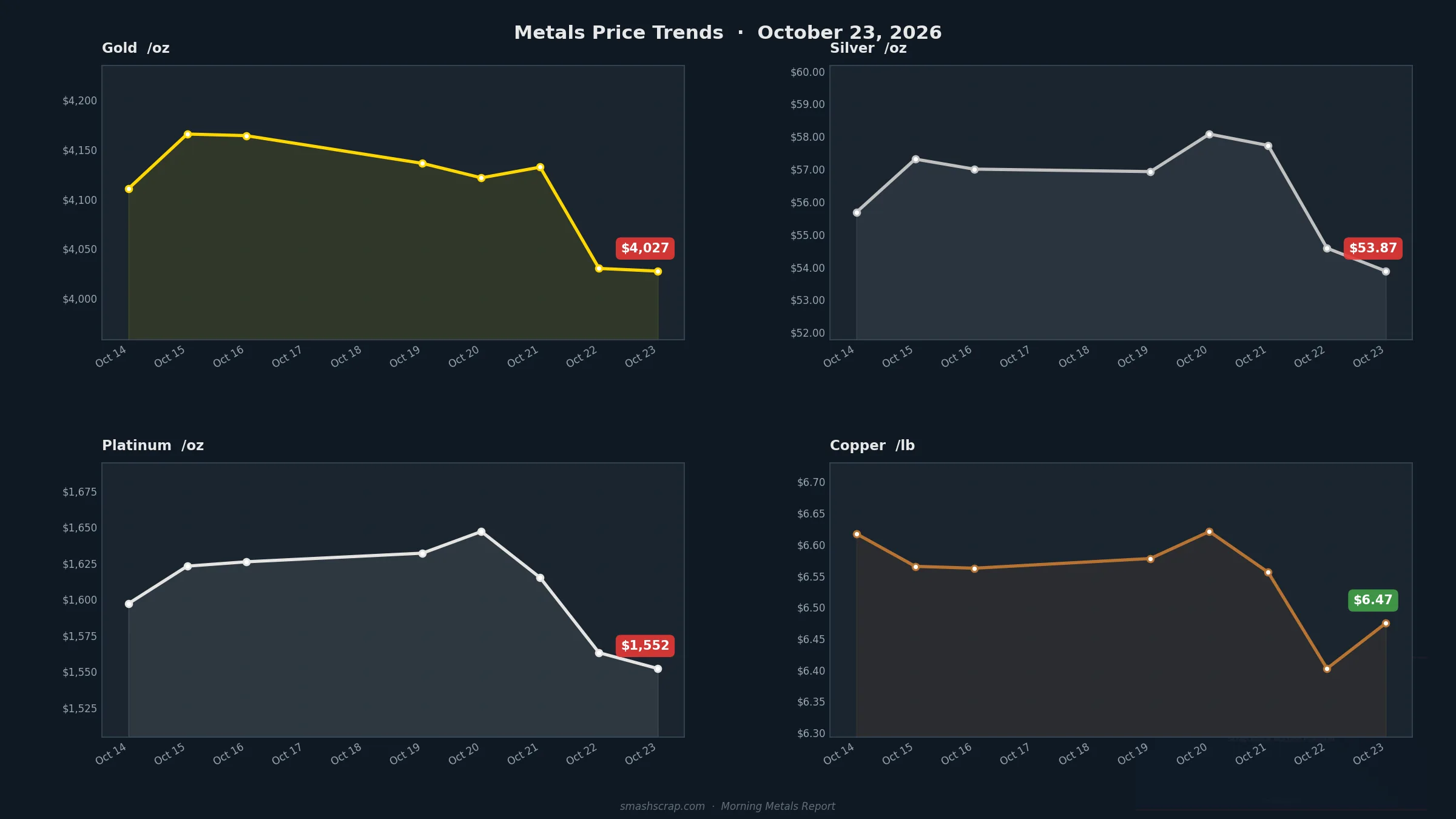
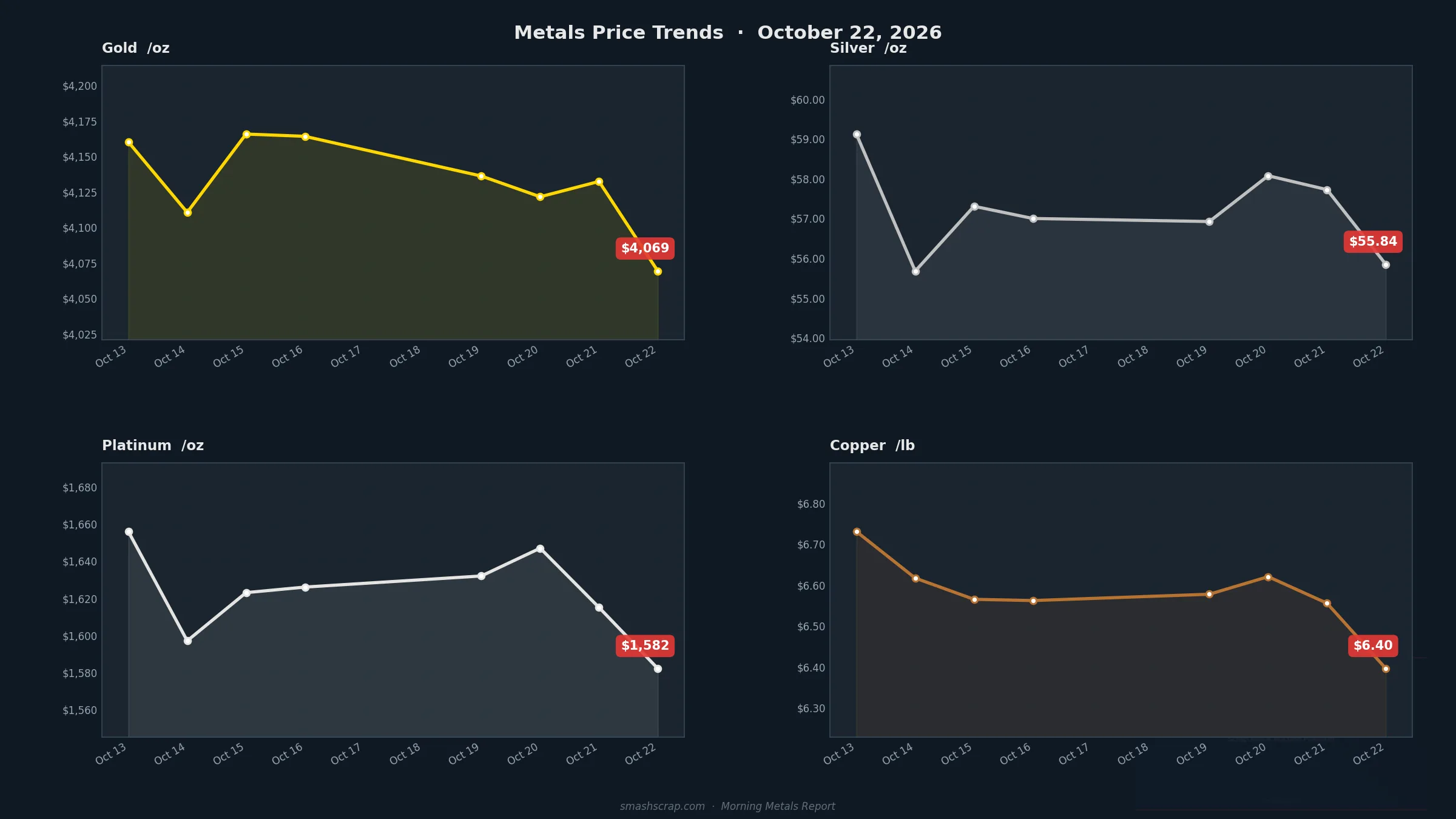
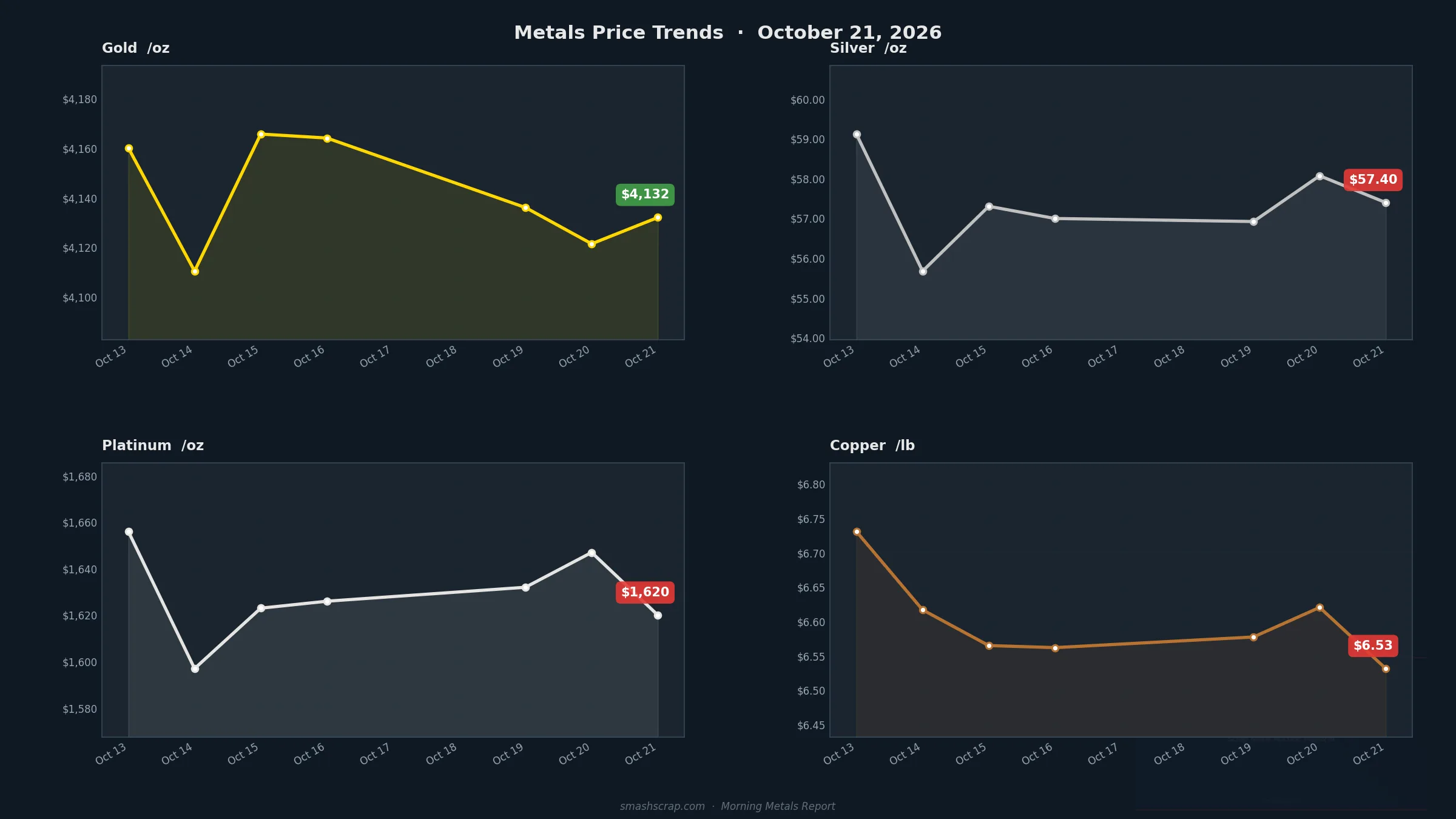
Platinum group metal prices are driven by a mix of automotive demand, mining supply, industrial applications, and speculative positioning. In 2026, EV adoption continues to reshape palladium demand — palladium has historically been the dominant PGM in gasoline three-way catalysts. As hybrid and EV penetration grows, the long-term supply/demand balance for palladium shifts. This makes staying on top of current catalytic converter prices today more important than ever.
Rhodium remains the wild card. It's produced in tiny quantities, largely as a byproduct of South African platinum mining. Supply disruptions — labour, infrastructure, geopolitical — send rhodium prices sharply in either direction. Platinum, by contrast, has broader industrial uses including hydrogen fuel cells and chemical processing, giving it more price stability relative to the other two.
What this means practically: a load of cats sold without checking current PGM spot is a load sold without full information. Platforms like SMASH help you connect with buyers who are pricing against live market data — so you're negotiating from the same starting point, not a disadvantaged one. You can also find the best price for your scrap on SMASH across a range of non-ferrous commodities, including copper scrap, aluminum, and more.
For Saskatchewan yards selling cats alongside other non-ferrous loads — think copper scrap Canada-wide demand for wire and tube, or aluminum recycling Saskatoon yards pulling wheels and radiators — bundling documentation and auctions across commodity types creates operational efficiency. One workflow. Multiple commodity types. Better price discovery across the board.
---What Canadian Industry Standards Say About Responsible Cat Selling
Catalytic converter theft remains a serious issue across Canada, and regulators have responded with stricter documentation requirements at the yard level. The Automotive Recyclers of Canada (ARC) and the Ontario Automotive Recyclers Association (OARA) both advocate for traceability and responsible sourcing practices — standards that align directly with how auction-based selling works.
When you sell cats through a documented auction process, you're building a paper trail that protects your yard. Serialized tracking, photo records, and vetted buyer networks reduce your exposure to compliance risk. They also signal to buyers — and regulators — that your operation runs clean. That matters in Saskatchewan and every other province as cat theft regulations continue to tighten.
Beyond compliance, responsible sourcing documentation often unlocks access to better buyers. Refiners and large processors increasingly require chain-of-custody documentation before accepting loads. The yards that built those workflows early are better positioned today. Join Canada's B2B scrap marketplace on SMASH Recycling and you're building that infrastructure as part of your normal selling process — not as a separate compliance headache.
---How to Get Started Selling Cats on a Competitive Auction Platform
If you've never sold catalytic converters through an auction, the process is more straightforward than you'd expect. Here's how it works on SMASH:
- Register your yard. SMASH vets both sellers and buyers. You're not selling into a free-for-all — you're selling to buyers who've been screened and are serious about closing deals.
- Document your load. Use SMASH's inventory tool to record unit types, serial numbers, photos, and packing list details before you list. This is the step most yards skip — and the one that makes the biggest difference in price discovery.
- List your auction. Set your terms, minimum thresholds if applicable, and let vetted buyers compete. Competition can help reveal the market in a way a single phone call never will.
- Accept the winning bid. Auto-invoicing handles the paperwork. BOLs and documentation flow automatically. Less admin, more time in the yard.
- Get paid. No subscription fees. SMASH only wins when you win.
Whether you're running a busy scrap depot near me-style operation in Saskatoon or managing volume across multiple Saskatchewan sites, this process scales with you. Read the latest from SMASH Recycling for ongoing market updates, auction tips, and non-ferrous pricing context.
---Frequently Asked Questions
Q: What are catalytic converter prices today in Canada?
Catalytic converter prices in Canada fluctuate daily based on platinum, palladium, and rhodium spot prices on global commodity markets. There's no single fixed rate — prices vary by converter type, PGM content, and current market conditions. Always check current PGM spot prices and work with buyers who price transparently against live data. Disclaimer: Scrap metal and PGM prices change frequently. Verify current rates before selling.
Q: How do I sell catalytic converters online in Canada?
You can sell catalytic converters online through B2B auction platforms like SMASH, which connect vetted Canadian yards with buyers who compete on your load. The process involves documenting your inventory, listing through the platform, and accepting bids from qualified buyers — all without a broker taking a cut of the margin.
Q: What are current metal recycling prices in Saskatchewan?
Metal recycling prices in Saskatchewan — including non-ferrous metals like copper, aluminum, and catalytic converter PGMs — follow national and global commodity benchmarks. Local market conditions, freight costs, and buyer access all affect what yards in Saskatchewan actually receive. Competitive auctions help ensure you're getting a market-based price rather than one buyer's best offer.
Q: Is aluminum recycling worth it for Saskatoon yards?
Yes — aluminum is one of the most consistently traded non-ferrous metals, and Saskatoon yards regularly move wheels, extrusions, and radiators. Prices vary by alloy grade and current LME aluminum spot. Sorting and documenting aluminum loads before selling generally improves returns, especially on a competitive platform where buyers can see exactly what they're bidding on.
Q: Do I need a lot of volume to use a B2B scrap metal auction platform?
Not necessarily. While higher-volume loads tend to attract more competitive bidding, many B2B platforms — including SMASH — work with yards of various sizes. The key is documentation quality. A smaller, well-documented and clearly photographed load of cats can attract serious bids from buyers who value transparency over raw tonnage.
---If you're still selling cats the old way — one call, one price, no competition — you're leaving money on the table on every load. The market knows what your converters are worth. The question is whether you do. Join Canada's B2B scrap marketplace and start selling with the transparency and competition your inventory deserves. Register at smashrecycling.ca or reach out directly to jeff@smashscrap.com to get started.
Follow SMASH on LinkedIn for industry updates, PGM market insights, and scrap metal news across Canada.