Coquitlam Scrap Metal: Market Shifts & Auction Wins
The State of Scrap Metal Recycling in Canada in 2026: What's Changed, What Hasn't, and Where the Real Money Is
Most scrap yards are still running a playbook written thirty years ago. One phone call. One buyer. One price — take it or leave it. Meanwhile, the scrap metal market has never been more volatile, more watched, or more competitive. Copper, platinum, palladium, rhodium — these aren't quiet commodities anymore. They move. And if you're not set up to capture that movement, you're leaving money on the table every single week.
Here's a straight look at where scrap metal recycling actually stands in Canada right now, what's driving the market in 2026, and how yards and sellers — from Coquitlam to Calgary to Hamilton — can stop guessing and start getting real price discovery on every load.
The Canadian Scrap Landscape in 2026: Bigger Demand, Bigger Complexity
Canadian scrap metal recycling is not a small industry. It feeds domestic mills, export markets, and a growing North American manufacturing base hungry for recycled feedstock. Steel, aluminum, copper, and non-ferrous metals keep moving — but the conditions around them have shifted significantly.
A few realities shaping the market right now:
- Electric vehicle production is accelerating demand for copper and aluminum. More EVs on the road means more of those metals eventually cycling through recycling yards.
- Catalytic converter theft and scrapping remain high-volume, high-scrutiny categories. Platinum, palladium, and rhodium prices continue to make cats one of the most valuable — and most regulated — scrap streams in the country.
- Regulatory pressure is tightening. Provinces across Canada are tightening documentation requirements for catalytic converters, cores, and automotive parts. Serial tracking and photo documentation aren't optional anymore — they're expected.
- Export uncertainty continues to create price swings. Tariff policy, shipping bottlenecks, and currency fluctuation all ripple into what buyers will pay on any given week.
In British Columbia, yards deal with an added layer — distance to major mills, a heavy mix of automotive and industrial scrap, and a buyer pool that hasn't always been easy to access from the Lower Mainland. That gap between seller and competitive market is exactly where platforms like SMASH do their best work.
5 Ways Scrap Metal Recycling Has Changed (And 2 Things That Haven't)
Let's run the comparison. The industry has evolved — but not everywhere, and not evenly.
What's Changed
- Price transparency expectations are higher. Sellers today have access to more market data than ever before. Live metal prices, international benchmarks, regional spot rates — the information is out there. The problem is translating that into what you actually get paid. A scrap metal auction platform closes that gap by putting multiple buyers in direct competition for your load.
- Documentation requirements have tightened everywhere. Whether you're selling cats, cores, or non-ferrous loads in Coquitlam or anywhere else in Canada, buyers and regulators want records. Photo documentation, VIN lookups, serial tracking — these used to be nice-to-haves. Now they're table stakes. Platforms built around inventory tools and photo documentation give sellers a real edge here.
- Catalytic converter pricing has become its own discipline. If you're still guessing what your cats are worth based on one buyer's quote, you're not doing it right. Platinum, palladium, and rhodium prices move independently and sometimes dramatically. Assay-backed pricing, VIN-referenced value estimates, and competitive bidding have replaced the old "here's what we'll give you" model for serious sellers.
- Buyer pools have expanded — but access hasn't kept up. There are more qualified buyers in the market than ever before. The issue is that most sellers don't have relationships with all of them. A vetted buyer network solves this without requiring you to cold-call smelters in three provinces.
- Auto-invoicing and digital paperwork are the new normal. BOLs, packing lists, invoices — the administrative side of selling scrap has moved online. Platforms that handle auto-invoicing and GST/HST/PST documentation remove a friction point that used to slow down every transaction.
What Hasn't Changed
- Most small yards are still selling to one buyer. Despite all the above, a significant portion of Canadian recycling yards — including plenty in British Columbia — are still picking up the phone and calling the same buyer they've dealt with for years. That's a relationship, not a market. Relationships are comfortable. They're also expensive when the buyer knows they're your only option.
- The grading disputes haven't gone away. Show up at a yard with a mixed load and watch the grade drop at the scale. Without documented inventory — photos, weights, categories confirmed before the truck rolls — you're negotiating blind. This is one of the oldest problems in the industry. Better documentation tools help, but the fundamental tension between buyer and seller at the point of grading is still real.
Scrap Car Recycling in Coquitlam: The Local Picture
If you're running a yard or sourcing scrap cars in the Coquitlam area, you know the market has layers. The Lower Mainland has strong demand for automotive scrap — end-of-life vehicles, salvage units, stripped hulks — but the buyer landscape can feel concentrated. A handful of processors dominate, and that concentration affects what you get paid.
Scrap car recycling in Coquitlam also intersects with provincial regulations around deregistration, fluid removal, and parts documentation. The Automotive Recyclers of Canada (ARC) sets national best practices that Canadian yards are expected to follow, while the Ontario Automotive Recyclers Association (OARA) has been influential in pushing documentation and environmental standards that have shaped provincial approaches coast to coast — including in B.C.
Getting more for your end-of-life vehicles isn't complicated in theory. It requires competitive bids, documented inventory, and access to buyers beyond your immediate geography. That's what a B2B scrap metal marketplace delivers. When you join Canada's B2B scrap marketplace on SMASH Recycling, you're not calling one buyer — you're putting your load in front of a vetted network that competes on price.
Catalytic Converter Prices and the Non-Ferrous Opportunity
Catalytic converters remain one of the highest-value, highest-scrutiny categories in Canadian scrap. Platinum, palladium, and rhodium — the three primary platinum group metals (PGMs) inside cats — trade on global commodity markets. Their prices move independently of steel and copper, and they can move fast.
For yards handling significant cat volume, the difference between a competitive bid and a single buyer's offer can be substantial per unit. Multiply that across a week's worth of cats and the math becomes obvious. Accurate identification matters too — knowing what you have before you sell it is the difference between a fair deal and a bad one. VIN lookup tools and serial tracking help establish what a converter is worth before it goes to market.
The same logic applies to copper scrap prices and aluminum. These non-ferrous streams are where margins live for a lot of yards. Find the best price for your scrap on SMASH by letting the market compete rather than accepting the first number you're handed.
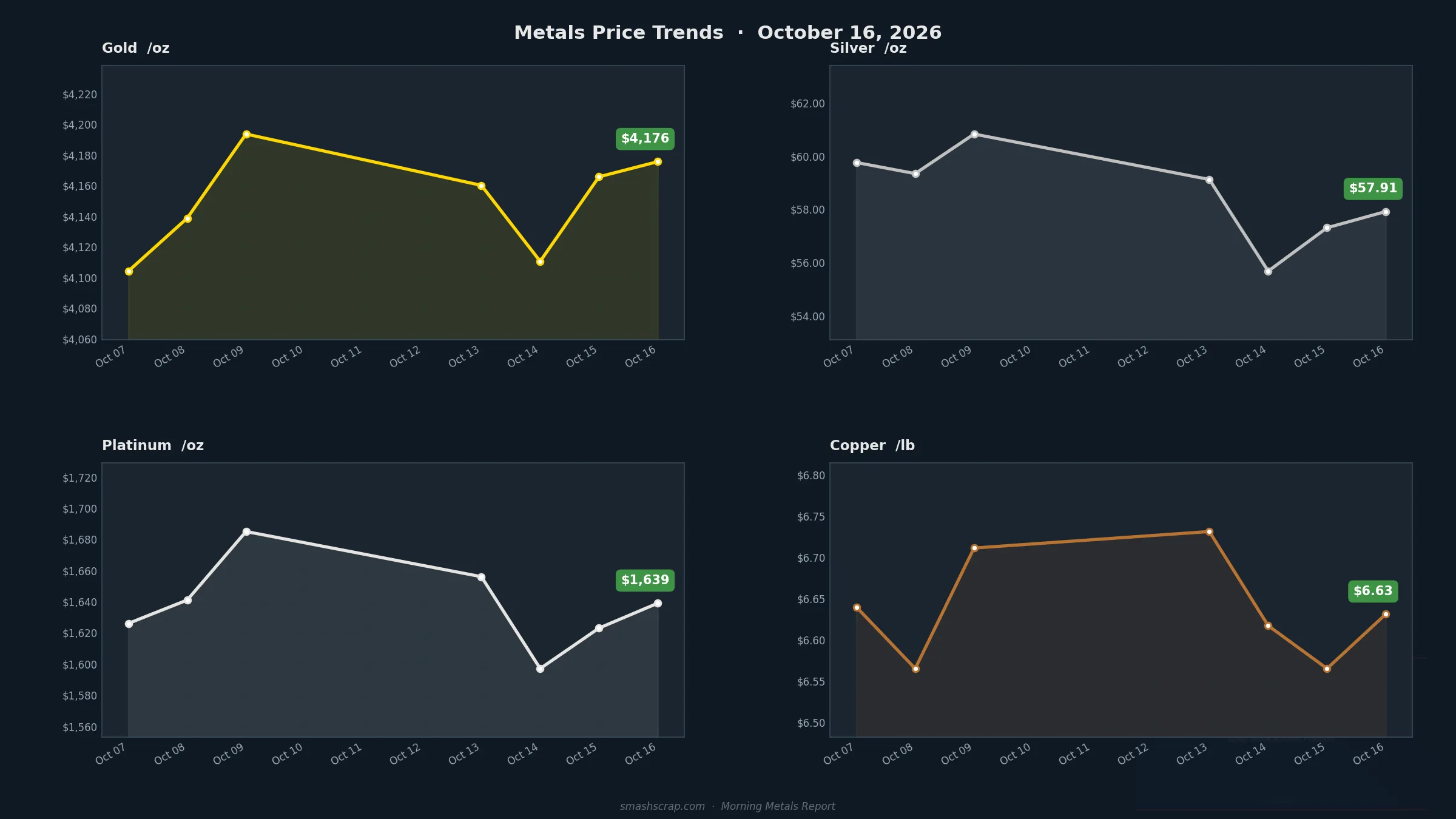
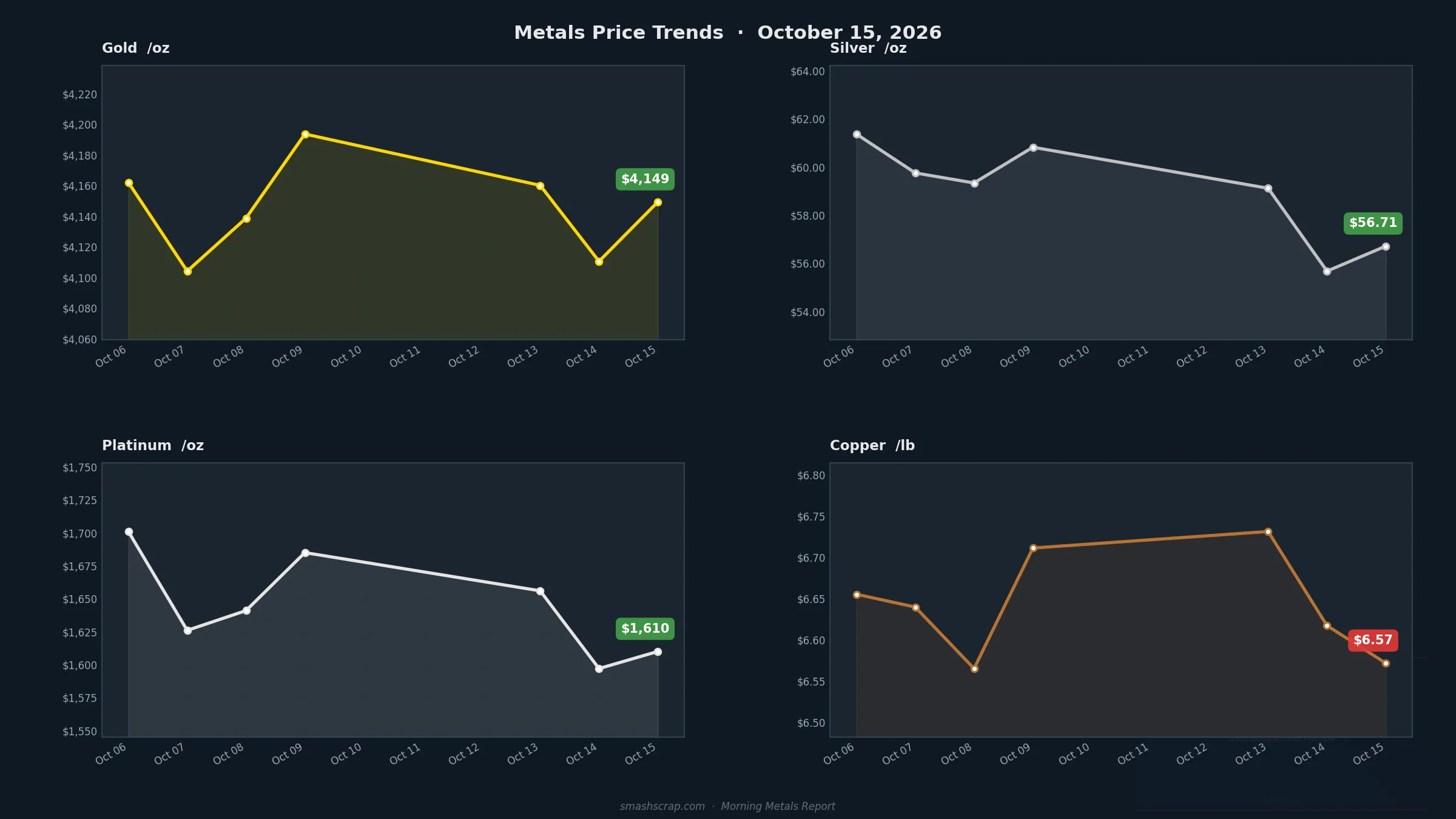
Note: All metal prices — platinum, palladium, rhodium, copper, and others — fluctuate daily based on global commodity markets. Always check current rates before making selling decisions.
Old Way vs. SMASH Way: A Direct Comparison
Here's the honest side-by-side.
Old Way SMASH Way Call one buyer, get one price Multiple vetted buyers compete on your load No documentation until the truck shows up Photo documentation and inventory tool before the auction Grade disputes at the scale Documented inventory reduces grading surprises Manual invoicing and paperwork Auto-invoicing with GST/HST/PST handling built in Subscription fees or middleman markups No subscription fees — SMASH wins when the seller wins Guessing what your cats are worth VIN lookup and serial tracking for accurate cat identificationMore buyers means better price discovery. That's not a slogan — it's how competitive markets work. Explore SMASH Recycling's auction platform and see what a real buyer network looks like for your specific load type.
Why the B2B Scrap Metal Marketplace Model Wins in 2026
The B2B auction model isn't new in other industries. It's been standard in real estate, finance, and wholesale goods for decades. Scrap metal is catching up — and the yards that adopt competitive selling first are the ones building defensible margin into their operations.
The core advantages are straightforward:
- Competition reveals real market value. One buyer gives you one data point. Multiple buyers give you a market.
- Vetted buyers mean fewer headaches. You're not chasing payments or dealing with buyers who ghost after a quote. SMASH's network is vetted before they bid.
- Documented inventory builds trust on both sides. Buyers who can see what they're bidding on bid with more confidence. That confidence shows up in the numbers.
- No subscription fees remove the risk of trying something new. If SMASH doesn't deliver value, you don't pay a monthly fee for nothing. The model is aligned with seller success.
For yards across Canada — whether you're running scrap metal recycling in Coquitlam or sourcing loads in Mississauga or Edmonton — the platform handles the complexity so you can focus on the yard. Read the latest from SMASH Recycling for market updates, pricing context, and industry news relevant to Canadian recyclers.
The scrap market in 2026 rewards sellers who show up with documentation, compete on a level playing field, and access buyers beyond their immediate geography. If you're ready to stop guessing and start selling smarter, register at smashrecycling.ca. Canada's B2B scrap marketplace is already running — your next load could be in it.
Frequently Asked Questions
Q: What types of scrap metal can I sell through a platform like SMASH in Coquitlam?
SMASH handles a wide range of B2B scrap categories — including catalytic converters, non-ferrous loads (copper, aluminum, stainless), automotive cores, and ferrous scrap. If you're a yard or commercial seller in Coquitlam or anywhere in British Columbia, the platform is built for volume loads with documentation requirements that match what serious buyers expect.
Q: How does scrap metal recycling in Coquitlam connect to national buyers?
Geography used to limit who you could sell to. A B2B auction platform like SMASH puts your documented load in front of vetted buyers across North America — not just local processors. That expanded buyer pool is where competitive pricing actually comes from.
Q: Are catalytic converter prices in Canada regulated?
Catalytic converter pricing itself is not government-regulated, but the buying and selling of cats is subject to increasing documentation requirements in most Canadian provinces. Serial tracking, photo documentation, and proof of origin are becoming standard expectations. Organizations like the Automotive Recyclers of Canada (ARC) have pushed for consistent standards across the industry.
Q: Do I need a subscription to use SMASH?
No. SMASH does not charge subscription fees. The model is built around seller success — you don't pay to access the platform on an ongoing basis. This makes it practical to try without financial risk.
Q: How do I know if scrap metal prices today are good enough to sell?
Metal prices fluctuate daily based on global commodity markets — copper, platinum, palladium, rhodium, and steel all move independently. The best way to know if today's price is competitive is to put your load to market and let buyers tell you. That's what the auction format is designed to do. Always check current market rates before making selling decisions, and use a platform that gives you multiple bids rather than one number.
Stay current on Canadian scrap metal market trends, pricing shifts, and platform updates by following SMASH on LinkedIn: follow SMASH Recycling on LinkedIn for industry insights that actually apply to your yard.