Catalytic Converter Recycling Brampton: Auction Advantage
Most scrap yards in Canada are still selling the same way they did a decade ago — one call, one buyer, one price. If that buyer's having a slow week, you eat the difference. There's no competition, no transparency, and no way to know if you left money on the table. For high-value material like catalytic converters, that gap can be significant.
This week's roundup breaks down one of the most important decisions Canadian scrap operators face: selling through a broker versus selling through an auction platform. If you handle cats, copper, or non-ferrous loads of any size, this one's worth reading carefully.
The Broker Model: Convenient, But at What Cost?
Brokers aren't villains. They serve a purpose — they take calls, move material, and handle logistics. But the broker model has a structural flaw that every yard operator should understand: the broker profits from the spread between what they pay you and what they sell your material for. The wider that spread, the better their margin.
When you sell through a broker, you're not getting the market. You're getting what the broker decides to offer you, minus their cut, minus their risk buffer, minus whatever else they're factoring in that week. You have no visibility into what your load actually sold for on the other end. That's a problem, especially for high-value material.
Consider catalytic converter recycling in Canada right now. PGM values — platinum, palladium, rhodium — shift daily based on commodity markets. A broker who calls you on a Tuesday with a price quote may be working off numbers that benefit them more than you. You'd never know the difference unless you had access to the same market data they do.
How Auction Format Changes the Dynamic for Catalytic Converter Recycling Canada
An auction flips the equation. Instead of one buyer setting the price in a private conversation, multiple vetted buyers compete openly for your load. That competition is what drives price discovery — buyers bid up to what the material is actually worth to them, not down to what they can get away with paying.
For catalytic converter recycling Canada-wide, this matters enormously. Cats are among the most price-sensitive items in the scrap stream. The PGM content in a single load can vary widely depending on make, model, year, and condition. A buyer with a strong processing relationship for a specific type of cat will bid more aggressively than one who doesn't — and in an auction, that buyer has to compete to win the load. That competition surfaces a real market price, not a negotiated discount.
The difference between a single-buyer offer and a competitive auction outcome isn't guaranteed to always favour the auction — but more buyers means better price discovery. That's not a slogan. It's how markets work. The SMASH scrap metal auction marketplace is built around this principle: documented inventory, vetted buyers, and open competition for every load.
What Automotive Recyclers in Brampton Are Dealing With Right Now
Brampton is one of Ontario's busiest automotive recycling corridors. Yards here process everything from end-of-life vehicles to commercial fleet turnover, and the non-ferrous material that comes off those vehicles — cats, copper wiring, aluminum components — represents a major revenue stream. Getting that stream priced properly is the difference between a good quarter and a great one.
For automotive recyclers in Brampton specifically, the broker dependency has been a long-standing issue. Many yards have relationships with the same buyer they've used for years — comfortable, low-friction, predictable. But predictable can also mean consistently under-market. When you've never tested what your load is actually worth to a competitive field of buyers, you don't know what you're leaving behind.
Industry organizations like the Ontario Automotive Recyclers Association (OARA) and the Automotive Recyclers of Canada (ARC) have long emphasized transparency and best practices in the sector. Moving toward auction-based selling aligns with that direction — it creates documented transactions, clear pricing, and accountability on both sides of the deal. That's good for the industry, not just individual yards.
Brampton yards also face the same market volatility challenges as anyone else in Ontario. Metal recycling prices fluctuate — copper, aluminum, steel, and PGMs all move based on global demand, energy costs, and trade conditions. Locking into a single-buyer relationship in a volatile market means you're absorbing that risk without any offsetting upside from competition. An auction format at least ensures you're seeing what the market will actually bear on a given day.
Sell Scrap Metal Online: What the SMASH Platform Actually Does
A lot of yards hear "online auction" and picture a consumer platform — something clunky, public, and disconnected from how they actually do business. SMASH isn't that. It's a B2B scrap metal marketplace built specifically for yards and buyers who deal in industrial volumes.
Here's how it works in practice:
- Inventory tool: You document your load with photos, weights, VIN lookups for cats, serial tracking where needed, and packing lists. This isn't busywork — documented inventory gives buyers more confidence, which means stronger bids.
- Vetted buyers: Every buyer on the platform is vetted. You're not dealing with unknown bidders. These are legitimate processors and traders with real purchasing capacity.
- Auction format: Your load goes to market and buyers compete. You see the bids. You know what the field thinks your material is worth.
- Auto-invoicing and GST/HST handling: Once a load sells, the paperwork generates automatically. BOLs, invoices, tax handling — it's built in, not bolted on.
- No subscription fees: SMASH earns when you sell. That alignment matters — the platform has a direct incentive to help you get a strong outcome.
If you've been looking for a way to sell scrap metal online without rebuilding your entire operation, SMASH fits into how yards already work. You're not replacing your process — you're adding competition to it. Explore SMASH Recycling's auction platform to see how the listing and bidding process is structured.
Metal Recycling Prices Ontario: Understanding What Moves the Market This Week
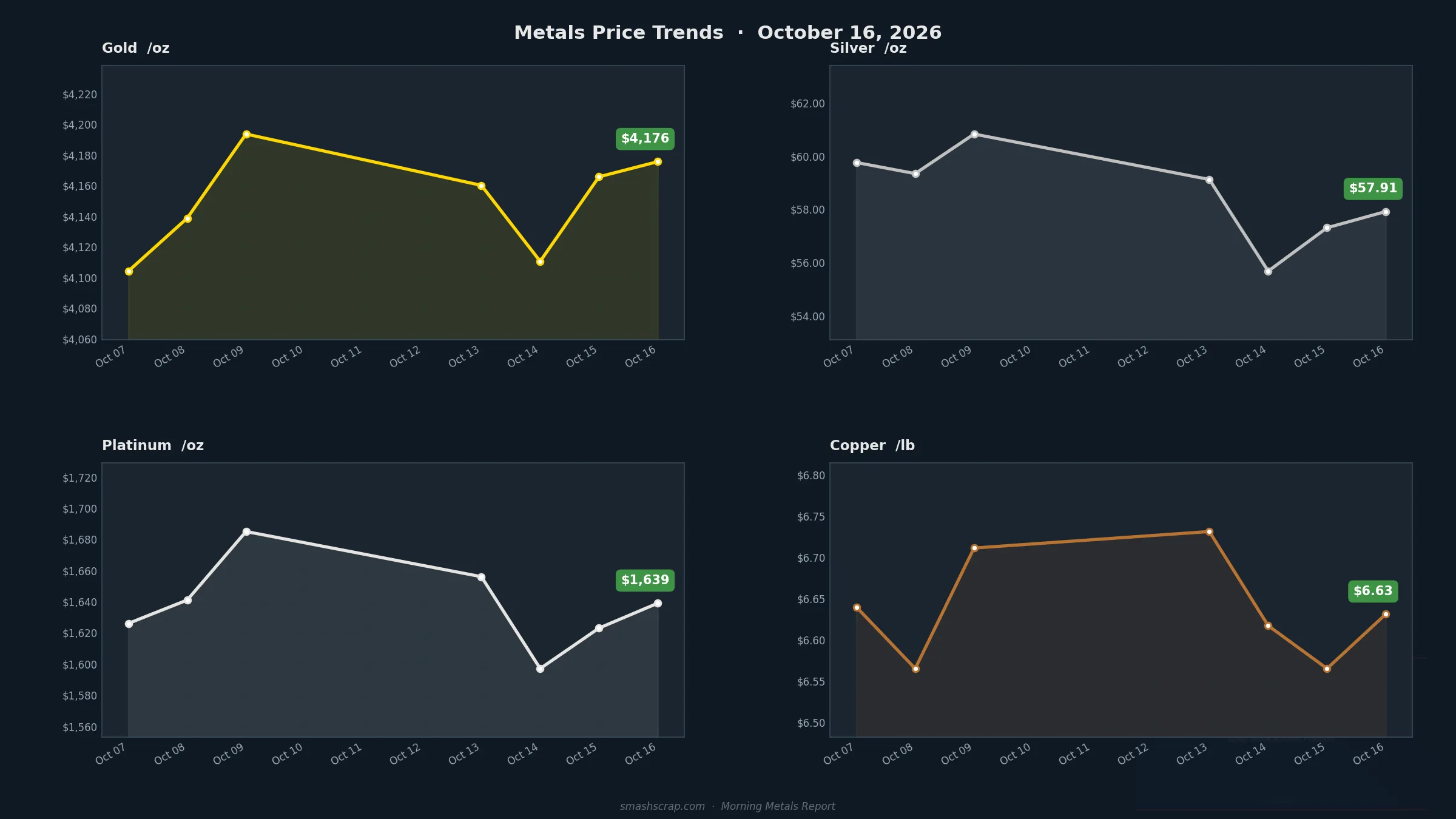
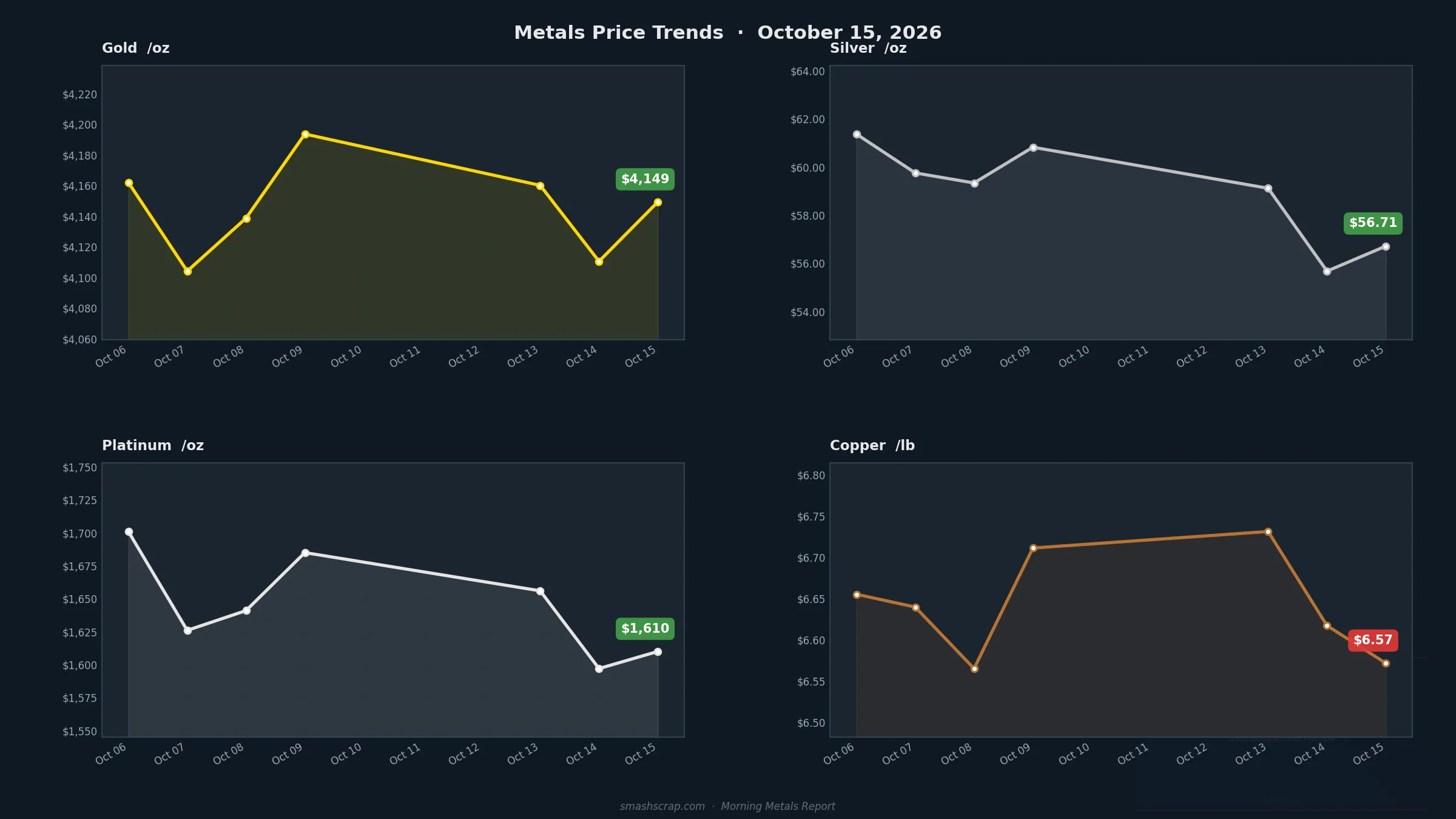
Let's talk about where prices sit in the context of mid-July 2026. This is a weekly roundup, so a few market-context notes are relevant — with the standard reminder that all metal recycling prices fluctuate significantly and you should verify current rates before making selling decisions.
PGMs (Platinum, Palladium, Rhodium): These are the core value drivers in catalytic converter recycling across Canada. Rhodium in particular has historically been volatile — it can represent a disproportionate share of a cat's total value depending on the vehicle type. Pricing for cats is always assay-dependent, which is another reason documentation and lot integrity matter so much at auction. Buyers bid harder when they trust the data.
Copper scrap prices: Copper remains one of the most actively traded non-ferrous metals in Ontario. The copper recycling process — from collection through sorting, shredding, and refining — is well-established, and pricing generally tracks global LME benchmarks with regional adjustments for grade and form. Insulated wire, bare bright, and #1 copper all carry different values. Accurate grading and documentation on the platform affects where bids land.
Aluminum and steel: Both remain volume-driven. Ferrous pricing in Ontario has been subject to broader steel market pressures throughout 2026. Non-ferrous aluminum — particularly from automotive dismantling — continues to be a steady revenue contributor for yards in Brampton and across the province.
The point isn't to give you a price sheet — that's not how this works, and any source that gives you a static price list without real-time data is doing you a disservice. The point is that in a volatile market, knowing what buyers will actually pay right now — through competitive bidding — is more valuable than any price guide. Read the latest from SMASH Recycling for ongoing market context and platform updates.
Why the Shift to Auction Selling Makes Sense for Canadian Yards in 2026
The Canadian scrap industry is consolidating. Larger processors are buying up mid-size yards. Buyer networks are tightening. In that environment, small and mid-size operators who rely on a single buyer relationship are increasingly at a structural disadvantage. The yards that adapt — that build access to competitive buyer pools and use documentation to command better bids — are the ones that will hold margin as the industry reshapes.
Auction-based selling isn't just a pricing strategy. It's a data strategy. Every load you run through a competitive auction tells you something about what the market thinks your material is worth. Over time, that data helps you make better decisions about grading, timing, lot size, and what to prioritize in your yard's processing workflow.
SMASH was built for exactly this moment. If you're an operator in Ontario — whether you're running a full dismantling yard in Brampton or a mid-size non-ferrous operation somewhere else in the province — the platform gives you access to a vetted buyer pool and a transparent process without asking you to rebuild how you work. Join Canada's B2B scrap marketplace on SMASH Recycling and see what competitive bidding looks like for your material.
The old way isn't wrong. It's just incomplete. One buyer, one phone call, one price — that's a ceiling, not a market. You've been operating under it long enough.
Frequently Asked Questions
Q: How does catalytic converter recycling in Canada work through an auction platform?
You document your cat load using the platform's inventory tool — photos, weights, vehicle data via VIN lookup, and lot details. Vetted buyers then review your listing and bid competitively. The highest bid wins, and the transaction processes with auto-generated invoicing and GST/HST handling. You see the full bid history, not just the winning number.
Q: What's the difference between selling cats through a broker vs. SMASH?
A broker gives you one price based on their margin needs and risk buffer. You have no visibility into what your load actually sells for downstream. SMASH puts your load in front of multiple vetted buyers who compete openly. More buyers in the room means better price discovery — the market sets the price, not one buyer's offer.
Q: Are there automotive recyclers in Brampton using auction platforms to sell scrap?
Brampton has a dense concentration of automotive recycling operations, and adoption of digital selling platforms is growing across Ontario. Yards of all sizes are increasingly looking for alternatives to single-buyer dependency, particularly for high-value non-ferrous material like catalytic converters and copper. SMASH is built for exactly that use case.
Q: Does SMASH charge a subscription fee to list scrap metal?
No. SMASH operates without subscription fees. The platform earns when a transaction completes, which means the incentives are aligned — SMASH only wins when you do. That structure is intentional and different from platforms that charge you regardless of outcome.
Q: How do metal recycling prices in Ontario affect what I should sell and when?
PGM prices, copper, aluminum, and ferrous values all fluctuate based on global commodity markets, trade conditions, and regional demand. There's no single right answer for timing, but having access to competitive buyer bids gives you a real-time read on what the market will pay. That's more useful than any static price guide. Always verify current rates before making selling decisions.
Ready to stop guessing what your loads are worth? Register at smashrecycling.ca and put your material in front of Canada's vetted buyer network. That's how price discovery is supposed to work.
Follow SMASH on LinkedIn for weekly market insights, platform updates, and scrap metal industry news across Canada.