Copper Supply Shifts & Cat Recycling Brandon 2026
Copper prices don't move in a vacuum — and if you run a recycling yard or sell scrap in Canada, you're already feeling the downstream effects. Global copper supply disruptions have quietly become one of the biggest pricing pressures hitting catalytic converter recycling Canada in 2026. It's not just copper either. Platinum, palladium, and rhodium — the three precious metals locked inside every cat — are all getting repriced as copper supply signals shift industrial demand patterns worldwide. Understanding the connection puts money in your pocket. Missing it leaves money on the table.
This piece breaks down five ways copper supply shifts are changing what you should expect from scrap metal prices today — and what Canadian yards and sellers need to do differently right now.
---1. Why Copper Supply Shifts Matter to Catalytic Converter Prices Today
Copper and platinum group metals (PGMs) don't share the same mine. But they share the same industrial demand story. When copper supply tightens — whether from mine output cuts in Chile and Peru, or from surging EV infrastructure build-out pulling copper into grids and chargers — it signals that industrial economies are running hot. Hot industrial economies drive up demand for catalytic converter recycling Canada wide, because more vehicles stay on the road longer and more end-of-life units flow into yards.
Tighter copper supply also pushes fabricators and manufacturers to look harder at secondary copper sources. That increased attention on the scrap and secondary metals market ripples into how buyers value mixed loads, non-ferrous grades, and even how aggressively they bid on automotive scrap bundles. If you're selling cats in Brandon or anywhere else in Manitoba, the copper market isn't background noise — it's part of your price.
- Copper deficit signals = stronger industrial buying sentiment
- Secondary metal demand rises when primary supply tightens
- PGM buyers and copper buyers often share the same smelter relationships
- Yard operators who track copper can anticipate cat price moves earlier
2. The 5 Biggest Impacts on Canadian Scrap Metal Markets Right Now
Here's the comparison that matters. These are the five clearest ways the 2026 copper supply picture is reshaping what Canadian scrap metal prices look like at the yard level — and what it means for sellers from Manitoba to Ontario.
Impact #1 — PGM Price Volatility Is Running Hotter Than Usual
Platinum, palladium, and rhodium prices are historically volatile. In 2026, that volatility has intensified. Copper supply disruptions accelerate reshoring and electrification projects, which in turn change the vehicle mix on North American roads. More hybrids and plug-in hybrids mean more cats per vehicle — and more cats flowing into recycling yards as older ICE fleets get scrapped. That shifts the supply of recyclable PGMs upward, which can soften prices even when demand is strong. Sellers who don't time their moves get caught on the wrong side of that spread. For practical guidance on navigating this, read the latest from SMASH Recycling — the blog covers PGM market moves and what they mean for Canadian yards.
Impact #2 — Copper Scrap Prices Are Setting New Floor Expectations
Canadian recyclers handling non-ferrous loads have seen copper scrap prices reset in 2026. Buyers are paying attention to purity grades more aggressively than they were two years ago. Bare bright, #1 copper, and #2 copper are getting wider spreads between them. If you're mixing grades or not documenting your loads properly, you're absorbing a discount you don't have to take. Photo documentation and accurate inventory grading — both standard tools on platforms like SMASH — help buyers bid with confidence, which is where better price discovery starts.
Impact #3 — The Price of Scrap Steel in Canada Is Getting Compressed
Here's the counterintuitive part. When copper gets expensive, some manufacturers substitute steel and aluminum where they can. That increases steel demand short-term, but it also draws more capital toward ferrous scrap sourcing — temporarily tightening the price of scrap steel in Canada. For yards selling mixed loads with steel content, that can mean a short window of stronger ferrous pricing. The catch: those windows close fast. Selling through a competitive auction rather than a single-buyer phone call is how you catch those peaks instead of finding out about them after the fact.
Impact #4 — Automotive Recyclers Face Tighter Margin Windows
Automotive recyclers in Brandon and across Manitoba are operating in a tighter margin environment in 2026. Input costs — towing, processing, labour — haven't dropped. But scrap metal prices today swing wider and faster than they did even three years ago. Organizations like the Automotive Recyclers of Canada (ARC) and the Ontario Automotive Recyclers Association (OARA) have both flagged pricing transparency and market access as top concerns for member yards. The answer isn't to accept one buyer's offer and move on. It's to create competition around every load. That's the core of what find the best price for your scrap on SMASH is built to do — put multiple vetted buyers on your inventory at once.
Impact #5 — Regional Buyers Are Getting More Selective
In a volatile metals environment, buyers — especially regional buyers in markets like Manitoba — are tightening their acceptance criteria. They want better documentation. They want serial tracking on high-value items like catalytic converters. They want photo evidence of condition and grade. That's not bureaucracy. That's buyers managing their own risk. Sellers who show up with documented, graded, photographed inventory move faster and attract more competitive bids. Sellers who don't are leaving room for lowball offers to stick.
3. What Catalytic Converter Recycling in Canada Looks Like in 2026
The cat recycling market in Canada has matured significantly. Catalytic converter theft response legislation, tighter tracking requirements, and smarter buyers have changed what it takes to sell cats properly. Yards in Brandon and throughout Manitoba are expected to maintain VIN-linked records, serial numbers, and sourcing documentation for every unit they move. That's not a burden — it's a filter that separates serious operators from bottom-feeders.
For yards that want to sell catalytic converters online to a broader buyer pool, the documentation infrastructure is now the differentiator. Platforms that support serial tracking, photo uploads, and buyer vetting — like SMASH — exist precisely because the old model of calling one smelter contact and hoping for a fair price doesn't serve sellers in a market this dynamic. More buyers means better price discovery. That's not a slogan — it's arithmetic.
- VIN-linked sourcing records are now expected, not optional
- Serial tracking on individual units protects sellers and buyers alike
- Photo documentation of condition and type speeds up buyer decisions
- Vetted buyer networks reduce the risk of dealing with unverified buyers
- Online auction formats let regional yards access national and cross-border demand
4. Comparing the Old Way to the SMASH Way for Canadian Scrap Sellers
Let's be direct about this. The old way of moving scrap — one buyer, one call, one price, take it or leave it — made sense when markets moved slowly and relationships were all you had. In 2026, with copper supply volatility, PGM price swings, and buyer selectivity all running hotter than usual, that model costs sellers real money.
Here's a side-by-side of how it plays out for automotive recyclers in Brandon and across Canada:
- Old way: Call your regular buyer. Accept their number. No documentation required. No idea if the market moved last week.
- SMASH way: Upload your inventory with photos, serials, and grade documentation. Multiple vetted buyers see it. Competition reveals the market. Auto-invoicing handles the paperwork. No subscription fees.
- Old way: Guess on timing. Hold cats hoping the rhodium price climbs. No visibility into buyer demand.
- SMASH way: List when you're ready. Auction format creates urgency on the buyer side. You see what the market will actually pay, not what one buyer says it's worth.
No subscription fees. SMASH only wins when the seller wins. That alignment matters, especially when margins are tight and every load counts. If you're ready to see how competition changes the conversation, explore SMASH Recycling's auction platform and set up your yard's account.
5. Metal Recycling Prices in Manitoba — What to Watch in the Second Half of 2026
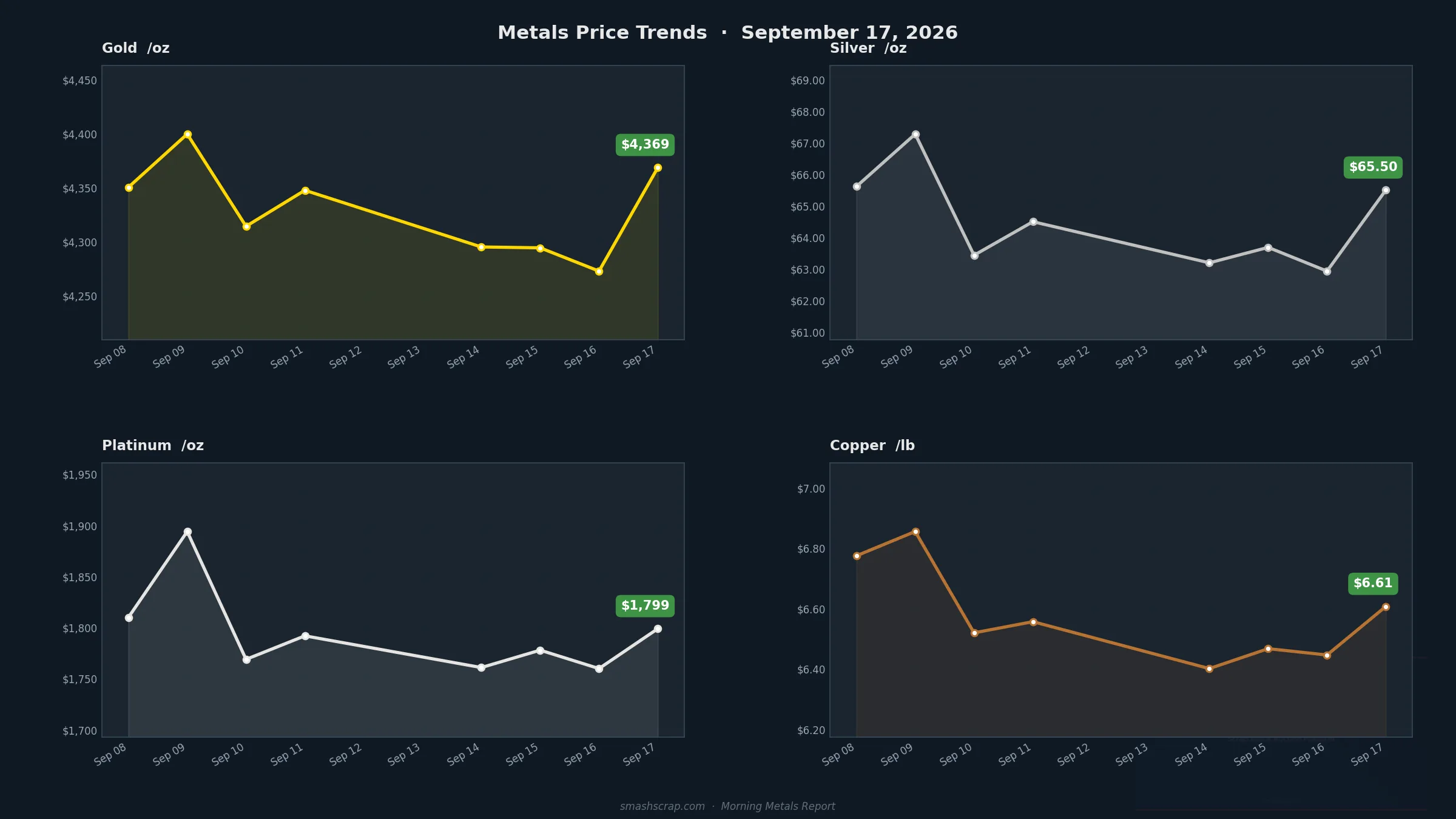
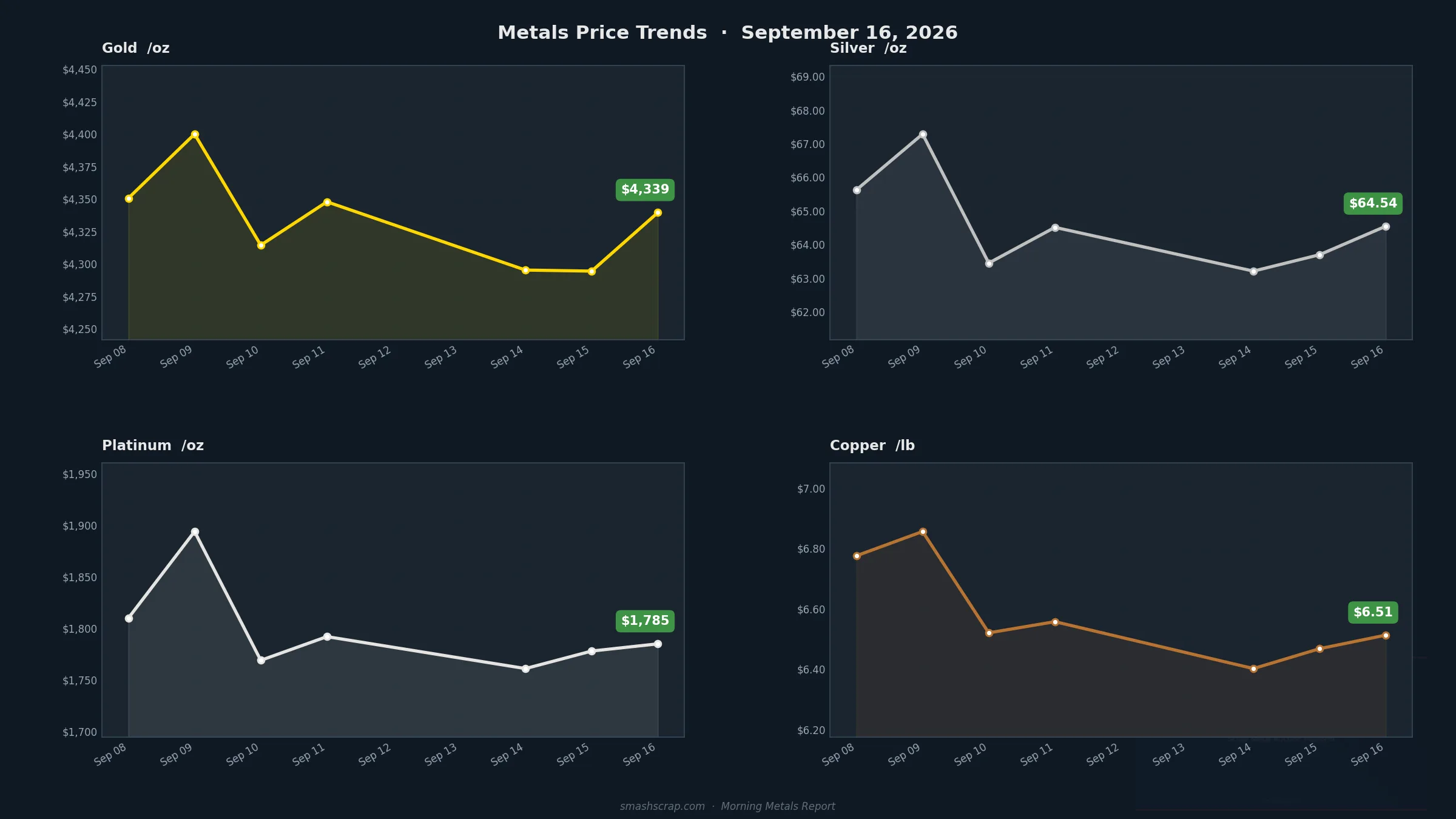
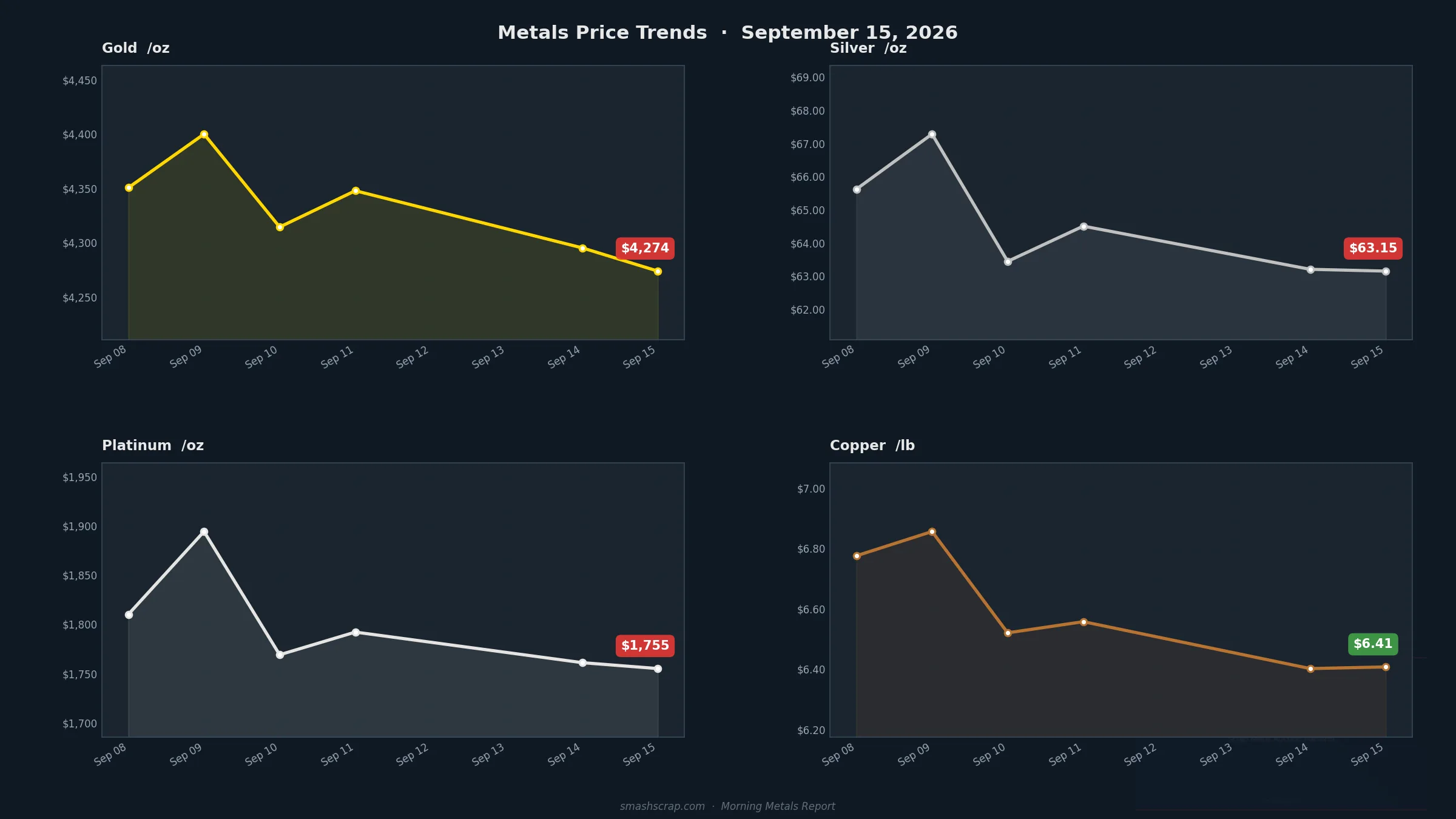
For sellers focused on metal recycling prices in Manitoba, the second half of 2026 brings a few signals worth tracking. Copper supply from South American mines has shown modest recovery, but energy policy changes and infrastructure spending in the U.S. and Canada continue to absorb available supply. That keeps copper scrap prices elevated relative to historical norms — good news for yards holding non-ferrous inventory.
PGM prices remain sensitive to EV adoption curves. As hybrid and plug-in hybrid volumes grow, the demand side for cats stays firm. But the supply of end-of-life units is also rising as the pandemic-era vehicle buying surge starts cycling through scrap age. Yards that can move volume quickly and cleanly — with documentation that satisfies buyer requirements — will be better positioned than those still operating on handshake deals and paper logs.
The bottom line for Manitoba scrap sellers: the market rewards preparation. Document your loads. Grade your material accurately. Get your cats in front of more than one buyer. If you want to understand how competitive auctions work in practice, join Canada's B2B scrap marketplace on SMASH Recycling and see what your inventory is actually worth to a competitive field of buyers.
Disclaimer: Metal prices fluctuate daily based on global market conditions. Always check current rates before making selling decisions. Nothing in this article constitutes financial or investment advice.
---Frequently Asked Questions
Q: How do copper supply shifts affect catalytic converter recycling prices in Canada?
Copper supply tightness signals stronger industrial demand, which tends to lift sentiment across the non-ferrous and PGM markets. It also draws more buyer attention to secondary metal sources, including catalytic converter recycling Canada wide. Tracking copper can give yard operators an early read on where cat prices are heading.
Q: Can automotive recyclers in Brandon, Manitoba sell catalytic converters online?
Yes. Yards in Brandon and throughout Manitoba can list catalytic converter inventory on B2B scrap marketplace platforms like SMASH. Online auction formats connect regional sellers to a vetted national buyer pool, which creates competition that a single local buyer call simply can't replicate. Documentation — VIN records, serials, photos — improves buyer confidence and bid quality.
Q: What documentation do I need to sell catalytic converters through a scrap auction platform?
Most vetted platforms and regulatory requirements in 2026 expect VIN-linked sourcing records, serial numbers on individual units, and photo documentation of condition and type. Organizations like ARC and OARA provide guidance on best practices for Canadian automotive recyclers. SMASH supports serial tracking and photo uploads as standard features — not add-ons.
Q: What are scrap metal prices doing in Manitoba right now?
Metal recycling prices in Manitoba, like the rest of Canada, are influenced by global copper supply, PGM market movements, and regional buyer demand. Ferrous and non-ferrous prices have both shown elevated volatility in 2026. Check current rates directly with buyers or through a live auction platform — published price lists are often days behind actual market levels.
Q: Does SMASH charge a subscription fee for Canadian scrap yards?
No. SMASH does not charge subscription fees. The platform operates on a model where SMASH only earns when a transaction is completed — meaning the seller's success and SMASH's success are aligned. That's a meaningful difference from platforms that charge monthly regardless of whether you sell anything.
---The copper market is moving. PGM prices are swinging. And buyers across Canada are getting pickier about what they'll accept and what they'll pay. The yards that adapt — with better documentation, better market access, and a competitive auction format — will come out ahead. If you're ready to stop guessing and start selling with real market visibility, register at smashrecycling.ca and join Canada's B2B scrap marketplace today.
Follow SMASH on LinkedIn for ongoing scrap metal market insights, pricing trends, and platform updates: linkedin.com/company/scrap-metal-auction-sales-hub.