Scrap Metal Depot Charlottetown: Price Gaps Explained
Why Scrap Metal Prices Vary So Much Across Canada — And What Charlottetown Sellers Can Do About It
If you've called two different scrap metal depots in the same week and gotten two completely different quotes, you're not imagining things. Canadian scrap metal prices don't follow a single national rate. They shift by region, by load type, by buyer demand, and sometimes by the day. For sellers in smaller markets like Charlottetown, that gap can be especially wide — and especially costly if you're not paying attention.
This guide breaks down how Canadian scrap metal pricing actually works in 2026, what's driving regional differences, and how sellers across Prince Edward Island and beyond can stop leaving money on the table.
How Canadian Scrap Metal Prices Are Set in 2026
There's no single posted price for scrap metal in Canada. What you get paid depends on a combination of global commodity benchmarks, local supply and demand, transportation costs, and what your buyer thinks you'll accept. That last part is the problem.
Global prices for metals like copper, aluminum, and catalytic converter PGMs (platinum, palladium, and rhodium) are set on international exchanges. But by the time those numbers reach a local scrap metal depot in Charlottetown, they've been filtered through a buyer's margin. If you're only calling one yard, you're getting one interpretation of the market.
- Copper scrap prices follow global LME (London Metal Exchange) rates closely, but local premiums and discounts vary.
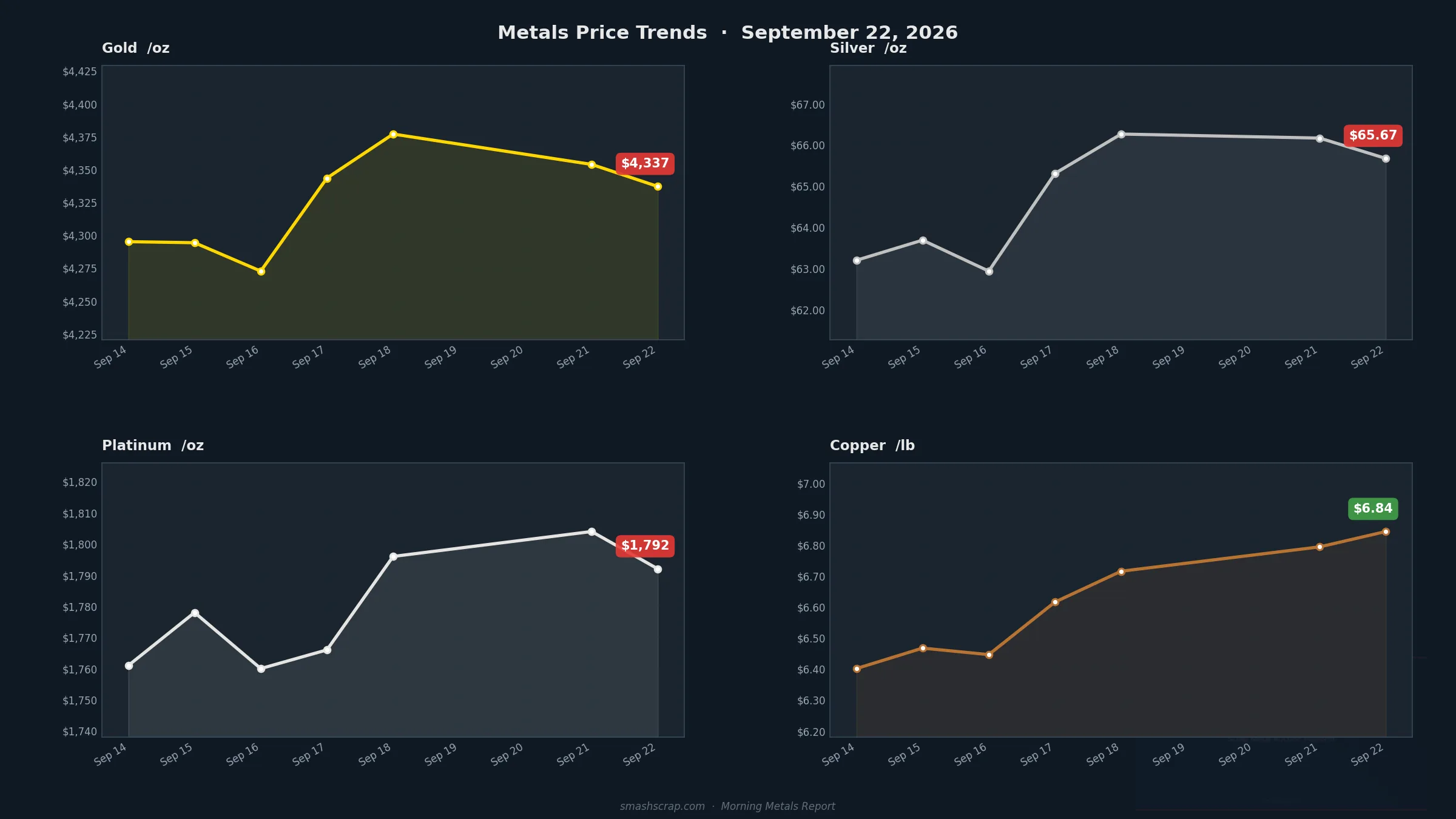
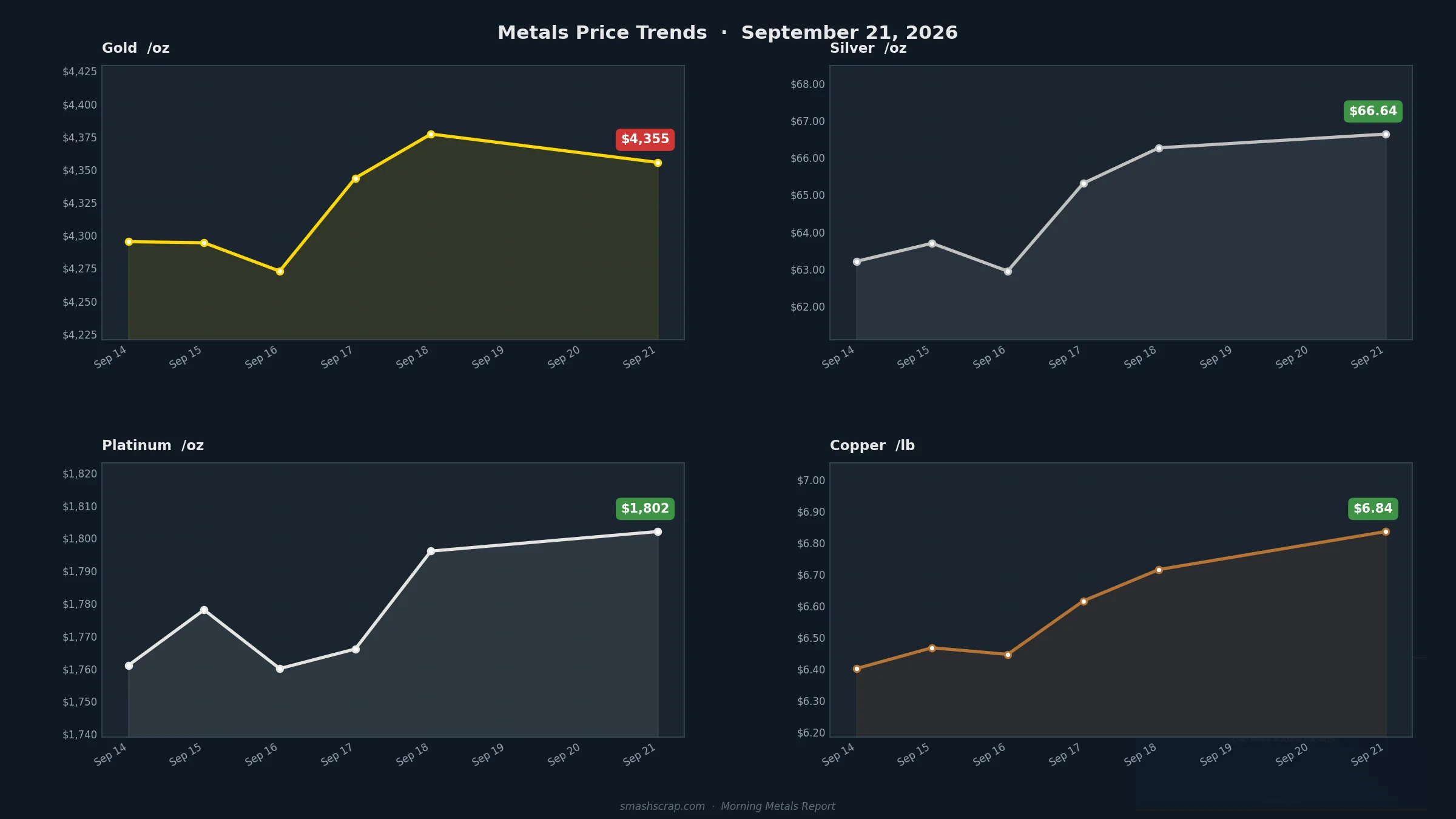
- Platinum price, palladium price, and rhodium price — the three key PGMs in catalytic converters — fluctuate daily and are especially sensitive to automotive production volumes and emissions regulation enforcement.
- Ferrous metals like steel and iron move on mill demand, which is regional and seasonal in Canada.
- Non-ferrous loads (copper wire, brass, aluminum extrusion) tend to have more price variation between buyers than ferrous tons.
The bottom line: the "market price" you hear quoted is always someone's interpretation. Competition between buyers is the only reliable way to pressure-test it.
Regional Pricing Gaps — Why Atlantic Canada Gets Underserved
Sellers in major urban centres — Toronto, Montreal, Calgary — have more buyer options within driving distance. That competition naturally narrows the spread between the best and worst offers. In smaller markets, the dynamic flips. Fewer buyers, less competition, and a pricing environment that can quietly tilt against sellers over time.
Charlottetown and the broader Prince Edward Island market face real logistical constraints. Lower scrap volume density, ferry or bridge transport to mainland buyers, and a smaller pool of vetted purchasing contacts all affect what sellers can realistically access. Most yards in the region default to a small roster of known buyers — not because those buyers are necessarily the best, but because finding alternatives takes time nobody has.
This is exactly where a B2B scrap metal marketplace changes the equation. When you list a load on a competitive auction platform, you're no longer limited by geography in the same way. Vetted buyers from across Canada can bid. The load goes to the best offer, not the most convenient one.
Platforms like SMASH Recycling's auction platform are built specifically for this kind of market access problem. More buyers seeing your load means better price discovery — not a guarantee, but a structural advantage that single-buyer phone calls can't replicate.
Catalytic Converter Prices Today — Still One of the Most Volatile Categories
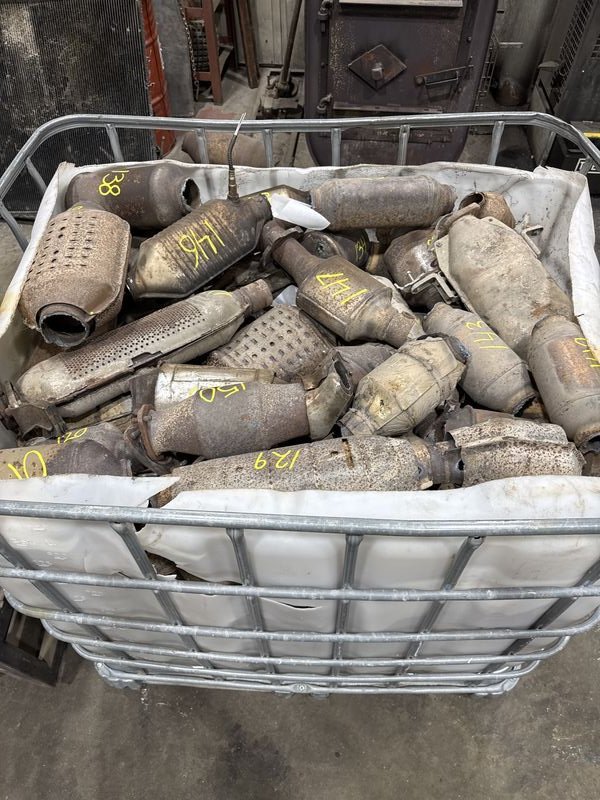
Catalytic converters remain among the highest-value and most price-volatile items in the Canadian scrap stream. The PGMs inside — platinum, palladium, and rhodium — have all seen significant swings over recent years, and 2026 is no different. Rhodium in particular has remained unpredictable, making accurate valuation genuinely difficult without current data and serial tracking.
For sellers, the challenge is that cat values are almost never posted publicly by local yards. You're relying on what the buyer tells you, and without independent verification, it's hard to know if you're being paid fairly. The best protection is documentation and competition.
- Use VIN lookup and serial tracking to identify what you actually have before you sell.
- Photo documentation of units protects you in disputes and gives remote buyers the confidence to bid accurately.
- Listing cats through a platform that connects you to multiple vetted buyers gives you a baseline to compare against.
If you want to compare scrap metal bids from verified buyers on converter loads, documented inventory is non-negotiable. Buyers won't bid confidently on mystery loads. Sellers who invest in proper documentation consistently see more competitive offers.
The Automotive Recyclers of Canada (ARC) and the Ontario Automotive Recyclers Association (OARA) both set standards for automotive recycling practices, parts tracking, and environmental compliance. If you're moving vehicles or automotive cores through your yard, aligning with ARC and OARA best practices isn't just about compliance — it builds credibility with serious buyers who are doing due diligence before bidding.
What Sellers Near Charlottetown Should Track Right Now
You don't need to watch commodity markets minute by minute, but a few key indicators matter if you want to time loads intelligently and negotiate from a position of knowledge.
Here's what's worth tracking in 2026:
- Copper scrap prices: Watch LME copper — it directly affects what you get paid for #1 and #2 copper wire, bare bright, and brass. When LME copper moves, local depot prices typically follow within days.
- Palladium and platinum prices: Both affect catalytic converter payouts. Palladium peaked historically and has normalized somewhat, but it remains a major value driver in gasoline-engine cats.
- Rhodium price: Highly volatile. A single sharp move in rhodium can meaningfully change the value of a large converter load.
- Steel mill demand: Ferrous prices in Atlantic Canada track closely with what mills in Quebec and Ontario are willing to pay for shredder feed. When mill capacity tightens, ferrous prices tend to firm up.
- CAD/USD exchange rate: Most commodity pricing is USD-denominated. A weaker Canadian dollar narrows your real-world payout even when the USD price holds steady.
Tracking these doesn't require a Bloomberg terminal. Industry publications, exchange feeds, and platforms that show live bid data all make this accessible. What matters is building the habit of checking before you sell, not after.
The Old Way Versus the Auction Way — A Practical Comparison
Let's be blunt about how most scrap metal transactions still happen in 2026. A seller calls one buyer — maybe two if they have time. They get a quote. They accept it or walk away. There's no competitive pressure, no documentation standard, no audit trail. The buyer knows the seller isn't shopping the load aggressively. That's a structural advantage for the buyer, not the seller.
The auction model flips the dynamic. You document the load properly — photos, weights, category breakdown, serial tracking on cats. You list it on a platform with a vetted buyer pool. Buyers compete. You see actual bids, not a single take-it-or-leave-it number. The price that clears the auction reflects what the market will actually pay, not what one buyer hoped you'd accept.
This isn't theoretical. It's just basic price discovery mechanics. More competition produces better information about real value. Sellers who use the scrap metal auction model consistently learn what their loads are actually worth — and often that number is different from what their regular buyer was quoting.
For a scrap metal depot in Charlottetown that moves mixed loads — ferrous tons, non-ferrous material, automotive cores, catalytic converters — the ability to reach buyers beyond the local market without making a dozen phone calls is genuinely useful. That's what joining Canada's B2B scrap marketplace on SMASH Recycling actually means in practice.
No subscription fees. We only win when the seller wins. Read the latest from SMASH Recycling to stay current on market shifts and platform updates.
Getting Your Yard Ready to Sell Competitively
Winning in a competitive market isn't just about finding a better platform. It's about presenting your inventory in a way that serious buyers respond to. Buyers bid higher when they have confidence. Confidence comes from documentation.
Here's what a well-prepared load listing looks like:
- Accurate weights and grades: Don't approximate. Buyers discount for uncertainty. Clean grade calls get sharper bids.
- Photo documentation: Multiple angles on cats, cores, and non-ferrous material. Buyers can't touch the load — photos are their only reference.
- VIN lookup on automotive material: Especially important for catalytic converters and cores. Serial tracking removes ambiguity.
- Complete packing lists and BOLs: Any buyer doing volume purchasing needs proper documentation before they move money. Have it ready.
- Consistent lot sizes where possible: Mixed loads sell, but consistent material grades and volumes attract more confident bids.
This preparation isn't just for one-time sellers. Yards in Prince Edward Island that build a reputation for accurate, well-documented listings attract repeat bids from serious buyers. That reputation has real commercial value over time.
If you're serious about getting competitive access to the Canadian scrap market — whether you're running a full recycling operation or moving specific loads — now is a good time to get set up properly. SMASH connects vetted buyers with documented sellers across North America, with no subscription fees and transparent bid data. Register at smashrecycling.ca and see what your loads are actually worth.
Frequently Asked Questions
Q: Is there a scrap metal depot in Charlottetown that buys all types of metal?
Several yards in the Charlottetown area accept ferrous and non-ferrous metals, but the range of materials accepted and prices offered varies by location. For competitive pricing on larger or mixed loads, listing through a B2B auction platform like SMASH gives you access to vetted buyers beyond your local area without being limited to a single depot's posted rate.
Q: How do scrap metal prices today in Charlottetown compare to the rest of Canada?
Atlantic Canada markets typically see slightly lower local quotes on ferrous and non-ferrous material compared to major urban centres, largely due to transportation costs and fewer competing buyers in the region. Using a national auction platform helps level the playing field by bringing buyers from across Canada to your load, rather than relying solely on local depot rates.
Q: What are the best metals to sell for the highest scrap value right now?
Non-ferrous metals — copper, aluminum, brass — consistently command the highest prices per pound in the Canadian scrap market. Catalytic converters remain high-value due to platinum, palladium, and rhodium content, though prices fluctuate daily based on global PGM markets. Always check current rates before selling; prices can shift significantly week to week. Note: Metal prices fluctuate — always verify current rates before making selling decisions.
Q: What is the ARC parts locator and how does it relate to scrap metal selling in Canada?
The Automotive Recyclers of Canada (ARC) parts locator is a tool that connects buyers with recycled OEM auto parts from member yards across Canada. It's primarily used for parts sales rather than bulk scrap, but ARC membership signals that a yard meets Canadian automotive recycling standards — which matters to serious scrap buyers evaluating who they're purchasing from.
Q: Do I need to be a large recycling yard to use a B2B scrap metal marketplace?
No. SMASH works with yards and sellers of various sizes. What matters is documented inventory — accurate weights, grades, and photos — not volume alone. Smaller loads can attract competitive bids when they're properly presented, and the auction format ensures you're not leaving money behind by defaulting to a single buyer's quote.
---Stay current on scrap metal market trends, pricing shifts, and platform updates by following SMASH Recycling on LinkedIn — where we share industry insights for Canadian recyclers and scrap metal professionals.