Laval Scrap Metal Prices: June 2026 Market Volatility
The Canadian Scrap Metal Market in June 2026: What Recyclers Need to Know
Most recyclers are leaving money on the table — not because they have bad material, but because they're selling to the wrong buyer at the wrong price. In a market where platinum, palladium, and rhodium values can swing dramatically week to week, calling one buyer and taking their number is the same as folding a winning hand. The Canadian scrap metal market in mid-2026 is volatile, competitive, and full of opportunity — if you know how to work it.
This isn't a pep talk. It's a practical breakdown of where the market sits right now, what's moving, and how platforms like SMASH are changing the way Canadian recyclers — from auto wreckers to e-waste processors — connect with verified buyers and get real price discovery on their material.
Where Canadian Scrap Metal Prices Stand in June 2026
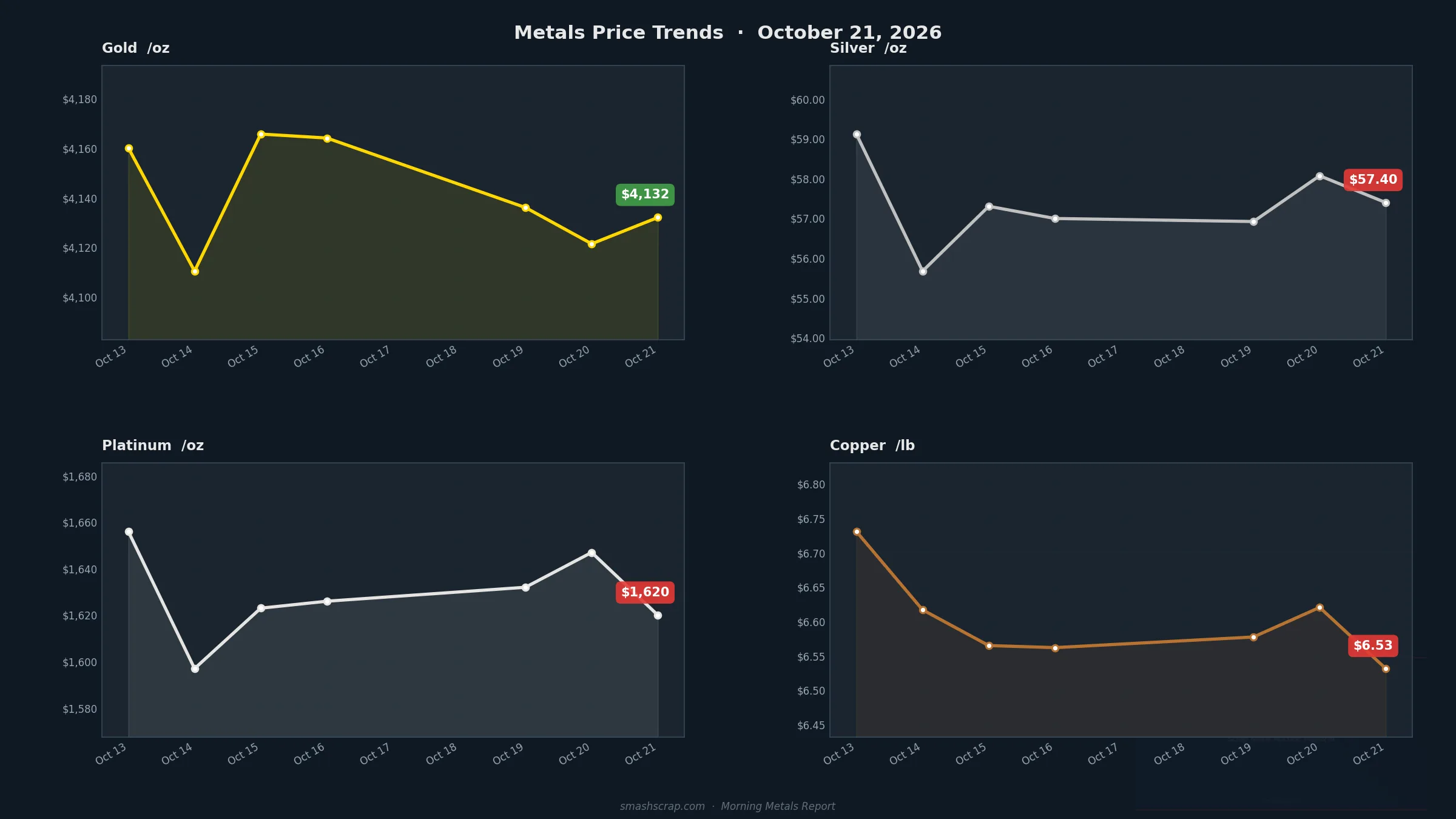
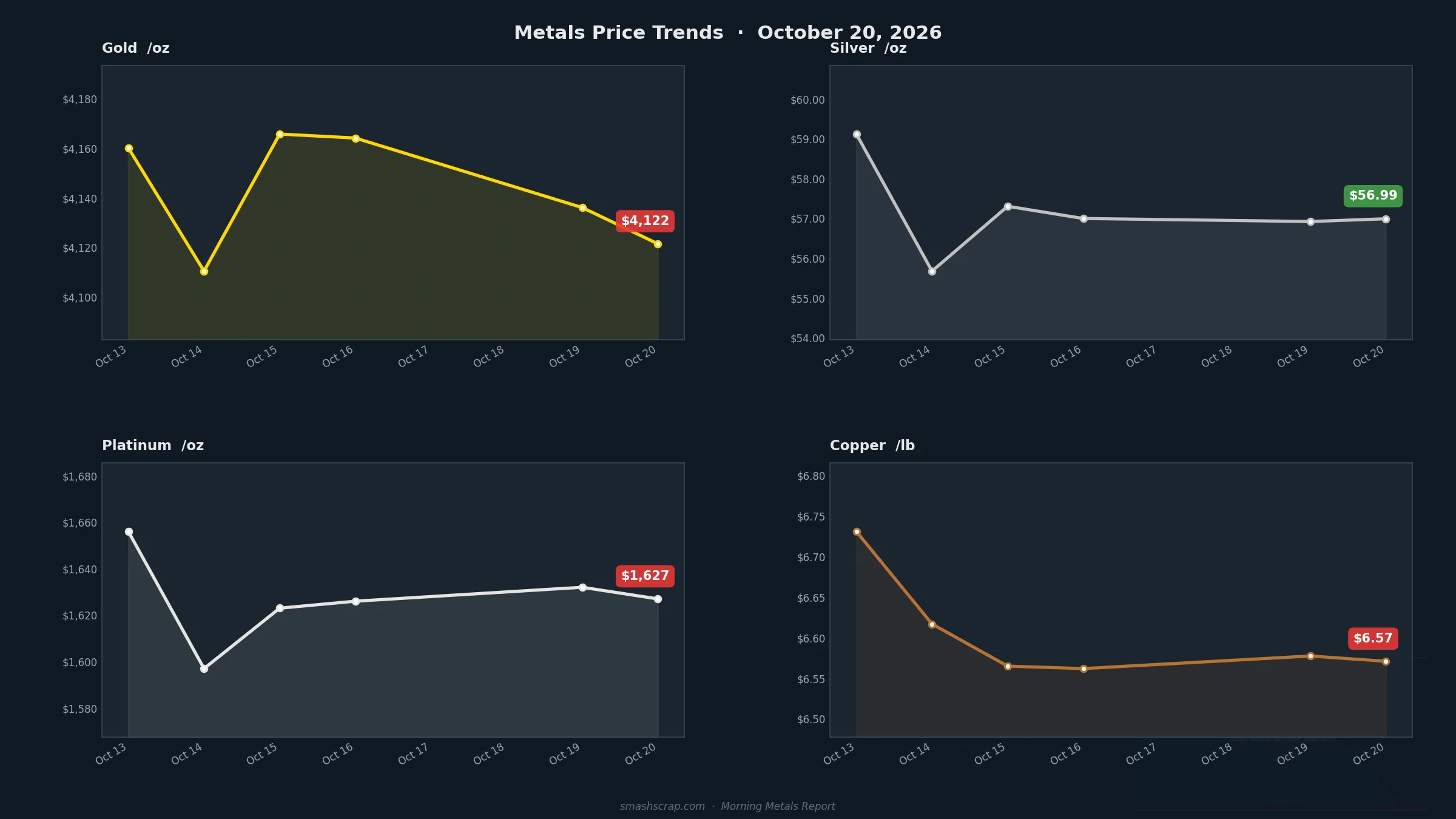
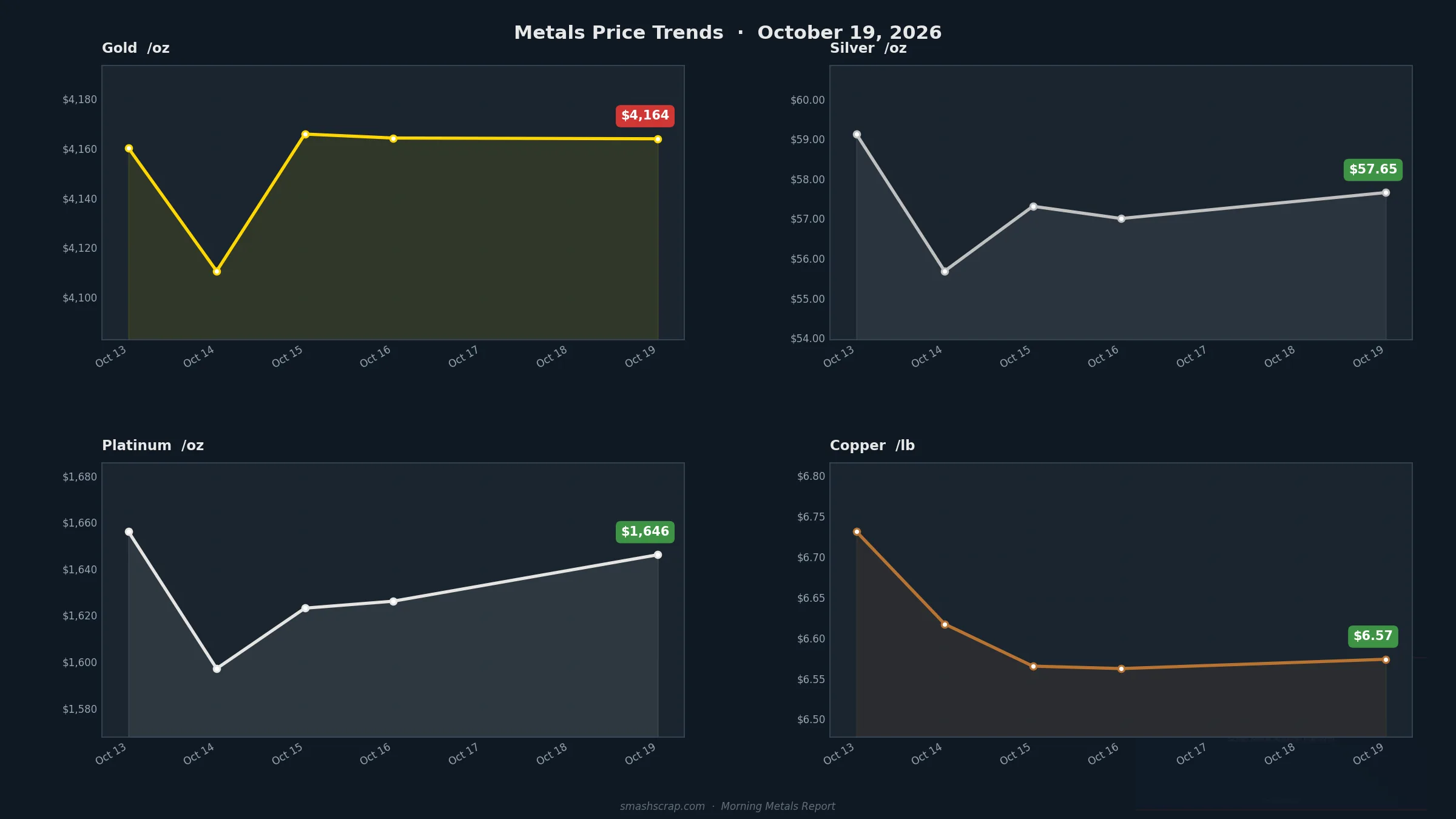
Commodity markets have had a turbulent first half of 2026. Base metals like copper have stayed elevated on the back of ongoing infrastructure spending and continued demand from EV manufacturing. Aluminum remains steady, though aluminum can prices in urban collection zones like Laval and the greater Montreal area are subject to local processor margins — so what you see posted regionally may not reflect what a competitive bid environment can actually yield.
Precious metals in catalytic converters remain the most volatile category. Platinum, palladium, and rhodium prices shift based on automotive production data, currency fluctuations between CAD and USD, and global refinery capacity. A catalytic converter lot worth one price this Monday could be worth meaningfully more or less by Thursday. That's not hyperbole — that's the market.
Disclaimer: All metal prices fluctuate daily based on commodity markets, currency exchange, and regional demand. Always verify current rates directly with buyers or through a live auction environment before committing to a sale.
Key categories worth tracking right now:
- Copper scrap — bare bright, #1, and #2 copper all carry different premiums. Documented grades with photos and weights command better bids.
- Catalytic converters — PGM content (platinum, palladium, rhodium) drives value. Serial numbers matter. Buyers pay more when they know exactly what they're bidding on.
- Aluminum — cast, extrusion, and painted alloys are priced differently. Mixing grades costs you money.
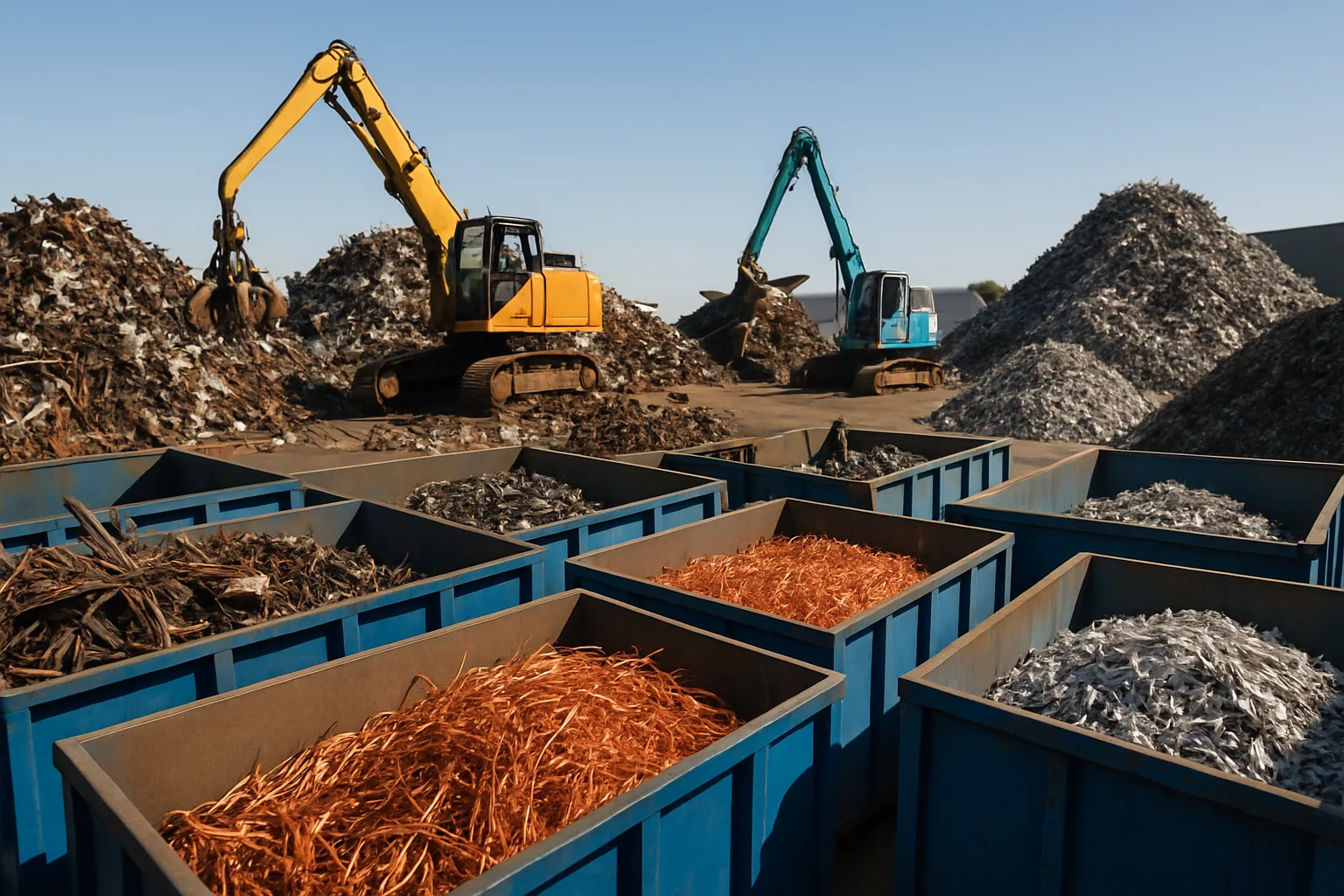
- E-waste materials — circuit boards, copper wire, and precious-metal-bearing components are in demand, particularly from processors handling e-waste recycling in urban centres like Laval.
- Ferrous loads — steel and iron remain high-volume, lower-margin plays. BOLs and accurate weights are non-negotiable for smooth transactions.
Why the Old Way of Selling Scrap Costs Canadian Recyclers Real Money
Here's the problem. You run a yard in Laval. You've got a skid of cats, a load of copper, and a container of mixed non-ferrous. You call the same two buyers you always call, get two numbers, and take the better one. That's not a competitive process — that's a coin flip with a familiar face.
The buyer you're calling already knows your material better than you do. They know what they'll pay the refinery, what margin they need, and how much room they have to negotiate. You're operating blind. That information gap is where recyclers consistently lose value — not because the material is bad, but because there's no competition forcing buyers to sharpen their pencils.
This is the core problem the B2B scrap metal marketplace model solves. When multiple vetted buyers compete for the same lot, the price discovery process does the work for you. You're not guessing. You're not haggling. You're watching the market tell you what your material is actually worth.
Organizations like the join Canada's B2B scrap marketplace on SMASH Recycling platform — along with industry bodies like the Automotive Recyclers of Canada (ARC) and the Ontario Automotive Recyclers Association (OARA) — have long emphasized transparency and documentation as foundations of a healthy recycling market. Competitive pricing is part of that foundation.
How SMASH Connects Canadian Recyclers with Verified Buyers
SMASH is built around one idea: more buyers competing for your load means better price discovery. Not a guarantee of the highest price on earth — but a genuine market, with real competition, between buyers who have been vetted before they ever place a bid.
Here's how it works in practice for a yard operator in Quebec:
- List your material. Use SMASH's inventory tool to document your load. For catalytic converters, that means serial numbers, VIN lookups where applicable, and photo documentation. For copper or aluminum, it means grade, weight, and condition. Good documentation drives buyer confidence — and buyer confidence drives bids.
- Auction goes live. Vetted buyers across Canada see your listing and compete. You're not calling around. You're not waiting for a callback. The market comes to you.
- Accept the winning bid. No subscription fee to get there. SMASH only wins when you win. Auto-invoicing handles the paperwork, including GST/HST handling for Canadian transactions.
- Move the material. BOLs and packing lists are documented in the platform. Clean transactions, clear records.
For auto wreckers across Canada dealing in catalytic converters, this process is especially valuable. Cat pricing is PGM-driven and changes constantly. Listing a cat lot through a catalytic converter auction format means buyers bid based on current platinum, palladium, and rhodium market values — not based on what they think you'll accept.
You can compare scrap metal bids from verified buyers and see what competitive pricing actually looks like for your material type before you commit to anything.
Scrap Metal Recycling in Quebec: Regional Context Matters
Quebec's recycling sector operates under specific provincial regulations and has a dense network of processors, auto dismantlers, and industrial generators — particularly in the greater Montreal area. Laval, sitting at the centre of major transportation corridors north of Montreal, has become a significant hub for secondary metals processing and scrap metal recycling in Quebec. Yards operating in and around Laval have direct access to both domestic processors and buyers shipping material east-west across Canada.
The e-waste stream in Laval has grown alongside commercial and industrial tech turnover. Circuit boards, server hardware, and telecommunications equipment all carry recoverable precious metal content. E-waste recycling in Laval is increasingly competitive, with buyers who specialize in electronic scrap making active bids on properly documented lots. The key word there is "documented." A box of mixed boards is worth less than an itemized, photographed lot that lets buyers calculate their return before they bid.
Quebec's regulatory environment also means that documentation isn't just good practice — it's increasingly expected. Traceability for catalytic converters, in particular, has become a compliance issue across multiple provinces. SMASH's serial tracking and photo documentation tools align directly with where that regulatory pressure is heading.
To stay current on how the market is evolving in your region, read the latest from SMASH Recycling — the blog covers price trends, platform updates, and practical guidance for Canadian recyclers.
What Documented Inventory Actually Does for Your Bids
This point doesn't get enough attention. The quality of your listing directly affects the quality of your bids. A catalytic converter lot with serial numbers, clear photos, weight documentation, and a packing list will attract more confident buyers — and more confident buyers bid higher. This isn't a theory. It's how markets work.
Buyers who can't verify what they're buying have to price in risk. That risk comes out of your pocket. Every unknown becomes a discount. When you use SMASH's inventory tools to remove those unknowns — VIN lookups on cores, serial tracking on cats, documented weights on non-ferrous loads — you're not just organizing your yard. You're building a stronger bid environment for every lot you list.
The same principle applies to copper scrap, aluminum, and e-waste. Documented grades, clean photos, and accurate weights are the difference between a buyer guessing and a buyer bidding with conviction.
Explore SMASH Recycling's auction platform to see how the inventory and documentation tools work before you list your first load.
No Subscription Fees. No Guessing. Just the Market.
The Canadian scrap metal market in 2026 rewards recyclers who have access to real buyer competition and penalizes those who don't. Whether you're running a full-service auto wrecker operation in Laval, processing e-waste in Quebec City, or managing a mixed non-ferrous operation anywhere across Canada — the principle is the same. One buyer is not a market. Two buyers is barely a negotiation. Multiple vetted buyers competing in an auction format is price discovery.
SMASH doesn't charge a subscription to find out. There are no monthly fees sitting between you and the platform. We only make money when a transaction closes — which means the incentive is always to get you the strongest bid possible, not to lock you into software you may or may not use.
If you're ready to stop guessing and start selling with real competition behind every load, it's worth registering. Join Canada's B2B scrap marketplace and see what your material is actually worth — register at smashrecycling.ca.
Frequently Asked Questions
Q: How does the SMASH auction platform work for Canadian scrap sellers?
You list your material using SMASH's inventory tools — including photos, weights, serial numbers, and grade documentation. Vetted buyers across Canada then compete in an auction format. You review bids, accept the best one, and SMASH handles auto-invoicing including GST/HST. No subscription fees apply.
Q: What are catalytic converter prices today in Canada?
Catalytic converter prices are driven by platinum, palladium, and rhodium spot prices, which change daily based on global commodity markets and CAD/USD exchange rates. There is no fixed "today" price — values vary by unit type, PGM content, and current market conditions. Using a competitive auction format through SMASH gives you real-time price discovery based on what buyers are actually willing to pay.
Q: Is SMASH available for scrap metal recycling in Quebec and Laval specifically?
Yes. SMASH serves recyclers and buyers across Canada, including yards operating in Laval and throughout Quebec. The platform handles CAD pricing and Canadian tax documentation including GST/HST, making it practical for Quebec-based operations.
Q: How do I sell catalytic converters online safely in Canada?
The safest approach is to use a platform with vetted buyers and documented transaction records. SMASH's serial tracking and photo documentation tools create a clear paper trail for every cat lot. This protects both sellers and buyers — and increasingly aligns with provincial traceability requirements for catalytic converter transactions.
Q: What scrap metal categories can I sell through SMASH?
SMASH handles a wide range of categories including catalytic converters, copper scrap, aluminum, e-waste materials, ferrous loads, and other non-ferrous metals. If you have a mixed or unusual load, reach out directly to discuss how to list it effectively. For selling inquiries, email jeff@smashscrap.com.
Stay current on scrap metal market trends and platform updates by following SMASH on LinkedIn: follow SMASH Recycling on LinkedIn for weekly industry insights and Canadian scrap market updates.