E-Waste Recycling Windsor: B2B Auction Advantage
The Weekly Scrap Roundup: What Canadian Recyclers Need to Know Right Now
Most recyclers in Windsor are still leaving money on the table — not because the metal isn't valuable, but because they're selling to one buyer without knowing what the market actually looks like. That's the problem SMASH was built to fix. This week's roundup breaks down what's moving in the Canadian scrap market, what buyers are paying attention to, and how verified competition changes the game for yards trying to get a fair price on everything from copper wire to catalytic converters.
The market doesn't sit still. Read the latest from SMASH Recycling regularly if you want to stay ahead of price swings and buyer demand shifts. One slow week on copper can get offset by a spike in PGM values — but only if you know to look.
E-Waste Recycling Windsor and the Growing B2B Opportunity
E-waste recycling in Windsor is a bigger commercial opportunity than most yards treat it. The region sits at a major cross-border corridor — Windsor's position directly across from Detroit means a steady flow of industrial, automotive, and electronic scrap that doesn't always get processed through formal channels. That's a gap. A profitable one, if you're set up right.
E-waste contains recoverable copper, aluminum, steel, and trace precious metals. The challenge is documentation. Buyers on a B2B scrap metal marketplace want to know what they're bidding on before they commit. That means photos, weights, serial tracking where applicable, and a clean inventory record. SMASH's built-in inventory tool handles exactly that — you document the load once, buyers see it clearly, and the auction does the rest.
For Windsor yards handling e-waste alongside automotive cores and non-ferrous, that documentation layer matters even more. Mixed loads with poor records attract low bids. Well-documented loads attract competition. There's a direct line between your prep work and your final price.
Scrap Metal Prices Today: What's Driving the Market This Week
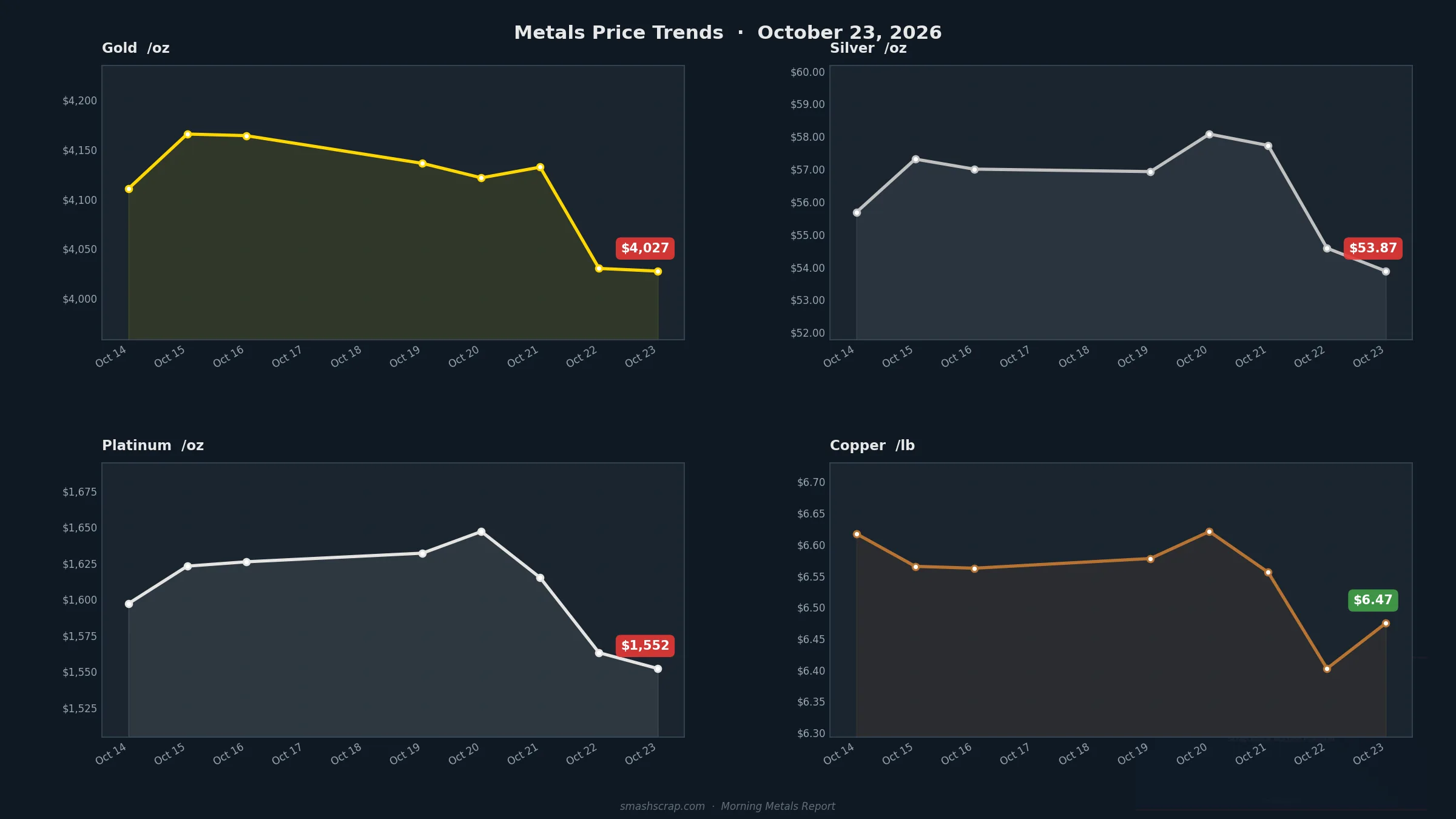
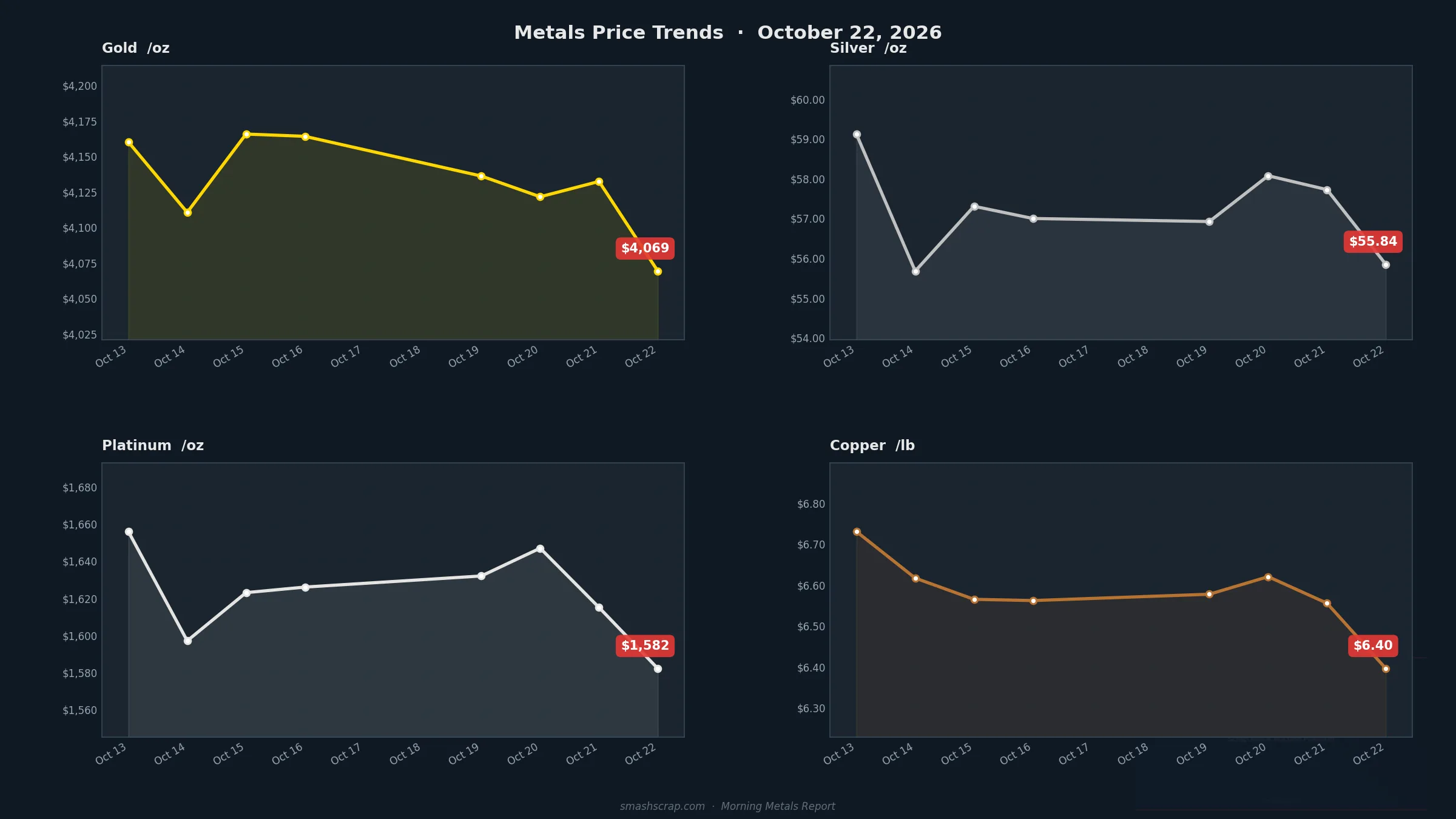
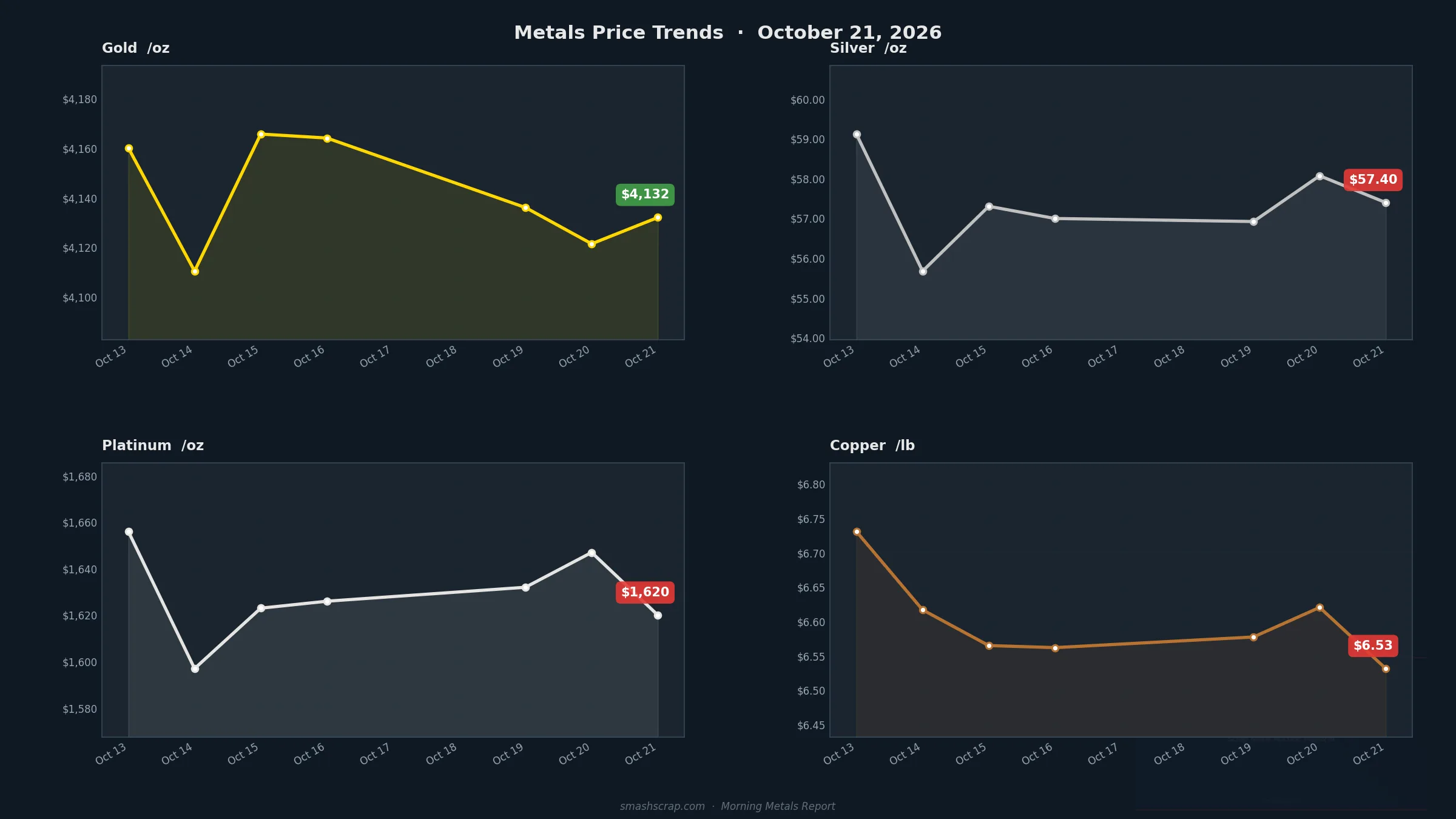
Copper is still the metal everyone watches first. How much is copper to recycle? Prices move daily based on LME spot, USD/CAD exchange rates, and regional buyer demand. In Ontario, non-ferrous yards are seeing active buyer interest, but the spread between what one buyer quotes and what a competitive auction reveals can be significant. Never assume the first number you hear is the real market.
Platinum, palladium, and rhodium — the three PGMs that matter most for catalytic converter pricing — continue to shift based on global industrial demand and automotive production cycles. Catalytic converter prices today reflect those commodity moves directly. If you're holding cats without checking current PGM values, you're guessing. SMASH gives buyers and sellers a structured format to trade cats with full visibility into what's in the load.
- Copper scrap prices: Watch LME daily. Insulated wire, bare bright, and #1 copper all grade differently — don't lump them together in your listing.
- Catalytic converter prices today: Tied directly to platinum, palladium, and rhodium spot. Assay results and vehicle-specific data (VIN lookup) move bid confidence significantly.
- Aluminum: Cast vs. extrusion vs. mixed — grade separation drives better bids on the platform.
- Steel and iron: Ferrous markets remain steady but competitive. Volume loads benefit most from auction format.
Disclaimer: Metal prices fluctuate daily based on commodity markets, exchange rates, and regional demand. Always verify current rates before making buying or selling decisions.
Scrap Car Recycling Across Canada — Manitoba, Ontario, and Beyond
Scrap car recycling isn't just a local game anymore. Yards in Manitoba, Ontario, and across Canada are moving vehicles through formal channels with increasing documentation requirements and buyer expectations. The Ontario Automotive Recyclers Association (OARA) and the Automotive Recyclers of Canada (ARC) have both pushed for higher standards around vehicle processing, parts documentation, and environmental compliance. That's a good thing for yards that do it right — because documented inventory builds buyer trust.
For scrap car recycling in Manitoba, Canada, the dynamics are slightly different. Rural yards often deal with longer transport distances and fewer local buyer options. That's exactly the scenario where a national B2B scrap metal marketplace makes the most sense. When your local buyer pool is thin, you need reach. SMASH connects sellers across provinces with vetted buyers who can bid regardless of geography.
The end-of-life vehicle process generates multiple sellable streams: the hulk itself, non-ferrous stripping (copper wiring, aluminum trim, radiators), catalytic converters, and reusable cores. Each of those streams benefits from separate documentation and ideally a separate listing strategy. Bundling everything into one vague load description is how you leave money behind.
If you're running Windsor scrap metal services and processing end-of-life vehicles, the ARC and OARA frameworks give you a compliance baseline — SMASH gives you the marketplace to monetize what that process produces.
How SMASH Connects Canadian Recyclers with Verified Buyers
The old model is simple: you call your buyer, they give you a number, you take it or push back a little, and the load moves. The problem isn't the relationship — it's the information asymmetry. Your buyer knows the market. You're guessing. That gap costs yards real money across hundreds of loads a year.
SMASH flips that dynamic. When you list a load on the platform, vetted buyers compete. Multiple bids mean you see what the market actually looks like — not just what one contact wants to pay today. More buyers means better price discovery. That's not a promise of higher prices on every load — it's a structural advantage that plays out over time.
Here's what the SMASH process looks like for a Canadian recycler:
- Document your load: Use the inventory tool to log weights, grades, photos, and any relevant serial or VIN data. Better documentation attracts more confident bids.
- List for auction: Your load goes live to SMASH's network of vetted buyers. No cold calls. No guessing who's buying this week.
- Bids come in: Competition can help reveal the real market. You see what buyers are willing to pay, not just what one buyer volunteers.
- Accept and close: Auto-invoicing handles the paperwork. BOLs, packing lists, GST/HST documentation — it's built in.
No subscription fees. SMASH only wins when the seller wins. That alignment matters — it means the platform is incentivized to get you better outcomes, not just to process transactions.
Ready to stop guessing? Join Canada's B2B scrap marketplace on SMASH Recycling and see what verified buyer competition actually looks like for your loads.
Metal Recycling Prices Canada: Why Transparency Beats the Handshake Deal
The handshake deal isn't dead — but it's no longer the ceiling. Established buyer relationships have real value: trust, reliability, consistent volume. But even your best buyer relationship doesn't guarantee you're getting market rate. Metal recycling prices in Canada vary by region, by buyer appetite, and by how much competition exists for your specific material.
Transparency is the fix. When you list on a structured platform like SMASH, the bid history builds a picture of what your loads are actually worth. That data has value beyond the individual transaction — it gives you a benchmark, a negotiating reference, and a record of market conditions over time.
For Ontario yards handling mixed streams — non-ferrous, cats, cores, e-waste — the ability to compare scrap metal bids from verified buyers isn't just convenient. It's a business intelligence tool. You learn which load types attract the most competition, which need better documentation, and which months drive stronger buyer demand.
That's the difference between running a recycling yard and running a recycling business. One reacts to prices. The other understands them.
This Week's Takeaway for Canadian Yards
If you're in Windsor, Sarnia, Winnipeg, or anywhere else in Canada sitting on non-ferrous, end-of-life vehicles, or catalytic converters, the market is moving whether you're watching it or not. PGM prices shift. Copper spreads tighten and widen. Buyer demand cycles through regions. The yards that build systems — documentation, buyer reach, price benchmarking — are the ones that consistently outperform the ones still running on gut instinct and one-buyer relationships.
SMASH is built for the yards that are ready to do it differently. No subscriptions. No fluff. Just a transparent auction format, vetted buyers across Canada, and the tools to document your inventory properly. If you're serious about getting what your scrap is worth, explore SMASH Recycling's auction platform and get set up before your next load moves.
Follow SMASH on LinkedIn for weekly market updates, scrap metal price insights, and industry news that actually matters to Canadian recyclers.
Frequently Asked Questions
Q: What types of e-waste can I recycle through a B2B scrap metal marketplace in Windsor?
Industrial and commercial e-waste containing recoverable copper, aluminum, and steel are the most common loads traded through B2B platforms. In Windsor, yards processing automotive electronics, industrial controls, and mixed wire harnesses find the most buyer interest when loads are clearly graded and photographed. SMASH's inventory tool makes that documentation straightforward.
Q: How much is copper worth to recycle in Canada right now?
Copper scrap prices in Canada fluctuate daily based on LME spot pricing and the CAD/USD exchange rate. Bare bright copper, #1 copper, and insulated wire all trade at different grades — blending them in one load without separation typically results in a lower blended bid. Always check current market rates before moving a load, and use a platform where multiple buyers can bid to reveal what the market is actually paying.
Q: How does SMASH verify buyers on its platform?
SMASH works with vetted buyers — meaning buyers go through a qualification process before they can bid on loads. This protects sellers from dealing with unqualified or low-intent bidders. For Canadian sellers, that vetting process is part of what makes competition on the platform meaningful rather than just volume for its own sake.
Q: Can I sell catalytic converters online through SMASH?
Yes. Catalytic converters are one of the most actively traded load types on the SMASH platform. Listings benefit from VIN lookup data, serial tracking, and photo documentation — all of which increase buyer confidence and can attract stronger bids. Catalytic converter prices today are tied to platinum, palladium, and rhodium spot prices, so accurate load documentation matters more than ever.
Q: Is SMASH available to recyclers outside of Windsor and Ontario?
SMASH operates across Canada, including yards in Manitoba, British Columbia, Alberta, Quebec, and Atlantic Canada. The platform is built for national reach — which is especially valuable for yards in regions with fewer local buyers. Whether you're running scrap car recycling in Manitoba or a non-ferrous yard in Ontario, the auction format and vetted buyer network work the same way.