Copper Recycling Prince George: Beat Single-Buyer Pricing
Canadian Scrap Metal Recycling in 2026: What's Changed, What's Driving Prices, and Where Prince George Fits In
Most scrap yards are still operating like it's 2010 — one buyer, one phone call, one price you hope is fair. Meanwhile, the Canadian scrap market has shifted hard. Copper is moving fast. Catalytic converter prices are volatile. And recyclers across British Columbia are starting to figure out that transparency isn't just nice to have — it's money left on the table when it's missing.
If you're doing copper recycling in Prince George or running a yard anywhere in the Interior, this is the current state of the industry. No fluff. Just what's happening and what it means for your operation.
The Canadian Scrap Metal Market in 2026: What's Actually Driving It
The fundamentals are simple: demand for recycled metals is strong, but supply chains are tighter and buyers are pickier. Global manufacturing — especially EV production and grid infrastructure — is pulling hard on copper, aluminum, and specialty metals. That creates real upward pressure on prices when you can actually access competitive buyers.
The problem? Most Canadian recyclers, especially outside major urban centres, still sell through one or two contacts. One mill. One broker. One relationship that may or may not be giving you market rate. When copper prices move, your single buyer knows it before you do — and they're not going to volunteer that information.
The scrap metal market in Canada is also under increasing regulatory scrutiny. Documentation requirements for high-value materials — particularly catalytic converters — have tightened at the provincial level. British Columbia has pushed stricter ID and record-keeping requirements for cat purchases. Running a yard without solid documentation isn't just bad business. It's a liability.
Organizations like the Automotive Recyclers of Canada (ARC) and the Ontario Automotive Recyclers Association (OARA) have both been vocal about the need for standardized documentation practices across the industry. Their guidance on catalytic converter tracking, VIN-level record keeping, and chain of custody isn't just compliance box-checking — it's what serious buyers now expect when they bid on a load.
Copper Recycling in Prince George: A Real Opportunity Being Left Behind
Prince George sits at a major crossroads in northern British Columbia. Forestry, mining, construction, and municipal operations all generate significant volumes of copper — wire, pipe, bus bar, rotors. There's no shortage of material. What's short is access to real price competition.
Most copper recycling in Prince George flows through a small number of regional buyers. Sellers often don't know whether they're getting market rate or a regional discount passed off as normal. That's not unique to Prince George — it's the reality for any mid-sized market that isn't sitting next to a major smelter or mill. Distance gets used as a pricing lever by buyers, and sellers have no easy way to push back without alternatives.
That's exactly where a competitive auction format changes the math. When multiple vetted buyers bid on the same load — wire grades, bare bright, #1 and #2 copper, whatever you're moving — price discovery actually happens. You see what the market will pay, not what one buyer tells you the market will pay. For a yard moving meaningful tonnage of copper, the difference in realized price per hundredweight adds up fast.
If you're looking to connect with buyers and get competitive bids on your copper loads, explore SMASH Recycling's auction platform — it's built for exactly this kind of market gap.
Catalytic Converter Prices in Canada: High-Value, High-Scrutiny
No material in the scrap industry has more upside — or more regulatory heat — than catalytic converters. Platinum, palladium, and rhodium prices are volatile by nature. A cat that was worth a certain amount last quarter may be worth significantly more or less today depending on PGM spot markets. That volatility is why selling cats through a single buyer, at a fixed agreed price, is one of the most expensive habits a yard can have.
A proper catalytic converter auction lets buyers compete in real time. The PGM content varies by make, model, and year — and experienced refinery-side buyers know that. When you're selling a mixed pallet of cats with documented serial numbers and photos, buyers can bid with confidence. That confidence is what drives competitive pricing. Without documentation, you're asking buyers to price in uncertainty — which means they're pricing against you.
Serial number tracking and photo documentation aren't optional extras anymore. They're the floor. Compare scrap metal bids from verified buyers and you'll quickly see how much documentation affects the quality of bids you attract.
The catalytic converter scrap price in Canada today is driven by global PGM markets — platinum, palladium, and rhodium all trade independently, and cat values shift accordingly. There's no single "cat price." There's a spread based on grade, condition, and documentation quality. Yards that understand this and document accordingly are capturing more of the spread. Yards that don't are leaving it with the buyer.
What a Scrap Metal Depot in Prince George Actually Needs Right Now
Running a scrap metal depot in Prince George in 2026 means dealing with a few realities at once. You're further from the major refinery hubs than yards in Vancouver or Calgary. Freight costs are real. And your buyer network is smaller by geography, not by choice.
What offsets that disadvantage? Volume discipline, documentation, and access to buyers who aren't local — buyers who can factor in freight and still make competitive bids because they want the material. That's not a fantasy. That's what a functioning B2B marketplace is supposed to deliver.
The tools that actually move the needle for a northern BC yard right now:
- Photo documentation — Clean, consistent load photos give remote buyers confidence. No photos means buyers price in risk.
- Serial and VIN tracking — Especially for cats and cores. It's the difference between a bid and a pass.
- Inventory management — Knowing exactly what you have before you list it keeps you from underselling mixed or misgraded loads.
- Auto-invoicing — Reduces back-and-forth and keeps deals clean. Buyers come back when the admin is painless.
- GST/HST handling — Canadian B2B transactions have tax complexity. A platform that manages this automatically saves real time.
You can check out the full range of Prince George scrap metal services available through SMASH to see how the platform addresses these specific challenges for northern BC yards.
B2B Scrap Metal Marketplace vs. Spot Sales: Why Auctions Win on Price Discovery
Here's the core argument, plain language: competition reveals price. When one buyer sets your price, you're at their mercy. When five or ten vetted buyers compete for the same load, the market sets the price. That's not a guarantee of a higher number — it's a guarantee of a more accurate number. Sometimes the market is lower than you hoped. But at least you know where you actually stand.
The old way — cold calls, relationships, whoever picks up the phone — works fine when prices are stable and you've been in the business for decades. It breaks down when markets move fast, when you're selling a material you don't move every week (cats, specific non-ferrous grades), or when your regular buyer is slow to reflect current prices.
A B2B scrap metal marketplace like SMASH is built for yards that want to know the market, not guess at it. The auction format creates a record of what buyers actually bid — not what someone told you the market was. That data has value beyond the individual transaction. It helps you grade better, document better, and time your sales better over time.
For yards across British Columbia — from the Lower Mainland to Prince George to the Kootenays — the ability to reach vetted buyers nationally without having to cold-call brokers is a structural advantage. Join Canada's B2B scrap marketplace on SMASH Recycling and get your loads in front of buyers who are actively bidding, not just answering the phone when they feel like it.
Where the Industry Is Headed: What Canadian Recyclers Should Watch in 2026
A few trends worth tracking if you're operating a yard or moving significant scrap volume anywhere in Canada:
- EV battery materials — Lithium, cobalt, and nickel are entering the secondary market as first-generation EVs age. Not traditional scrap yard territory yet, but it's coming.
- PGM price volatility — Platinum, palladium, and rhodium markets remain sensitive to automotive manufacturing shifts. Cat prices will keep swinging. Documentation is your hedge.
- Regulatory tightening — Expect more provinces to follow BC's lead on cat documentation and high-value non-ferrous tracking. Getting your systems right now saves scrambling later.
- Freight and logistics costs — Remote yards feel this more than anyone. Buyers who factor in freight and still compete are worth cultivating through platforms that give you broader reach.
- Digital documentation standards — Industry bodies including ARC are pushing for consistent digital record-keeping. Paper trails are becoming table stakes for selling to serious buyers.
The yards that adapt their documentation and selling practices now will be positioned better when market conditions tighten. The ones still operating on handshakes and gut feel will be the last to know when they're behind the market.
Ready to see what competitive bidding looks like for your loads? Read the latest from SMASH Recycling for market insights, platform updates, and practical guidance for Canadian recyclers.
The market is there. The buyers exist. The question is whether your current setup lets you reach them — or whether one buyer keeps collecting the difference. Register at smashrecycling.ca and find out what your loads are actually worth in a competitive market.
Frequently Asked Questions
Q: What are current copper recycling prices in Prince George?
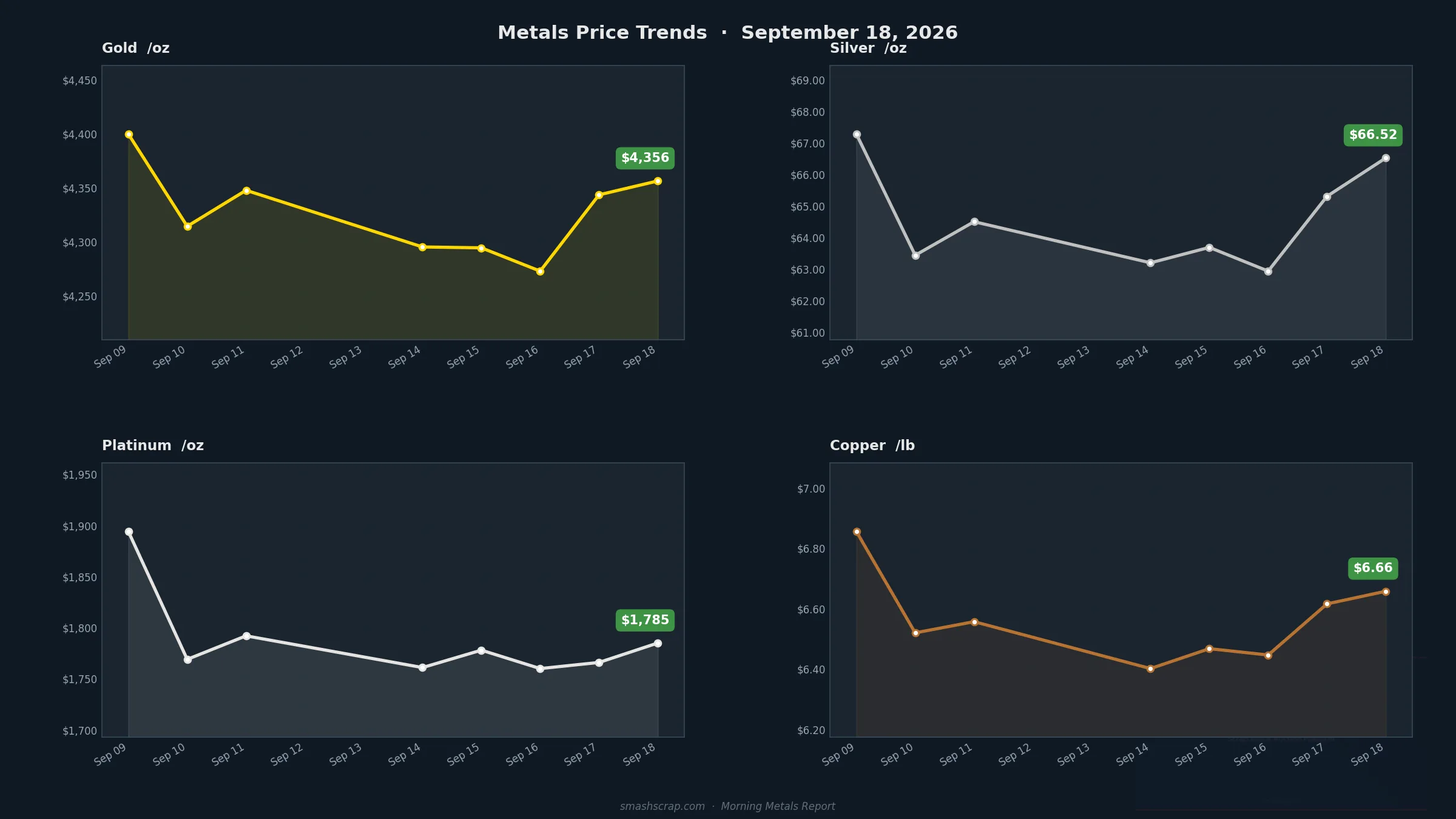
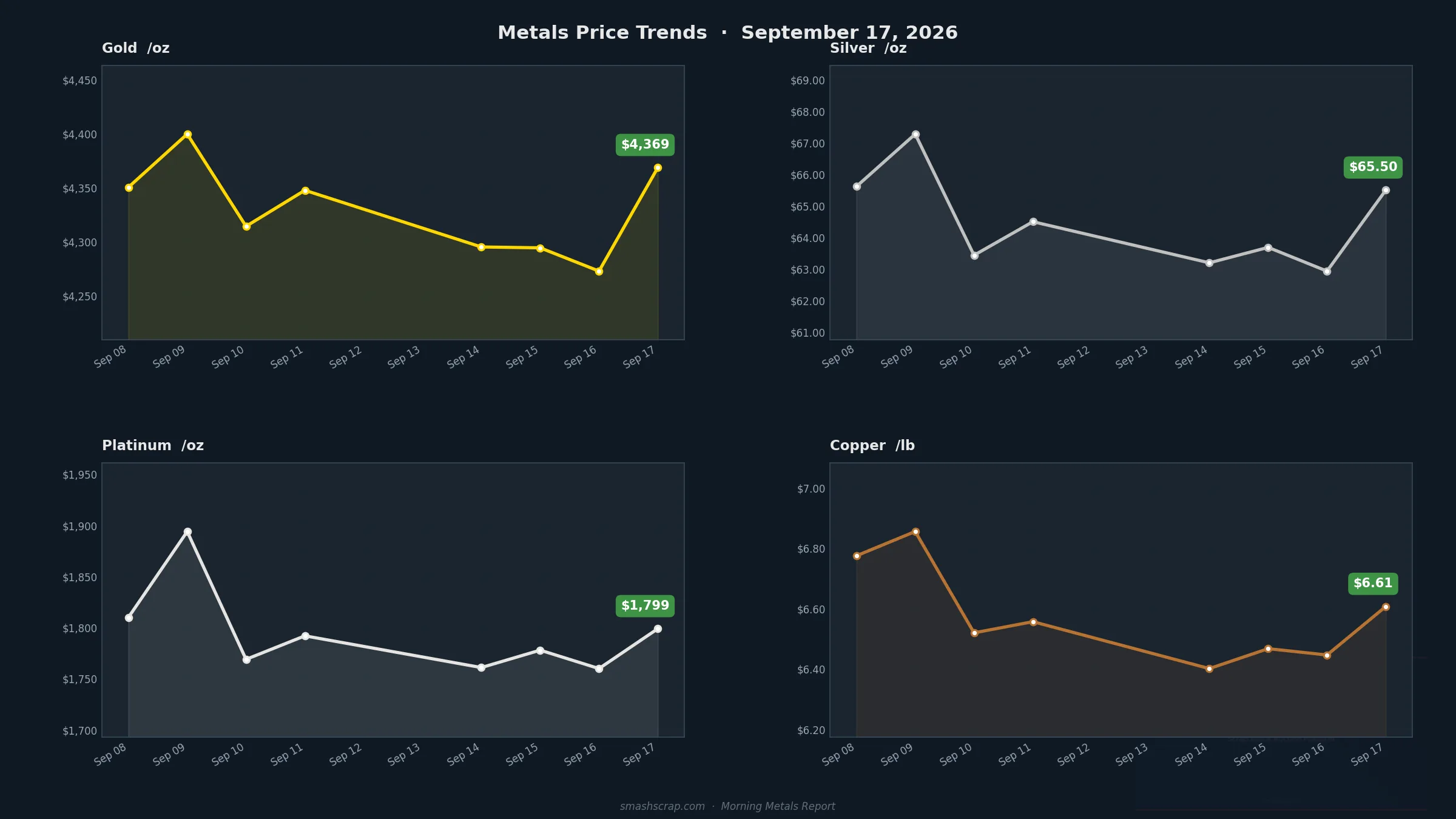
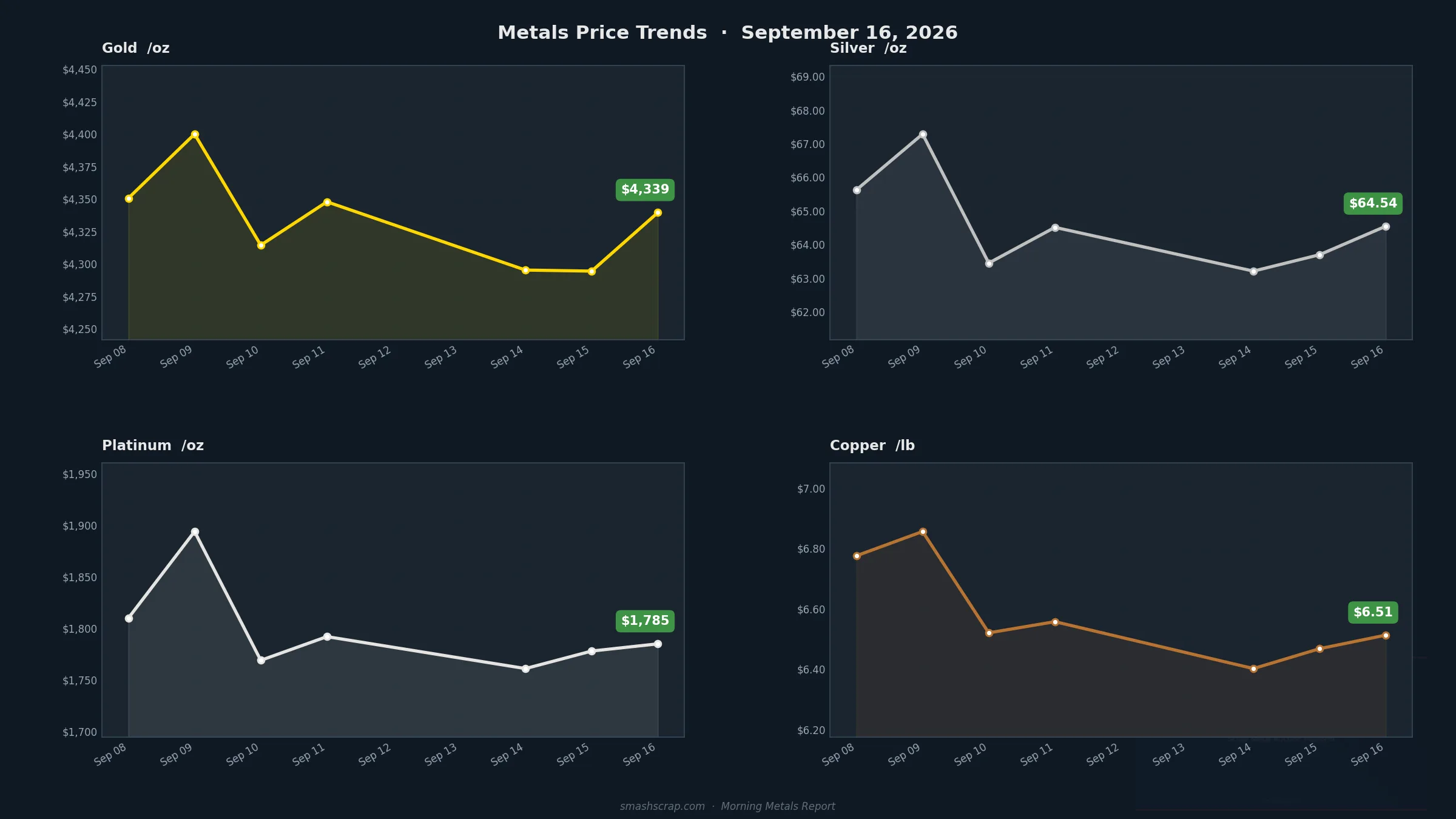
Copper prices fluctuate daily based on global commodity markets. Bare bright copper, #1 copper, and #2 copper all trade at different grades and prices. Rather than quoting a number that may be outdated tomorrow, the most reliable way to know what your copper is worth is to put it in front of multiple vetted buyers through a competitive auction. Always check current market rates before selling — prices change fast.
Q: How do I sell catalytic converters in British Columbia legally and for a fair price?
BC requires documented records for catalytic converter purchases, including seller ID and vehicle information where applicable. To get a fair price, document your cats thoroughly — serial numbers, photos, and vehicle of origin where possible. Selling through a platform with vetted buyers and a structured auction format helps ensure you're getting competitive bids based on actual PGM content rather than one buyer's flat offer.
Q: Is there a scrap metal depot in Prince George that handles non-ferrous metals?
Yes, Prince George has established scrap metal operations handling a range of non-ferrous materials including copper, aluminum, and specialty metals. For yards looking to access broader buyer networks for high-value loads, platforms like SMASH connect you with vetted buyers across Canada without being limited to local depot pricing.
Q: What is the catalytic converter scrap price in Canada right now?
There's no single catalytic converter price — values vary significantly by make, model, year, and condition due to differences in platinum, palladium, and rhodium content. Prices shift daily with PGM spot markets. Serial number documentation and photo records help buyers bid more confidently, which typically results in stronger price competition. Check current PGM prices and consult vetted buyers for current converter valuations.
Q: How does SMASH Recycling work for a yard in northern BC?
SMASH is a B2B auction platform that connects Canadian scrap sellers with vetted buyers across North America. You document your inventory — loads, grades, photos, serial numbers — list it through the platform, and buyers compete with bids. There are no subscription fees; SMASH earns only when a sale closes. For a yard in Prince George or elsewhere in northern British Columbia, this means access to buyers beyond your immediate region without the cold-calling.
Follow SMASH on LinkedIn for regular scrap metal market updates, platform news, and industry insights built for Canadian recyclers.