Copper Recycling Prince George: Auction Payouts
Auction vs. Broker: Which Gets You More for Your Scrap Metal in Canada?
Here's a number that might surprise you: Canadian scrap metal sellers who switch from fixed-price brokers to competitive auction platforms report recovering significantly more value per load — sometimes double digits more on high-value materials like copper and catalytic converters. If you're running a recycling yard, auto wrecker operation, or industrial scrap program anywhere in British Columbia, that difference goes straight to your bottom line. So why are so many sellers still leaving money on the table by defaulting to the same broker they've always used?
The answer is usually habit — and a lack of visibility into what their scrap is actually worth on the open market. This market report breaks down the real advantages of selling scrap metal through a transparent auction platform versus a traditional broker, with specific relevance for operations in Prince George and across the province. Whether you're moving copper wire, end-of-life vehicles, or catalytic converters, how you sell matters just as much as what you're selling.
How the Broker Model Works — And Where It Falls Short
A traditional scrap broker acts as a middleman between the seller and the end buyer. They offer you a price, take their margin, and pass the material on to smelters, refiners, or processors. On the surface, it sounds simple and convenient. In practice, it means you're accepting one opinion of what your scrap is worth — and that opinion is shaped by the broker's own profit motive.
Brokers aren't inherently dishonest, but the structure of the model creates an information asymmetry. The broker knows current copper scrap prices, platinum prices, palladium prices, and rhodium prices better than most sellers do. That gap in knowledge typically benefits them, not you. Consider some of the common friction points sellers face with brokers:
- Opaque pricing: You receive one number with little context on how it was calculated.
- No competition: There's no mechanism to drive the price up. You either take the offer or walk away.
- Relationship dependency: Many sellers stay with the same broker out of loyalty or inertia, even when market rates shift upward.
- Delayed settlements: Broker timelines for payment can be slower than platform-based alternatives.
- Limited material types: Some brokers specialize only in certain metals, meaning you may need multiple contacts for a single load.
For a scrap metal depot Prince George operation moving mixed loads of ferrous, non-ferrous, and catalytic converter material, this fragmented approach is costly. Time is money, and so is every dollar left behind on an underpriced load.
The Auction Advantage: Why Competition Drives Better Prices
The core principle behind a scrap metal auction is straightforward: when multiple qualified buyers compete for your material, prices reflect actual market demand rather than one buyer's preferred margin. This is how B2B scrap metal marketplace platforms like join Canada's B2B scrap marketplace on SMASH Recycling change the economics for sellers.
Think about what happens when you list a load of refined copper wire or a batch of high-grade catalytic converters on a competitive auction platform. Buyers — whether they're refiners, processors, or auto wreckers Canada-wide — see the listing and bid against each other. The seller doesn't need to know every buyer in the country. The platform does that work. The result is a price that reflects true market value at the moment of sale, not the price one intermediary decided was fair.
Here's how the auction model addresses each broker pain point directly:
- Transparent pricing: Multiple bids create a visible price ladder. You see what buyers are willing to pay in real time.
- Competitive upward pressure: Buyer competition naturally pushes offers higher on quality material.
- Broader buyer access: You're not limited to one local contact. National and regional buyers participate in the same auction.
- Faster decisions: Auction timelines are defined, meaning you know exactly when you'll have a confirmed sale.
- Market intelligence: Seeing bids gives you ongoing insight into scrap metal prices today across material types.
For anyone running a scrap depot near me search trying to understand what their local yard is worth compared to the broader market, this kind of transparency is genuinely valuable. It's not just about one transaction — it's about building a more informed business.
Copper Recycling in Prince George: The Market Context in 2026
Copper remains one of the most actively traded non-ferrous metals in Canada, and copper recycling Prince George operations have a strategic advantage: the region's ongoing industrial activity, infrastructure projects, and resource sector operations generate consistent scrap copper supply. Electrical wire, plumbing materials, industrial motors, and construction demolition all contribute to a steady local feedstock.
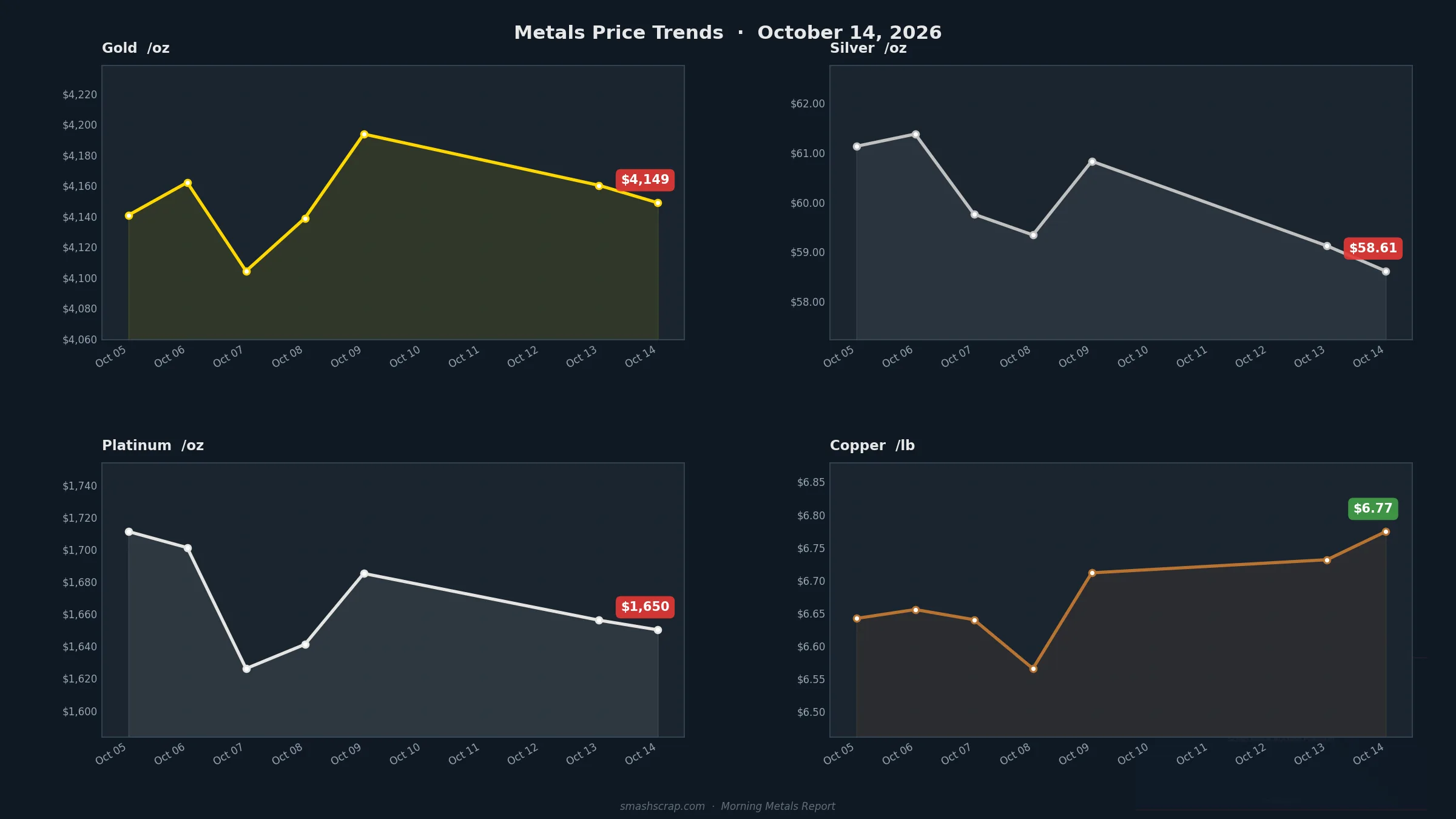
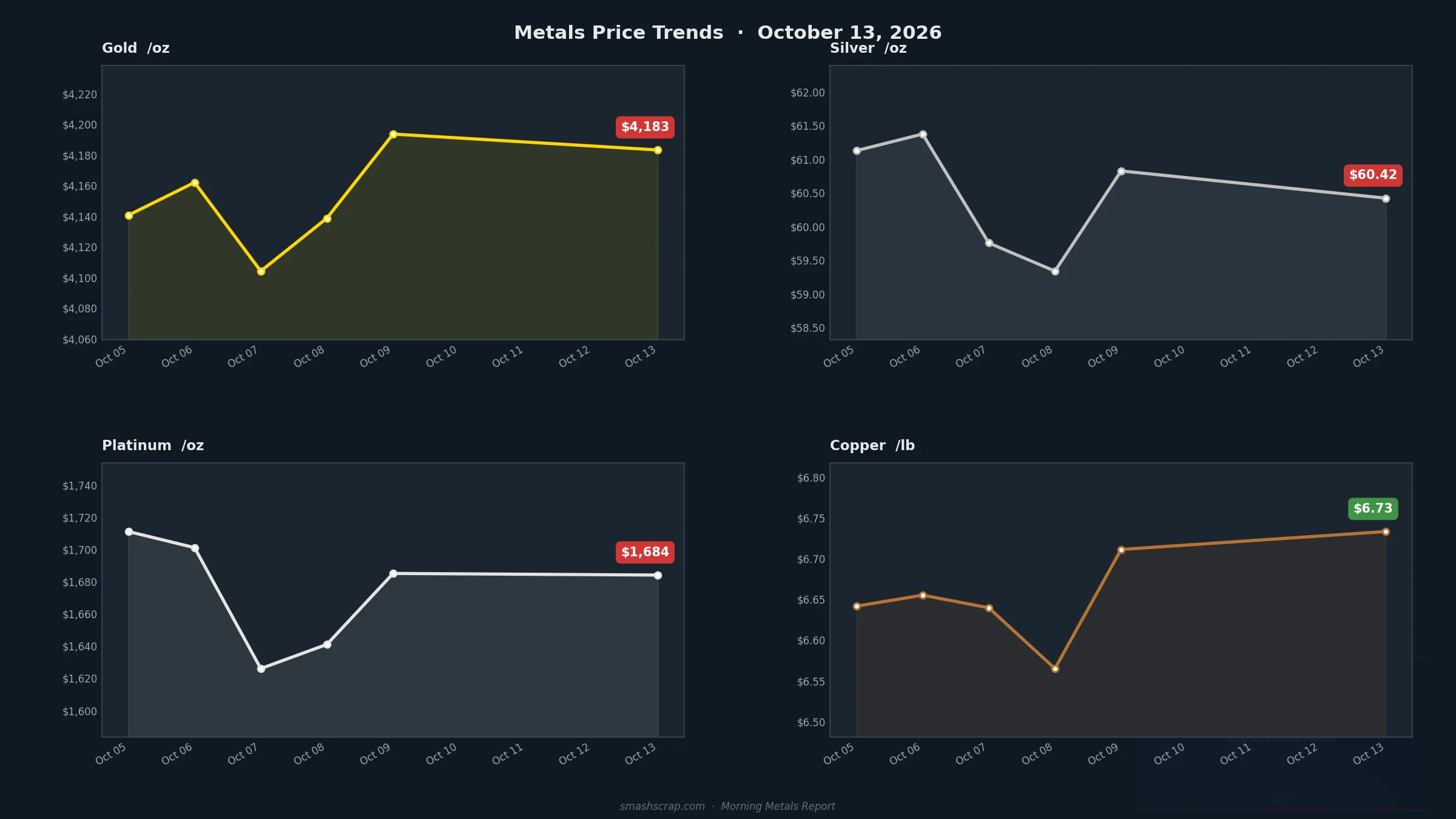
As of June 2026, copper scrap prices continue to be influenced by global factors including energy transition demand (copper is critical for EV infrastructure and power grid expansion), supply chain dynamics in South America, and currency fluctuations affecting Canadian export values. The range between what a broker quotes and what a competitive auction delivers on copper can be meaningful — particularly for high-purity grades like bare bright copper wire or #1 copper tubing.
Sellers in Prince George who rely on a single local buyer for their copper loads may not realize how much demand exists outside the region. explore SMASH Recycling's auction platform to see how Canadian buyers bid on materials from across British Columbia — including Prince George. Distance is no longer a barrier when the platform handles buyer qualification and logistics coordination.
Disclaimer: Copper and all scrap metal prices fluctuate daily based on market conditions. Always check current rates before committing to a sale.
Catalytic Converter Auctions: A High-Stakes Category Where Platform Matters Most
No material category illustrates the broker-versus-auction gap more clearly than catalytic converters. These components contain platinum, palladium, and rhodium — precious metals whose prices can move dramatically within a single week. Catalytic converter prices today depend on which converter type you hold, the current precious metal spot prices, and critically, who's buying.
A broker quoting you on a batch of catalytic converters has every incentive to offer conservatively, especially when platinum price, palladium price, and rhodium price are in flux. A catalytic converter auction forces buyers to compete based on their own assay capabilities and refining economics — meaning you benefit from whoever values your specific material most highly on that particular day.
The Automotive Recyclers of Canada (ARC) and the Ontario Automotive Recyclers Association (OARA) have both emphasized the importance of transparent, traceable transactions in the catalytic converter market — a category that has historically been vulnerable to theft and under-reporting. get competitive bids for your scrap metal through a platform built for accountable, documented B2B transactions. This is exactly the kind of infrastructure ARC and OARA advocate for across the Canadian automotive recycling sector.
For Prince George auto wreckers and recycling yards processing end-of-life vehicles, the ability to sell catalytic converters online through a verified auction channel — rather than handing them to a local broker at a flat rate — represents a meaningful shift in how value flows through the supply chain.
How to Transition From a Broker Relationship to an Auction Platform
Making the shift doesn't have to be disruptive. Many Canadian scrap operations run broker and auction channels simultaneously during a transition period, comparing returns on similar material types before fully committing to the platform model. Here's a practical approach:
- Identify your highest-value materials first. Copper, catalytic converters, and specialty alloys typically show the greatest price improvement through competitive bidding.
- Register on a verified B2B platform. SMASH connects qualified sellers with buyers across Canada — the registration process is straightforward for established recycling operations.
- Run parallel transactions. List a portion of your next load on auction while selling the rest through your existing broker. Compare the results.
- Track settlement times and net returns. Factor in logistics, fees, and payment speed — not just the headline price.
- Build your platform history. Like any marketplace, buyer confidence grows as your listings demonstrate consistent quality and accurate material descriptions.
Recycling yards accessing Prince George scrap metal services through SMASH can connect with qualified buyers who are actively seeking British Columbia supply — a geographic advantage that broker relationships often underutilize.
For more market insights and platform updates, read the latest from SMASH Recycling — covering price trends, platform features, and Canadian scrap industry news relevant to sellers across the country.
The Bottom Line for Canadian Scrap Sellers in 2026
The broker model served a purpose when market access was limited and information was scarce. In 2026, neither of those conditions applies. Digital auction platforms have made it genuinely possible for a recycling yard in northern British Columbia to compete for the same buyer pool as operations in Toronto or Vancouver. The infrastructure exists. The buyers are there. The only question is whether your current selling method is capturing the full value of what you produce.
For copper recycling, catalytic converters, ferrous loads, and specialty metals alike, the competitive auction model consistently delivers better price discovery, greater transparency, and stronger long-term market intelligence than any single broker relationship can provide. If you're serious about optimizing your scrap operation — in Prince George or anywhere across Canada — the time to explore what a B2B auction platform can do for your returns is now. Join Canada's B2B scrap marketplace and register at smashrecycling.ca to start getting competitive bids on your material today.
Stay current on scrap metal market trends and platform news by following SMASH on LinkedIn: follow SMASH Recycling on LinkedIn for regular industry updates, price insights, and Canadian market intelligence.
Frequently Asked Questions
Q: Is a scrap metal auction better than a broker for copper recycling in Prince George?
In most cases, yes — especially for higher-value materials like refined copper grades. A competitive auction exposes your material to multiple qualified buyers simultaneously, which creates upward price pressure that a single broker quote cannot replicate. For Prince George sellers with consistent copper supply, the cumulative difference over a year of transactions can be substantial.
Q: How do catalytic converter auction prices compare to broker quotes?
Broker quotes on catalytic converters are often conservative because they account for the broker's own risk margin on precious metal price movements. An auction platform lets refiners and processors bid directly based on their own assay data and current platinum, palladium, and rhodium spot prices — typically resulting in more accurate, market-reflective offers. Always verify current precious metal prices before selling.
Q: Can I use a B2B scrap marketplace if I'm a small operation in Prince George?
Yes. SMASH is designed for the full range of Canadian scrap operations, from large industrial generators to independent recycling yards. The platform's B2B structure means you connect with verified buyers regardless of your volume, and Prince George sellers benefit from access to buyers across British Columbia and nationally.
Q: What scrap metal prices should I check before listing on an auction platform?
Before listing, review current copper scrap prices, catalytic converter precious metal values (platinum, palladium, rhodium), and any ferrous benchmarks relevant to your load. SMASH provides market context through its platform and blog, but prices fluctuate daily — always confirm current rates at the time of your listing.
Q: Are there industry standards for B2B scrap metal transactions in Canada?
Yes. Organizations like the Automotive Recyclers of Canada (ARC) and the Ontario Automotive Recyclers Association (OARA) provide frameworks for responsible, traceable transactions — particularly in the automotive recycling and catalytic converter categories. Reputable auction platforms align with these standards, ensuring documented, accountable transactions that protect both buyers and sellers.