Scrap Car Recycling Etobicoke: Auction vs Broker
Auction vs. Broker: Why Canadian Scrap Yards Are Changing How They Sell
Most yards in Canada are still selling scrap the old way — one buyer, one phone call, one price. That's not a market. That's a guess. If you're running a recycling operation in Etobicoke or anywhere else in Ontario, you deserve to know what your material is actually worth before you agree to move it.
The difference between using a broker and selling through a competitive auction isn't just philosophical. It shows up in your margins, your paperwork, and your ability to make smart decisions about what to pull, when to sell, and who to trust. This article breaks down both models — and explains why the auction format is gaining ground fast in scrap metal recycling Canada.
How the Broker Model Works — and Where It Falls Short
A broker sits between you and the buyer. They buy low from you and sell high to their network. That spread is their margin — and it comes directly out of your pocket. There's nothing inherently dishonest about that model, but it means your interests and the broker's interests are structurally misaligned.
When you call a broker for a price on a load of cats or a pallet of non-ferrous, you're getting their number — not the market's number. They may be talking to three buyers. They may be talking to one. You'll never know. You're trusting them to pass along a fair price, with no visibility into what's behind it.
Here's where that gets expensive:
- Platinum, palladium, and rhodium prices move daily. A broker quoting yesterday's rate on a high-grade catalytic converter load costs you real money.
- You have no way to verify whether a competing offer was ever sought.
- Documentation is inconsistent — BOLs, packing lists, and photo records often don't exist or aren't shared with you.
- Disputes over grades, weights, or assay results have no paper trail to fall back on.
For a yard moving volume — cores, cats, copper, mixed non-ferrous — these gaps add up fast. And in 2026, with Canadian scrap metal prices fluctuating alongside global PGM markets, guessing your price is a liability you can't afford.
How a Competitive Auction Changes the Dynamic for Scrap Car Recycling
An auction doesn't replace buyers. It puts them in competition with each other. That's a fundamental shift in who holds the leverage in the transaction.
When you list a load on a platform like SMASH Recycling's auction platform, vetted buyers across North America see the same listing at the same time. They bid against each other. The price they land on reflects actual demand in the actual market — not a single buyer's margin target. That's what price discovery looks like when it works properly.
For scrap car recycling in Etobicoke, this matters in very practical terms. A recycling yard pulling catalytic converters off end-of-life vehicles needs to know what those cats are worth before they leave the yard. The difference between a mid-grade and a high-grade cat can be significant when PGM spot prices are moving. Auction format — with proper photo documentation and serial tracking — gives buyers the confidence to bid higher because they know exactly what they're getting.
Key differences the auction model delivers:
- Transparent price discovery. More buyers means the final price reflects real demand, not one buyer's margin.
- Documented inventory. Photo records, VIN lookups, serial tracking, and packing lists are built into the process — not optional.
- Vetted buyer network. You're not selling to whoever answers the phone. You're selling to buyers who've been screened and approved.
- Auto-invoicing. The paperwork gets done. GST/HST handling is built in — not left to you to sort out after the fact.
- No subscription fees. On SMASH, you don't pay to list. The model only works if the seller does.
Catalytic Converter Recycling in Canada: Where Transparency Is Non-Negotiable
Catalytic converter recycling in Canada sits at the intersection of high-value PGMs and serious regulatory scrutiny. Platinum, palladium, and rhodium prices have made cats one of the most valuable items coming off an end-of-life vehicle — and one of the most targeted for theft and fraud. That context matters when you're deciding how to sell.
Buyers paying for cats are paying for what's inside them — the PGM content. Prices fluctuate with global spot markets, so asking how much is a recycled catalytic converter worth on a given day depends on grade, foil condition, and which metals dominate the substrate. A diesel particulate cat is a very different product than a standard three-way converter from a domestic sedan. If your broker doesn't distinguish between them, you're leaving money on the table.
Auction platforms that include serial tracking and photo documentation solve a core problem in this space: buyers can actually assess what they're bidding on. That confidence shows up in the bids. Documented inventory gives buyers more confidence — and that confidence translates to more competitive offers. For Etobicoke yards processing high volumes of end-of-life vehicles, that difference compounds quickly across a full season of loads.
Industry organizations like the Ontario Automotive Recyclers Association (OARA) and the Automotive Recyclers of Canada (ARC) have both pushed for better documentation practices and chain-of-custody standards across the sector. Selling through a platform that builds those standards into every transaction puts you ahead of the curve — and on the right side of regulatory expectations as they tighten.
What the Numbers Actually Tell You About Scrap Metal Prices Today
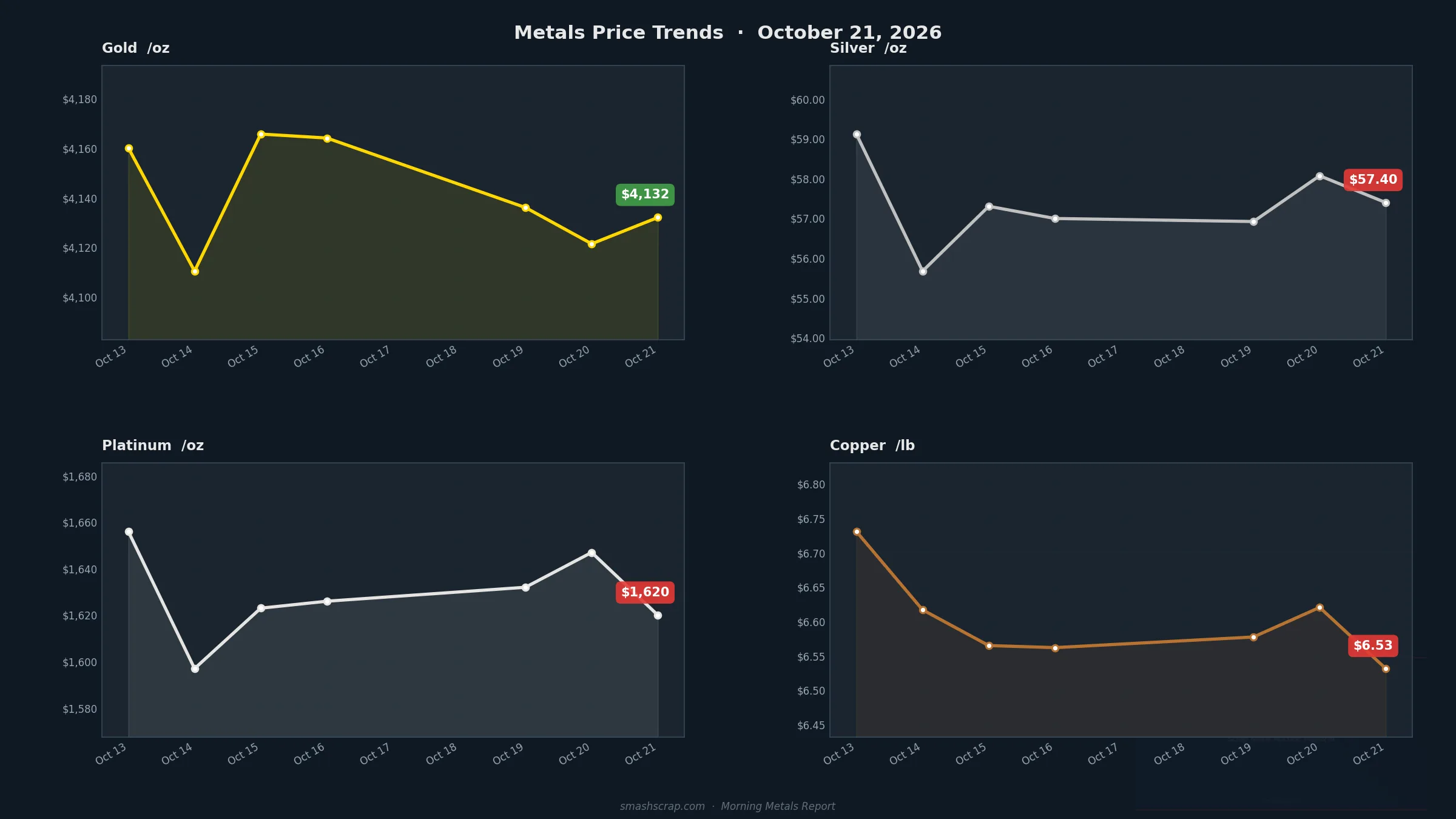
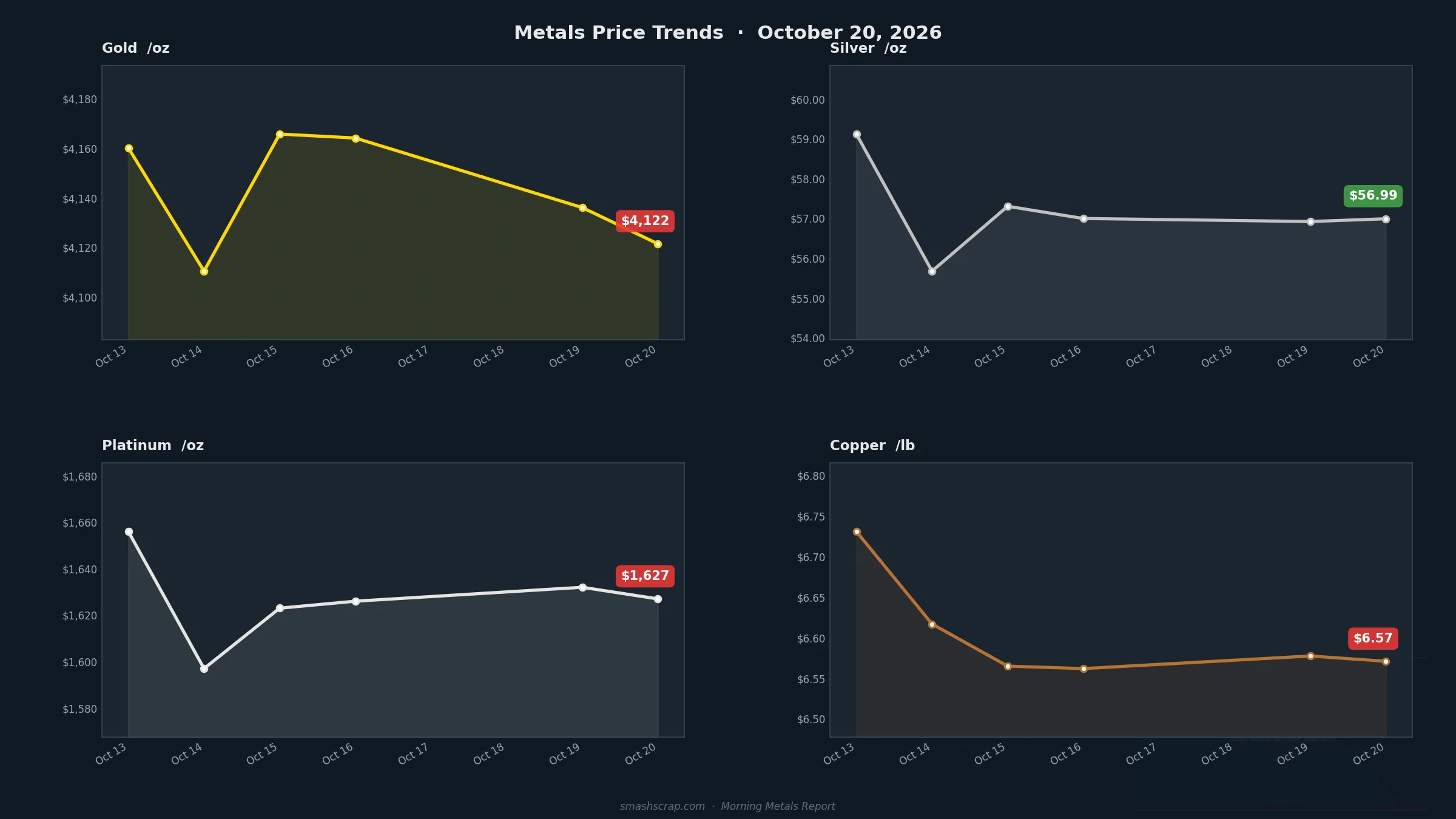
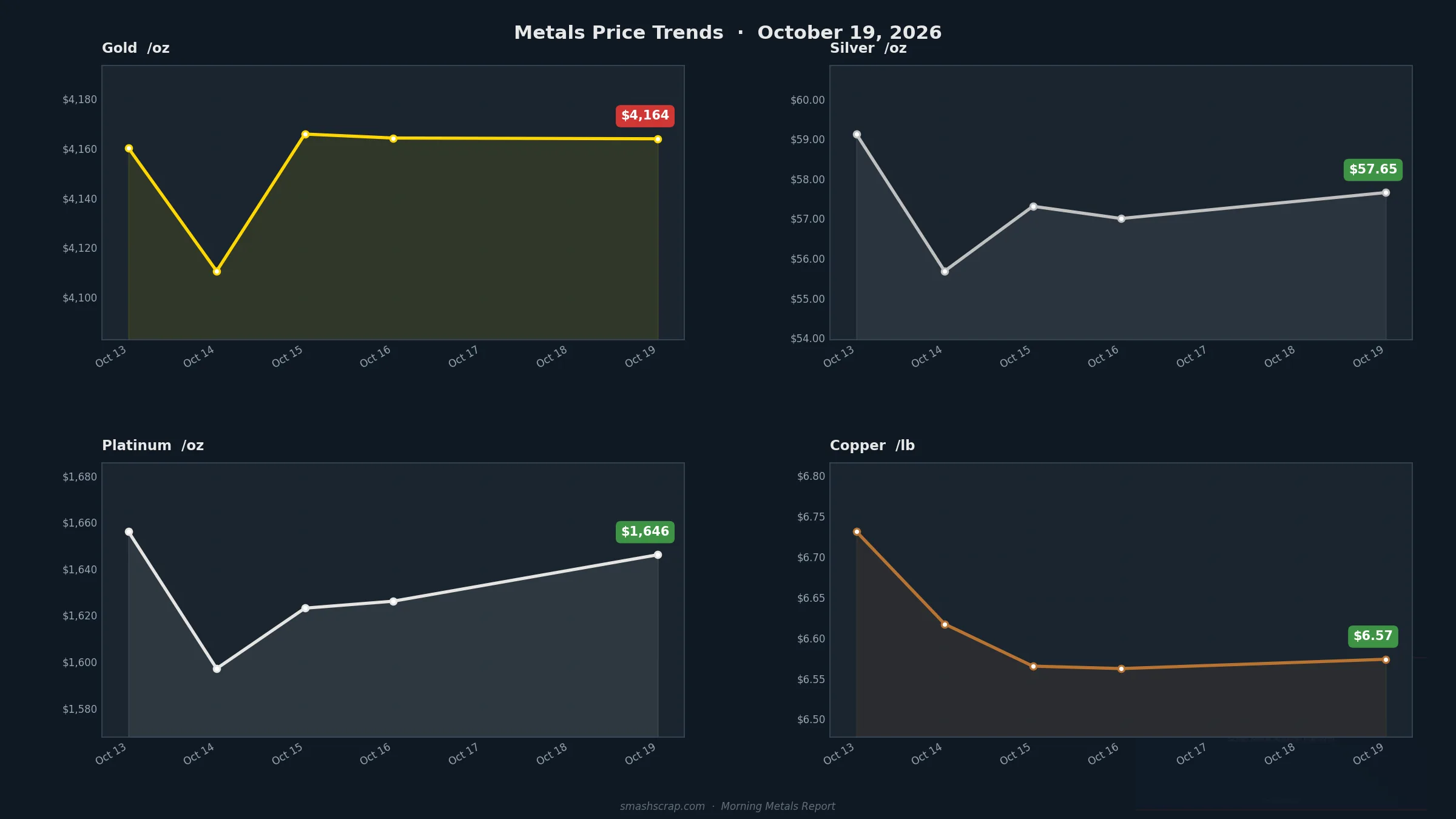
Copper scrap prices, platinum price, palladium price, rhodium price — these are live markets. They change every trading session. Anyone quoting you a flat price for a load of non-ferrous without referencing current spot is either working off stale data or building in a buffer that benefits them, not you.
A B2B scrap metal marketplace built around auction mechanics keeps pricing honest because the bids have to compete. A buyer who comes in low gets outbid. A buyer who wants the load has to sharpen their pencil. You don't have to trust anyone's word about what the market will bear — the auction tells you.
That's especially relevant in Ontario, where scrap metal recycling Canada connects local yards to a broader network of processors, smelters, and specialty buyers. A yard in Etobicoke isn't limited to whoever's driving through the neighbourhood. Through a platform like SMASH Recycling, that yard is visible to vetted buyers across the continent.
Disclaimer: Scrap metal prices — including copper, platinum, palladium, and rhodium — fluctuate daily based on global commodity markets. Always check current rates before listing or selling.
Regulation, Documentation, and Why 2026 Is the Year to Get Your Process Right
Canadian regulators and provincial authorities have been tightening expectations around scrap documentation — particularly for high-value materials like catalytic converters, copper, and precious metal-bearing electronics. In Ontario, yards that can't demonstrate proper chain of custody on cats and non-ferrous loads face increasing scrutiny from both enforcement and insurance perspectives.
That regulatory pressure is a reason to move away from informal broker arrangements and toward platforms that build documentation into every sale. When every load comes with photos, weights, packing lists, BOLs, and auto-generated invoices, you're not just selling better — you're protecting yourself. Your records exist. Your process is auditable. If a dispute comes up, you have something to point to.
OARA and ARC continue to set the standard for responsible automotive recycling in Canada. Their guidelines on parts documentation, fluid handling, and vehicle processing reflect the same principle: do it right, document it, and let the paper trail protect your business. The SMASH scrap metal auction format is built around that same logic — every transaction leaves a record.
If you're a recycling operation in Etobicoke or across Ontario still relying on verbal agreements and handshake pricing, 2026 is the year to ask whether that model still serves you. The documentation burden is only going up. The platforms that make compliance easier — not harder — are worth a serious look.
Ready to stop guessing what your loads are worth? Join Canada's B2B scrap marketplace on SMASH Recycling and let competitive bids show you the real market. You can also explore the broader North America's B2B scrap metal auction platform to see how the model scales. For more on Canadian scrap market trends and platform updates, read the latest from SMASH Recycling.
Frequently Asked Questions
Q: What is the difference between selling scrap through a broker vs. an auction in Canada?
A broker acts as a middleman — they buy from you at one price and sell to their network at a higher price, keeping the spread. An auction puts multiple vetted buyers in competition for your load, so the price reflects real market demand rather than a single buyer's margin target. For high-value material like cats and non-ferrous, that difference is meaningful.
Q: How much is a recycled catalytic converter worth in Canada?
The value of a recycled catalytic converter depends on its grade, the condition of the PGM substrate (platinum, palladium, rhodium), and current spot prices for those metals. Prices fluctuate daily alongside global commodity markets — a load worth one figure on Monday can be worth more or less by Thursday. Always check current rates and use a platform with documented grading to ensure you're being paid accurately for what you have.
Q: Is scrap car recycling in Etobicoke regulated?
Yes. Automotive recycling in Etobicoke and across Ontario is subject to provincial environmental regulations, OARA guidelines, and ARC best practices covering fluid removal, parts documentation, and chain of custody for high-value materials. Proper documentation — photos, packing lists, BOLs, invoices — protects your operation and helps demonstrate compliance if your process is ever reviewed.
Q: Does SMASH charge a subscription fee to list scrap for auction?
No. SMASH does not charge subscription fees. The platform only earns when a sale completes, which means SMASH's interests are aligned with yours — getting you the best possible outcome on every load, not charging you to access the platform regardless of results.
Q: How does an auction platform handle GST/HST for Canadian scrap metal sales?
SMASH handles GST/HST within the platform through auto-invoicing, so the tax documentation is generated as part of the transaction — not something you have to sort out separately after the load moves. For specific tax questions related to your operation, always consult a qualified Canadian tax professional.
Follow SMASH on LinkedIn for ongoing scrap metal market insights, industry updates, and platform news across Canada and North America.