E-Waste Recycling Yorkton: Competitive Bidding Advantage
Small Canadian Recyclers Have More Leverage Than They Think
Think the big operations have the market locked up? Think again. A regional yard in Yorkton, Saskatchewan moves real volume. You know your material. You've built local relationships. What you've been missing isn't size — it's price discovery. When you're calling one buyer and taking one price, you're leaving money on the table every single load. That's the real competitive gap, and it's fixable.
E-waste recycling Yorkton and across Saskatchewan has grown quietly but steadily. More material is moving. More buyers want access to regional supply. The problem is that most small and mid-size yards are still selling the old way — single buyer, verbal quotes, no documentation, no competition. Large operations have procurement departments and multi-buyer networks. You can level that playing field without hiring a single extra person.
Why Large Recyclers Seem to Win (And Why That's Changing)
Big operations don't necessarily have better material. They have better systems. They document everything. They run multiple quotes on every load. They use volume to force competitive pricing from buyers. That's it. There's no magic. The advantage is process, not size.
Here's what's changed: B2B platforms have made those same systems available to independent yards. Explore SMASH Recycling's auction platform and you'll see exactly what we mean. Vetted buyers, competitive bidding, photo documentation, auto-invoicing — the infrastructure that used to take a procurement team to build is now one registration away.
The other shift is buyer appetite. Buyers across Canada are actively looking for consistent regional supply. A yard running steady volume out of Saskatchewan is genuinely attractive. You don't need to be the biggest yard in the country. You need to be reliable, documented, and connected to real competition.
The Price Discovery Problem in Metal Recycling Prices Canada-Wide
Here's a hard truth about metal recycling prices Canada: if you're only calling one buyer, you don't actually know what your material is worth. You know what one buyer told you it's worth. Those are two very different things.
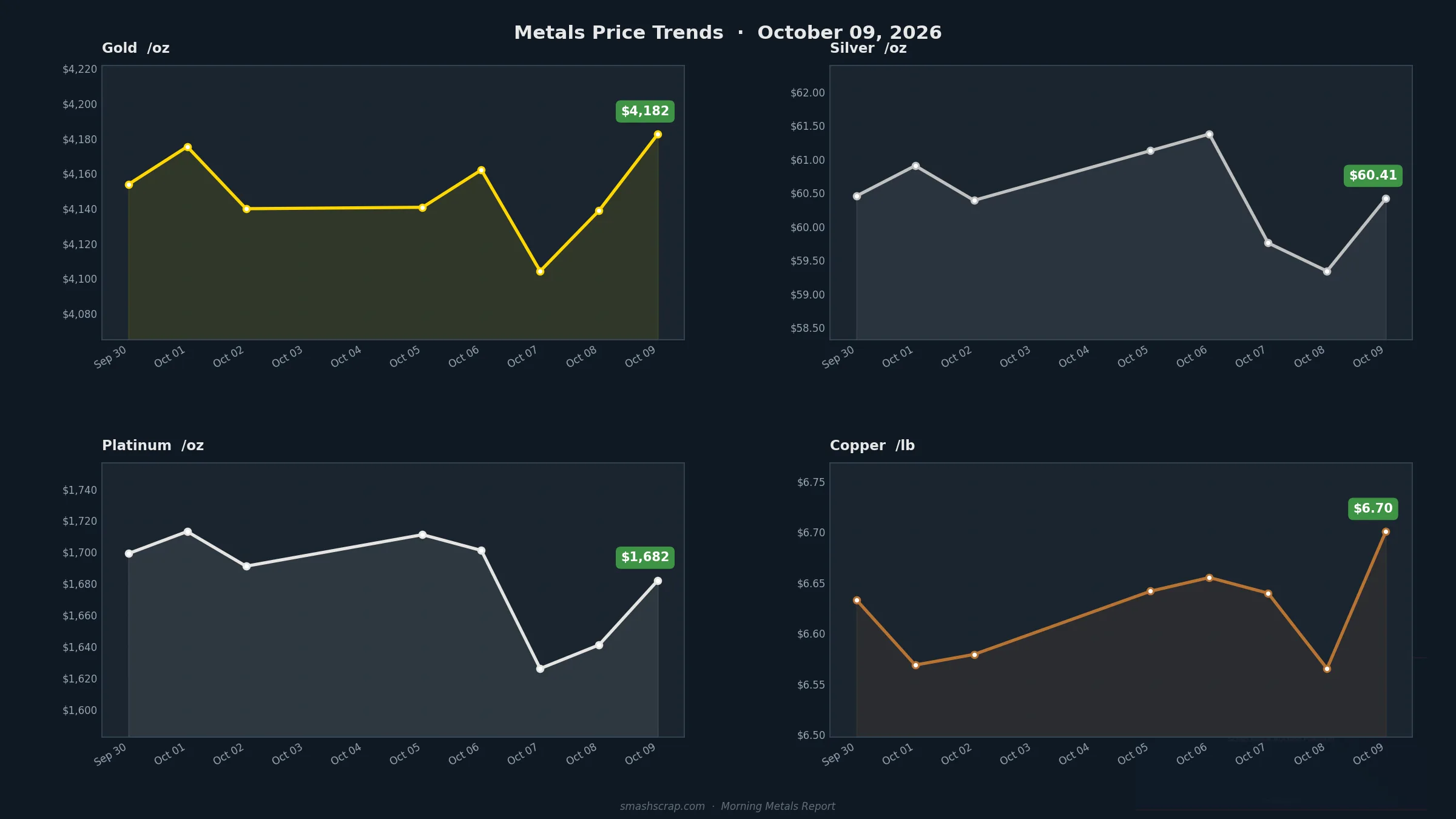
Copper scrap prices fluctuate with global markets. Catalytic converter prices today shift based on platinum price, palladium price, and rhodium price — all three of which can move significantly week to week. A load of cats that one buyer quotes at a certain number might be worth meaningfully more to a buyer running short on specific grades. You won't know that unless you have competition.
More buyers means better price discovery. That's not a promise of higher prices on every load — markets are markets. But documented inventory gives buyers more confidence to bid aggressively. A packing list with weights, grades, and photos beats a verbal description every time. The yards that win on price are the ones that make it easy for buyers to say yes fast.
- Non-ferrous loads — copper, aluminum, brass — benefit most from multi-buyer competition
- Catalytic converters — platinum, palladium, and rhodium content drives value; serial tracking and photo documentation matter here
- Auto cores — consistent documentation makes it easier for buyers to build recurring purchasing relationships
- E-waste streams — mixed loads with documented component breakdowns attract more targeted buyers
How Small Yards Can Compete on E-Waste Recycling and Scrap Metal Recycling Canada-Wide
E-waste is one of the fastest-growing material streams in scrap metal recycling Canada. Circuit boards, drives, power supplies, wire harnesses — this material has real non-ferrous value, and buyers who process it are actively sourcing. The challenge for smaller yards has been access: how do you find those buyers without a national sales network?
The answer is the same as it is for any other load. Put the material in front of vetted buyers through a competitive format. Document what you have. Let the market set the price. Small yards doing e-waste recycling in Yorkton and across Saskatchewan are sitting on material that buyers elsewhere want — the gap is visibility, not value.
If you want to compete with larger operations on scrap metal recycling Canada-wide, focus on three things:
- Documentation: Weigh and photograph every load before it moves. A buyer who can see exactly what they're getting bids with more confidence.
- Consistency: Regular volume on a predictable schedule is more valuable to buyers than one big sporadic load. Build your cadence.
- Competition: Stop calling one buyer. Full stop. Every load deserves more than one quote.
Organizations like the Automotive Recyclers of Canada (ARC) and the Ontario Automotive Recyclers Association (OARA) have been pushing industry standards around documentation and best practices for years. What they've identified at the industry level applies directly to your yard: documented, traceable material sells better. It's not just about compliance — it's a commercial advantage.
What Auto Recyclers in Ontario and Across Canada Are Doing Differently
Auto recyclers Ontario Canada-wide have been early adopters of digital selling tools, partly because the volume demands it and partly because buyers pushed for it. VIN lookup, serial tracking on cats, photo documentation for cores — these aren't just nice-to-haves anymore. Buyers use this data to make faster decisions, and faster decisions mean more competitive bids.
The good news for yards in Saskatchewan and other regional markets: you don't need Ontario volume to use Ontario-level tools. Platforms built for scrap metal auction formats handle yards of all sizes. Whether you're running five loads a month or fifty, the process is the same. List your material, document it properly, let vetted buyers compete.
If you're wondering how much is copper to recycle or what your cats are fetching versus last quarter, a competitive auction gives you a real answer grounded in actual buyer behaviour — not one buyer's margin calculation. That's data you can use to make better decisions about what to buy, what to stockpile, and what to move now.
For yards in Yorkton looking to build buyer relationships beyond their immediate region, Yorkton scrap metal services through SMASH connect you to vetted buyers across Canada — no cold calls required.
Build Your Operation Like a Buyer Wants to Buy From It
Large operations are attractive to buyers because they're predictable. Consistent grades, consistent documentation, consistent communication. That's all it is. You can build that discipline at any size.
Start with your inventory tool. Every piece of non-ferrous material that comes in gets logged — weight, grade, condition, photo. Cats get serial numbers tracked. E-waste gets component documentation. BOLs and packing lists go out with every load. This takes time upfront, but it compresses dramatically with habit, and the payoff is real: buyers who trust your documentation bid more aggressively because they're not pricing in uncertainty.
SMASH handles auto-invoicing once a deal closes, which removes one more administrative burden from your plate. No chasing paper. No disputes over what was agreed. The record is there, clean, from the moment the auction closes. Join Canada's B2B scrap marketplace on SMASH Recycling and you start with that infrastructure already built.
The yards that grow aren't always the ones with the most material. They're the ones that make it easiest to do business with them. In a market where buyers have options, being easy to buy from is a real competitive advantage — and it's entirely within your control.
Stop Competing on Volume. Compete on Process.
You're not going to out-volume a 50-acre operation in Southern Ontario. That's not the game. The game is margin, reliability, and buyer relationships — and those don't require scale. They require discipline and the right platform.
Scrap metal prices today move fast. Catalytic converter prices, copper scrap prices, platinum, palladium, and rhodium — these numbers don't wait for you to finish your phone tag with one buyer. A competitive auction format means your material hits the market when it's ready, with real buyers, in real time. North America's B2B scrap metal auction platform is built for exactly this.
If you're running a yard in Yorkton or anywhere across Saskatchewan and you're still selling on a single verbal quote, the process change is simpler than you think. Document your material. List it. Let buyers compete. That's it. The platform does the rest.
Ready to stop guessing what your loads are worth? Read the latest from SMASH Recycling to stay current on market moves, platform updates, and practical tips for yards of every size. And when you're ready to put your next load in front of vetted buyers, register at smashrecycling.ca — no subscription fees, no guesswork, no single-buyer ceiling.
Frequently Asked Questions
Q: Can small recycling yards in Yorkton actually compete with large operations on price?
Yes — but not by trying to match volume. Small yards compete by improving documentation, accessing multi-buyer competition, and running consistent operations. Platforms like SMASH put smaller yards in front of the same vetted buyer pool that large operations access. Price discovery improves when more buyers are competing, regardless of yard size.
Q: What types of e-waste recycling materials have the most value in Yorkton and Saskatchewan?
Non-ferrous content drives value in e-waste streams. Circuit boards, copper wire harnesses, aluminum chassis components, and power supply units typically carry the highest recovery value. Documentation matters — buyers who know exactly what's in a load bid more confidently than buyers pricing in uncertainty about mixed material.
Q: How do scrap metal prices in Canada compare across regions?
Metal recycling prices Canada-wide are primarily driven by global commodity markets — copper, aluminum, platinum, palladium, and rhodium all trade internationally. Regional variation exists based on transportation costs, local buyer competition, and material access. Running a competitive auction exposes your material to buyers across the country, which can help offset regional price gaps.
Q: How much is copper worth to recycle in Canada right now?
Copper scrap prices fluctuate based on global commodity markets and local grade specifications — bare bright, #1, #2, and insulated wire all trade at different levels. We don't publish live prices here because they change frequently. Check current rates through your buyer network or a competitive auction platform. Disclaimer: All scrap metal prices are subject to market fluctuation. Always verify current rates before selling.
Q: Do I need to be a large auto recycler to use SMASH's auction platform?
No. SMASH is built for yards of all sizes across Canada, including independent operations running regional volume. Whether you're selling cats, non-ferrous loads, e-waste, or auto cores, the platform handles documentation, buyer vetting, and auto-invoicing regardless of your monthly volume. You don't need a procurement team — you just need consistent material and proper documentation.
Follow SMASH on LinkedIn for scrap metal market insights, platform updates, and industry news relevant to Canadian recyclers.